
A winter wedding is the best kind of fashion challenge: the dress code says glamorous, the weather says practical, and the photographs will last for years. Knowing what to wear to a winter wedding guest is mostly about choosing the right fabric, the right length and the right coat — and then not overthinking the rest.
This guide covers every dress code — black tie, formal, semi-formal and casual — plus the colours, fabrics, coats, shoes and layering that make a winter wedding outfit work.
The quick answer: velvet or heavy crepe, midi or maxi, jewel tones
The safest winter wedding guest outfit is a midi or maxi dress in a substantial fabric — velvet, heavy crepe, satin, brocade or jacquard — in a jewel tone: emerald, burgundy, navy, plum or sapphire. Add a warm coat for arrival, closed-toe heels or heeled boots, and a small evening bag.
Winter fabrics are already the most wedding-appropriate fabrics there are — velvet, heavy crepe and satin look rich in evening light and feel warm on the skin. Light, summery fabrics are the ones to avoid; they look out of season and will not keep you warm.
One rule covers every dress code: never wear white, ivory or anything close to it. The bride owns white at a wedding, whatever the season.
First, read the dress code
The invitation tells you most of what you need to know. The dress code is usually printed on it, and the venue and time fill in the rest.
| Dress code | What it means for a guest | Go-to outfit |
|---|---|---|
| Black tie | Floor-length or formal maxi, evening fabrics | Velvet or satin maxi, heeled shoes, evening bag |
| Formal / black-tie optional | Midi or maxi, formal fabrics | Heavy crepe midi, velvet maxi, closed-toe heels |
| Semi-formal / cocktail | Midi dress, dressy separates | Satin midi, jacquard midi, heeled boots |
| Casual / daytime | Midi dress or smart separates, still polished | Knit midi dress, tailored jumpsuit, low heels |
| Festive / holiday | As formal, with seasonal colour welcome | Jewel-tone velvet, metallic accessories |
If the invitation gives no dress code, assume semi-formal: a midi dress in a substantial fabric, with a coat. It is the outfit that is never wrong at a winter wedding.
What to wear to a winter wedding guest: the best fabrics
Fabric is the single most useful decision, because it solves warmth and formality at the same time.
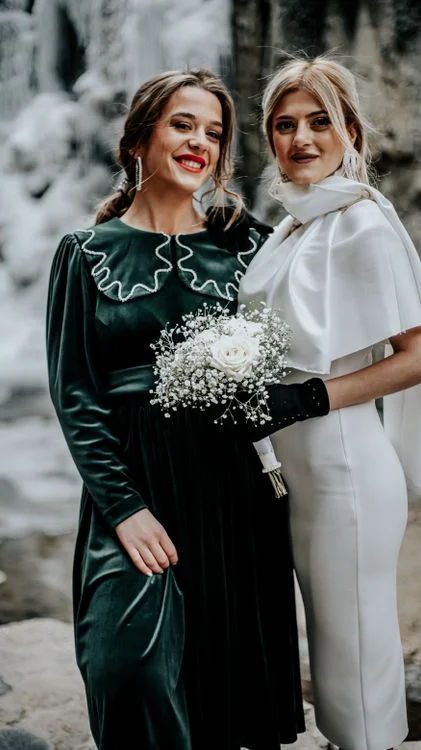
Velvet is the winter wedding fabric. Its plush pile catches indoor lighting beautifully and provides genuine insulation against chilly drafts. A velvet midi dress with long sleeves is the classic winter wedding formula, and it works for every dress code except the most casual.
Heavy crepe holds its shape all evening, resists wrinkles during a seated dinner, and looks polished in photographs. A crepe midi or column dress in a jewel tone is the most versatile choice — formal enough for black tie optional, comfortable enough for a long day.
Satin catches the light and reads as evening, which makes it ideal for formal and black-tie weddings. A satin slip dress on its own is a summer look, but winterized — with a coat, a wrap or long sleeves — it becomes evening formal.
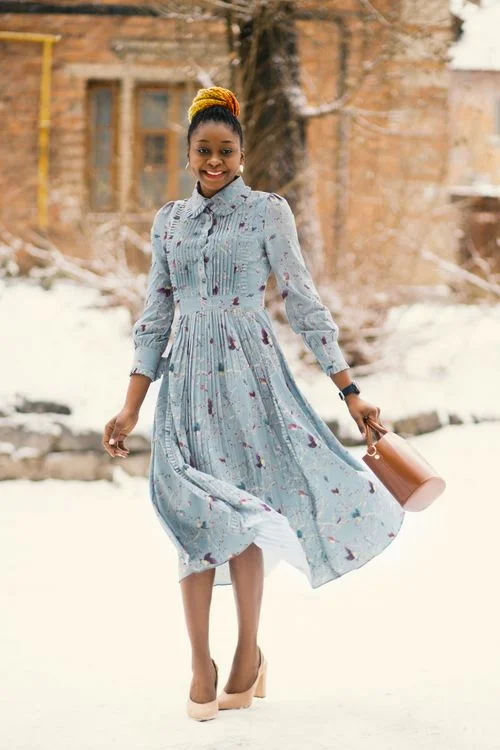
Brocade and jacquard add pattern and texture without needing accessories. A jacquard midi dress in a dark floral or geometric pattern looks considered with almost no styling at all.
Lace works in a long-sleeve version, in any colour but white. A long-sleeve lace midi is one of the most reliable semi-formal choices.
Avoid thin chiffon, linen and lightweight cotton. They are summer fabrics, and at a winter wedding they look out of season as well as feeling cold.
Colours: jewel tones win winter
Jewel tones are the colours of winter weddings: they glow under warm indoor lighting and look expensive in photographs. Emerald, burgundy, navy, plum, sapphire and ruby all work, and they suit almost every skin tone.
Black is fine at a winter wedding — especially a black evening dress with jewel-tone accessories. The old rule against black at weddings has faded, and in winter a black velvet or crepe dress is one of the most elegant choices there is. What makes black work is the accessories: gold or jewel-tone earrings, a metallic clutch, a coloured wrap.
Metallics work too, in small doses: a gold or silver sequin midi for an evening wedding, or metallic shoes and a clutch with a jewel-tone dress. Avoid head-to-toe metallic in daylight.
Avoid white and ivory, always. Very pale pastels can also read as bridal in photographs. And be careful with bright scarlet — a deep burgundy is the safer red. Burgundy is also a natural choice for a February wedding — see these Valentine’s Day outfit ideas for more formal occasion dressing.
Outfit formula 1: black tie
For black tie, choose a floor-length or formal maxi dress in velvet or satin. Long sleeves are the warmest choice and the most practical; a sleeveless gown needs a wrap or a faux-fur stole for arrival and outdoor photographs.
Shoes: closed-toe heels, in a metallic or matching dark tone. A small evening bag, statement earrings and a wrap complete it. The same formal pieces work for New Year’s Eve outfit ideas too. The coat for arrival should be long and dark — a wool coat in black, navy or charcoal — and it stays in the cloakroom once you are inside.
Outfit formula 2: formal and black-tie optional
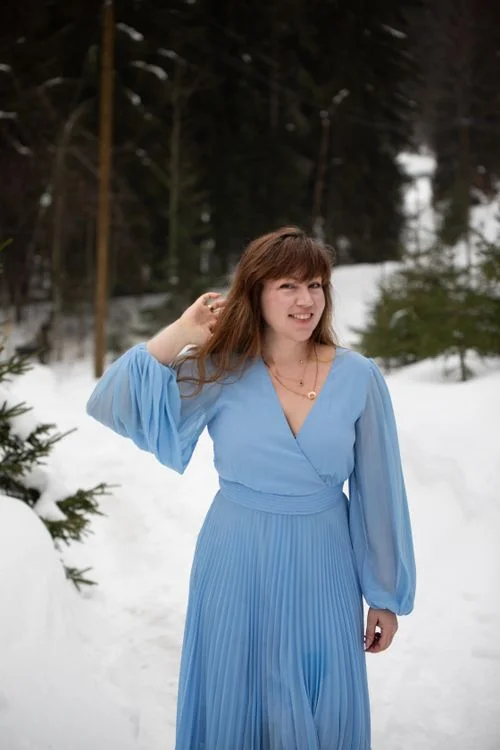
A midi or maxi dress in heavy crepe, velvet or satin. A velvet wrap dress in emerald or burgundy is the most reliable version: the wrap shape suits most people, the tie waist is adjustable, and the fabric does the dressing-up. Add closed-toe heels and a small bag.
Outfit formula 3: semi-formal and cocktail
A midi dress in satin, jacquard or heavy crepe, with heeled boots or closed-toe heels. This is the dress code where you have the most freedom: a long-sleeve lace midi, a satin wrap dress, a jacquard midi with a faux-fur stole.
Heeled boots are the winter guest’s best friend at this dress code — they are warmer than heels, they handle outdoor photographs and uneven ground, and they look intentional with a midi dress. Choose a block heel over a stiletto if you will be standing for a long time.
Outfit formula 4: casual and daytime winter weddings
A casual winter wedding still asks for polish — just less of it. A knit midi dress with heeled boots and a coat, a tailored jumpsuit in a dark tone, or a midi skirt with a fine knit and a blazer. The fabrics should still be substantial: a heavy knit, a wool-blend skirt, a crepe jumpsuit.
Daytime means lighter colours are more acceptable — navy, plum, forest green — but white is still off limits. And keep the coat in mind: a daytime winter wedding often involves more time outdoors, so the coat matters more, not less.
The coat: what to wear over it
The coat is half the outfit at a winter wedding, because it is what everyone sees on arrival and in outdoor photographs. Choose a long wool coat in black, navy, charcoal or camel — long enough to cover the dress, dark enough to look formal. For more cold-weather outfit inspiration, see these winter outfit ideas for women.
A faux-fur stole or a wrap is the alternative for milder days: it keeps shoulders warm during outdoor photographs and adds instant glamour. A pashmina or a large scarf works the same way indoors, draped over the shoulders during the ceremony if the venue is cool.
What not to wear over a wedding outfit: a puffer jacket, a parka or a casual raincoat. They are warm, but they undo the formality of everything underneath. If the weather is truly bad, wear the practical coat for the journey and change into the formal coat at the venue.
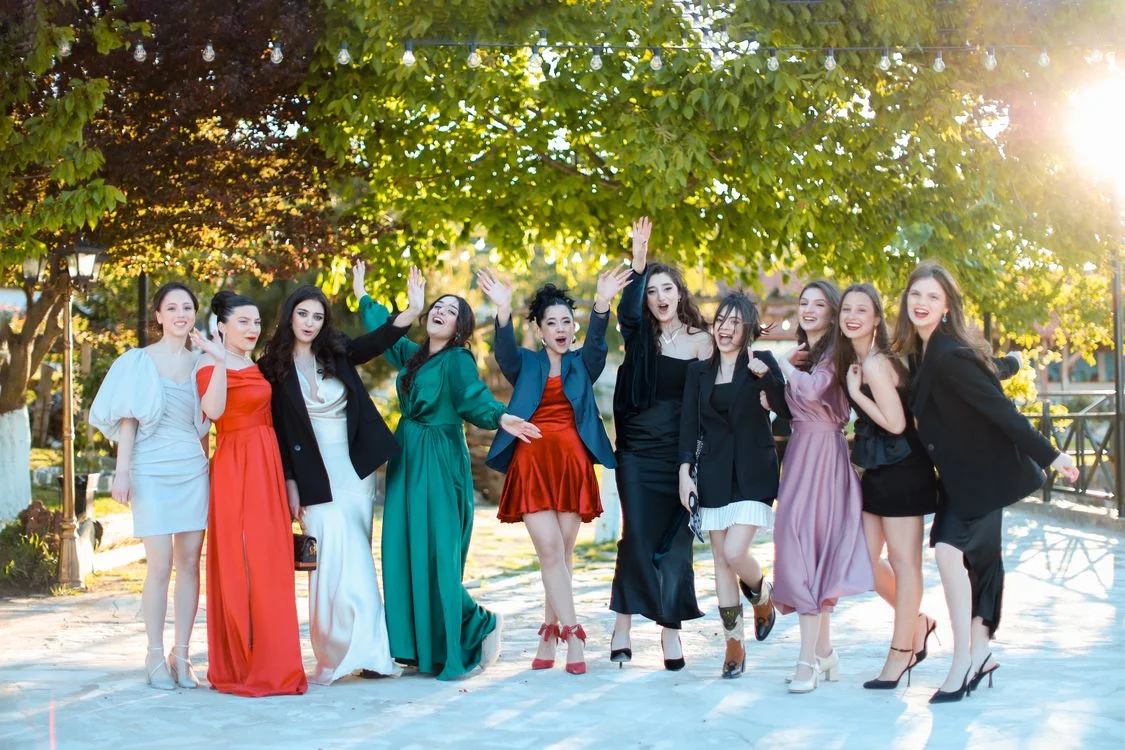
Shoes, tights and hidden layers
Shoes decide how comfortable the day is. Closed-toe heels are the classic choice; heeled boots are the warmer one. A block heel is kinder than a stiletto for a day that includes standing, dancing and walking on grass or gravel. Bring flat shoes for dancing if the wedding goes late — nobody photographs your feet on the dance floor.
Tights are your friend: opaque or sheer dark tights under a midi dress add real warmth and make heeled boots look intentional. Match the tights to the shoes, not the dress, for the cleanest leg line.
Hidden layers make the difference between enjoying the day and shivering through it: a thin thermal vest under the dress, a slip underneath for warmth and for the fabric to sit properly, and a wrap for the ceremony. None of them show, and all of them matter when the venue is a cold church or an outdoor terrace.
Accessories for a winter wedding guest
Accessories should be warm as well as pretty. A faux-fur stole, leather gloves for arrival, a velvet or satin clutch, and earrings that catch the light. Metallic shoes — gold or silver — work with almost every jewel tone and add a festive note without needing a second statement. If you prefer an understated look, these quiet luxury outfits show how to keep a formal outfit elegant without extra sparkle.
Common mistakes and how to fix them
- Wearing white or ivory. The bride owns white. Fix: any jewel tone, black or navy instead.
- A summer fabric in winter. Thin chiffon or linen looks out of season and feels cold. Fix: velvet, heavy crepe, satin, brocade or jacquard.
- No coat, or the wrong coat. A puffer over a formal dress undoes the outfit. Fix: a long wool coat, or a faux-fur stole.
- Stiletto heels on grass or gravel. Fix: a block heel, or heeled boots.
- Forgetting the venue is cold. Churches and outdoor terraces are cold even in a heated venue. Fix: hidden layers, tights and a wrap.
- Overdressing for the dress code. A floor-length gown at a casual daytime wedding draws the wrong kind of attention. Fix: read the invitation, and when in doubt choose semi-formal.
Shopping guidance: what to buy first
You do not need a new wardrobe for one wedding — you need one dress and the pieces that make it winter-appropriate. Buy in this order:
- The dress, in a substantial fabric and a jewel tone. Velvet or heavy crepe, midi or maxi. This is the piece that does the work.
- A long wool coat if you do not already own one — it is useful far beyond the wedding, and it is what makes the arrival look formal.
- Closed-toe heels or heeled boots in a metallic or dark tone, with a block heel if you will be on your feet all day.
- A wrap or faux-fur stole for outdoor photographs and cold venues.
For more formal winter outfit ideas, see these winter wedding guest dresses and these Christmas party outfit ideas. These outfit ideas that look expensive cover the details that make an outfit look polished.
No prices or availability are promised here, because both change by store and season. Try the dress on with the shoes and the coat together — the three pieces have to work as one outfit, not three separate ones.
Frequently asked questions
What should a guest wear to a winter wedding?
A midi or maxi dress in a substantial fabric — velvet, heavy crepe, satin or jacquard — in a jewel tone, with a long wool coat for arrival and closed-toe heels or heeled boots. Match the formality to the dress code on the invitation.
Can you wear black to a winter wedding?
Yes. Black is fine at a winter wedding, especially a black velvet or crepe dress with jewel-tone or metallic accessories. The old rule against black has faded, and in winter black is one of the most elegant choices.
What is the best dress length for a winter wedding?
Midi and maxi lengths are the most practical choices: they cover more, they pair with tights and boots, and they suit every dress code from semi-formal to black tie. A knee-length dress works for casual daytime weddings.
Can you wear boots to a winter wedding?
Yes — heeled boots are one of the best choices for a winter wedding guest. They are warmer than heels, they handle outdoor photographs and uneven ground, and they look intentional with a midi dress. Choose a block heel and a polished leather finish.
How do you stay warm at a winter wedding without ruining the outfit?
Hidden layers: a thin thermal vest under the dress, dark tights, a slip, and a wrap or faux-fur stole for the ceremony and outdoor photographs. A long wool coat for arrival, left in the cloakroom once you are inside.
What colours should you avoid as a winter wedding guest?
White and ivory, always — they belong to the bride. Very pale pastels can also read as bridal in photographs. Bright scarlet can compete with the couple; a deep burgundy is the safer red.
Conclusion
A winter wedding guest outfit is three decisions: a substantial fabric, a jewel tone, and a proper coat. Velvet or heavy crepe, midi or maxi, emerald or burgundy or navy — then closed-toe heels or heeled boots, a small bag, and hidden layers for warmth. Read the dress code, skip the white, and let the winter fabrics look rich in evening light and keep you warm.