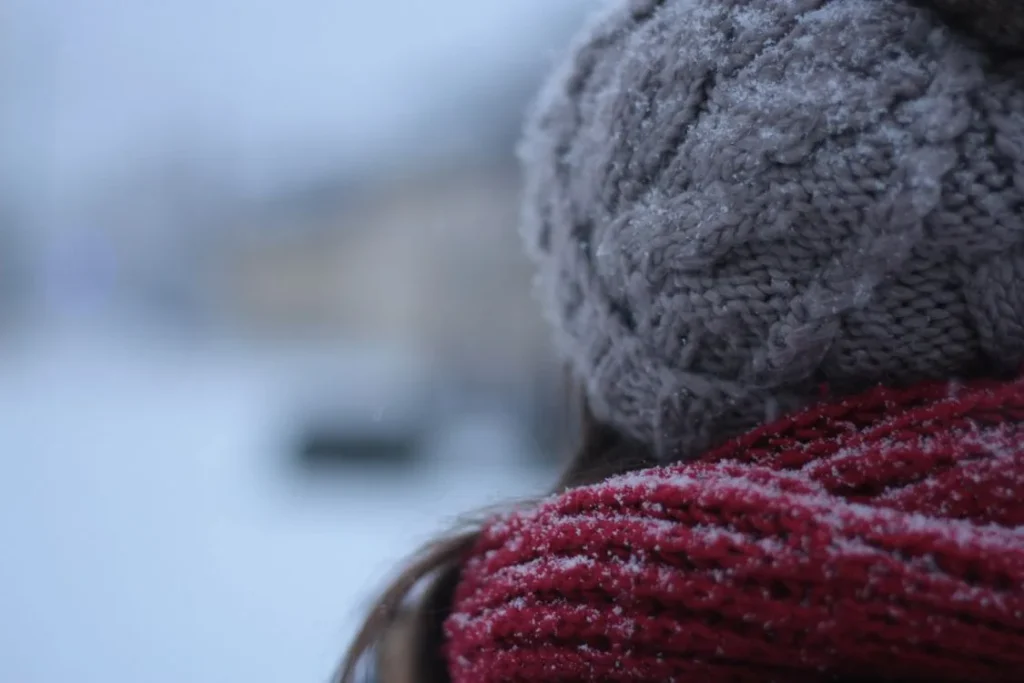

A scarf is the smallest piece in a winter outfit and the one that does the most work. It keeps the cold out of the gap between your coat collar and your neck, it adds colour to a dark coat, and it can change an outfit you have worn all week into something that looks new. But learning how to style a scarf with a winter coat is also about avoiding the ways it goes wrong: a scarf that adds bulk at the neck, fights with the collar, or hangs in a tangled mess can undo an otherwise polished outfit.
This guide covers the scarf types worth owning, seven ways to wear them with a coat, the colour rules, and the mistakes to avoid.
How to style a scarf with a winter coat: the quick answer
Choose a wool or cashmere scarf long enough to loop once around your neck with the ends reaching your chest. For most coats, the simplest method works best: drape the scarf around your neck, loop one end over the other, and tuck the ends inside the coat. Match the scarf to the coat — a light scarf with a dark coat, or a scarf in a colour from your outfit — and keep the bulk at the neck neat, not piled high. One scarf, worn neatly, beats two scarves or a scarf plus a bulky collar.
That is the whole method. The scarf should look like part of the coat outfit, not like something added on top of it at the last minute.
What is a scarf, and which types work with a coat?
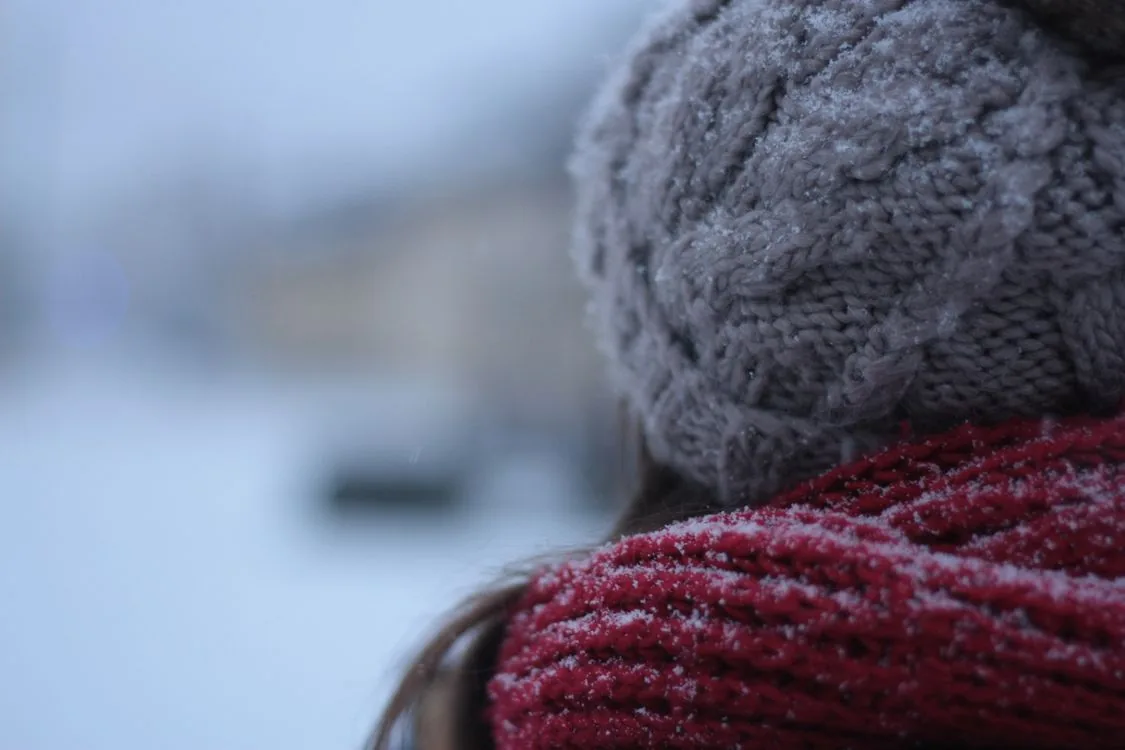
A scarf is a piece of fabric worn around the neck for warmth, sun protection or style — and in winter, warmth comes first. The main types you will meet are the long rectangular scarf, the blanket scarf, the infinity scarf, and the silk square. Each behaves differently with a coat.
The long rectangular scarf is the most useful. It is long enough to loop, knot or drape, and it works with every coat length and collar. In wool or cashmere it is warm; in a lighter wool it works for milder days. This is the scarf to buy first.
The blanket scarf is large and square, usually in wool or a wool blend, often checked or plaid. It is the warmest option and the most dramatic — worn draped over the shoulders like a shawl under an open coat, or folded into a triangle and looped at the neck. It adds real bulk, so it suits long, roomy coats better than fitted ones.
The infinity scarf is a loop with no ends. It is the easiest to wear — just loop it twice around the neck — and it never comes undone or hangs in your way. It is less versatile than a long scarf, because you cannot change how it drapes, but it is the best choice if you hate fussing with a scarf.
The silk square is a lighter, smaller scarf, usually worn folded into a triangle or a band. It adds colour and polish, but almost no warmth. It works under a coat collar on milder days, or as the finishing touch on an evening coat — not as your main winter scarf.
The best scarf fabrics for winter
Fabric decides whether a scarf is warm, comfortable and worth the money. Wool is the standard: it insulates even when damp, it holds its shape, and a good wool scarf lasts for years. Merino wool is softer and finer than ordinary wool, and it is the best choice if wool usually itches you.
Cashmere is the softest and warmest for its weight, and a cashmere scarf feels luxurious against the neck. It is also the most expensive and the most delicate — check the care label and read how to care for silk, cashmere, velvet and wool before washing it. A wool-cashmere blend gives you most of the softness at a lower price.
Acrylic scarves are cheap and widely available, but they do not insulate as well as wool, they pill quickly, and they can feel clammy. They are fine as a first scarf or a bright colour experiment, but they are not the scarf to rely on in real cold. Silk is elegant and light, but it is a style scarf, not a warmth scarf.
Seven ways to wear a scarf with a coat
1. The simple loop. Drape the scarf around your neck with one end longer than the other. Loop the long end once around your neck and let both ends hang in front, tucked inside the coat for a neat finish. This is the method to learn first — it works with every coat and every scarf.
2. The drape. Lay the scarf around your neck and let both ends hang evenly down the front, outside the coat. This is the least warm method, but the most elegant — it shows the scarf’s colour and pattern, and it suits a long coat worn open. Best on milder days, or indoors.
3. The knot (Parisian knot). Fold the scarf in half, drape the folded loop around your neck, and pull the two loose ends through the loop. Pull it snug. This is the neatest and warmest method for a long scarf — it sits close to the neck and stays in place all day. It works best with a medium-weight scarf; a very thick scarf makes too much bulk.
4. The wrap. Loop the scarf twice around your neck and tuck the ends in, or let one end hang. This is the warmest method for a long, thin scarf, and the best choice for very cold days. Keep the loops loose rather than tight — a scarf wound too tightly can distort the coat collar.
5. The blanket drape. Fold a blanket scarf into a triangle, drape it over your shoulders like a shawl, and wear the coat open over it. The scarf becomes a visible layer across the chest. This suits long coats and casual days; it is too much bulk for a fitted coat.
6. The tuck. Wear the scarf inside the coat, looped once around the neck, with the ends tucked into the coat and the coat buttoned over them. Only a band of scarf shows at the neck — a clean, minimal look that is also very warm. This is the best method for work, because nothing hangs loose or gets in the way.
7. The belt. Drape a long scarf around the neck and let the ends hang, then belt the coat over the scarf ends. The belt holds the scarf in place and creates a long, layered line down the front of the coat. It works best with a long, lightweight scarf and a belted coat.
Matching a scarf to your coat
The scarf and the coat are worn together every day, so they need to get along. Three rules cover most combinations.
Colour. A light scarf — cream, camel or grey — lifts a dark coat and stops a winter outfit looking heavy. A scarf in a colour from the rest of your outfit — the burgundy of your knit, the green of your bag — ties the outfit together. A bright scarf is the easiest way to add colour to a dark coat: red, mustard or forest green against black, navy or chocolate. For the full palette, see the old money colour palette.
Bulk. Match the scarf’s bulk to the coat’s collar. A thick, chunky scarf needs a coat with room at the neck — a wide lapel or an open collar. A thin scarf works with a fitted coat and a high collar. If the scarf pushes the collar out or the collar pushes the scarf up around your chin, one of them is too bulky for the other.

Scarf pairings for each coat type
Wool overcoat. The most versatile coat, and the easiest to pair. A long wool scarf in cream, camel or grey, worn in a simple loop or a Parisian knot, is the default. A blanket scarf works too, worn open over the coat.
Trench coat. The trench’s wide lapels and belt suit a neat scarf: a silk square or a fine wool scarf, worn in a knot or tucked inside the coat. A chunky knit scarf fights with the trench’s clean lines — save it for a puffer.
Puffer and parka. Warm, bulky coats take a chunky scarf well. A thick knit scarf in a loop or a wrap matches the coat’s volume. A blanket scarf also works, draped over the shoulders under the open coat.
Accessories around the scarf: hats, gloves and bags
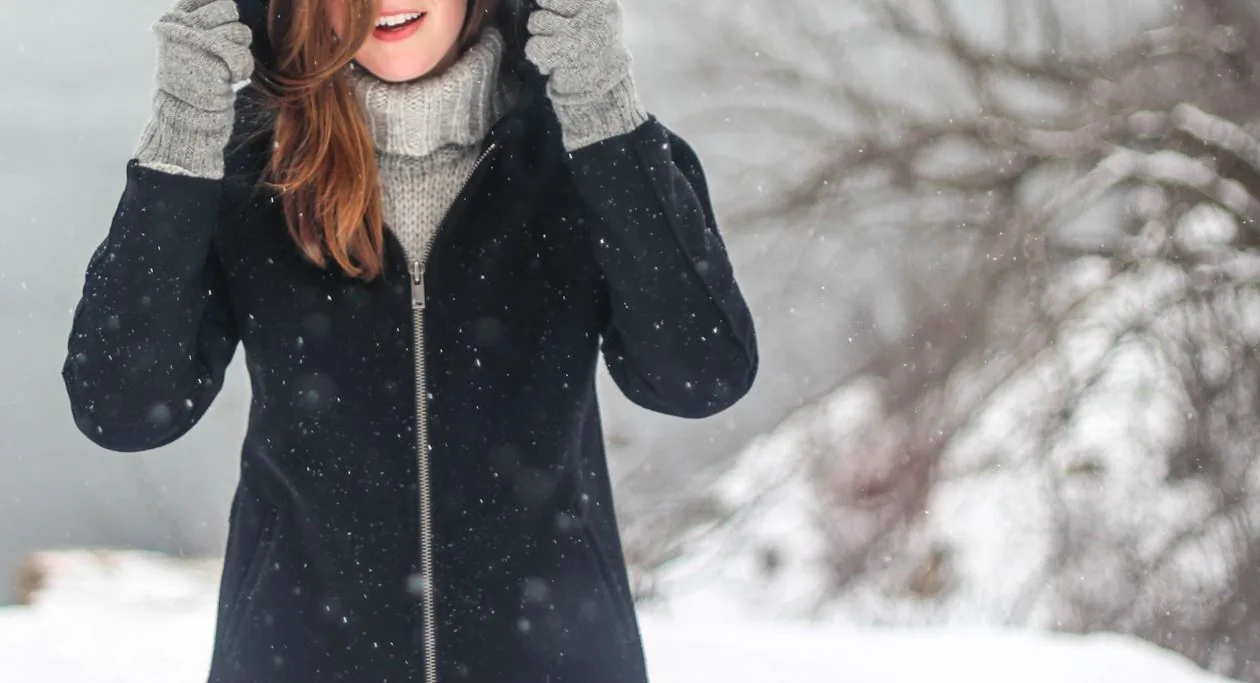
The scarf does not live alone. A hat should sit close to the head — a beanie or a beret — so it does not compete with the scarf’s bulk at the neck. A wide-brimmed hat plus a chunky scarf is too much around the face.
Gloves should match the scarf’s tone rather than its exact colour: brown gloves with a camel scarf, black gloves with a grey scarf. And the bag should stay simple — a structured tote or a cross-body bag.
Shopping guidance: what to buy first
You need two or three scarves, not ten. Buy in this order: a long wool scarf in a neutral — cream, grey or camel — that goes with every coat you own; a second scarf in a colour you love — burgundy, forest green or mustard — that adds colour to dark coats; and, if you want one, a blanket scarf in a check or plaid for the coldest days.
Buy the neutral scarf in the best quality you can afford. It is the scarf you will wear most, and wool or cashmere will last for years if you care for it. Check the label for the fibre content — a scarf labelled “wool” can be mostly acrylic, so read the fine print. If you are building a wardrobe on a budget, build a capsule wardrobe on a budget first and add the scarves as the cheapest high-impact update. A good scarf is also a classic piece in a quiet luxury capsule wardrobe — one quality neutral, worn well, does more than five cheap ones.
Common mistakes and how to fix them
- Too much bulk at the neck. A thick scarf looped three times under a high collar looks like a neck brace. Fix: use the Parisian knot with a medium scarf, or a thinner scarf with a fitted coat.
- A scarf that fights the collar. The scarf pushes the collar up, or the collar pushes the scarf into your chin. Fix: match the scarf’s bulk to the coat’s collar, or tuck the scarf inside the coat.
- Two patterns competing. A checked scarf with a checked coat. Fix: one pattern at a time — plain scarf with a patterned coat, or the reverse.
- A scarf that is too short. It cannot loop and it will not stay put. Fix: choose a scarf long enough to loop once with the ends reaching your chest.
- An acrylic scarf in real cold. It looks warm and is not. Fix: wool or cashmere for the coldest days, and save acrylic for milder weather.
- Everything matching exactly. A scarf, hat and gloves in the identical colour and pattern look like a set from a gift shop. Fix: match tones, not exact colours — a camel scarf with brown gloves, not the same camel everywhere.

Frequently asked questions
How do you wear a scarf with a winter coat?
Loop it once around your neck and tuck the ends inside the coat, or use a Parisian knot: fold the scarf in half, pass the loop around your neck, and pull the ends through. Keep the bulk neat and the colour matched to the coat.
What is the best scarf for a winter coat?
A long wool or cashmere scarf in a neutral colour — cream, grey or camel. It is warm, it goes with every coat, and it is long enough to loop, knot or drape.
Should a scarf match your coat or contrast with it?
Either works. A scarf in a similar tone to the coat looks polished; a light or bright scarf against a dark coat adds contrast and lifts the outfit.
How do you keep a scarf from looking bulky with a coat?
Use the Parisian knot or the tuck method, choose a medium-weight scarf rather than a very thick one, and match the scarf’s bulk to the coat’s collar. A thin scarf with a fitted coat, a chunky scarf with a roomy coat.
Can you wear a blanket scarf with a winter coat?
Yes — fold it into a triangle and drape it over your shoulders under an open coat, or loop it once at the neck. It suits long, roomy coats best.
Conclusion
A scarf is the easiest upgrade a winter coat outfit has. Choose a long wool or cashmere scarf in a neutral, learn the simple loop and the Parisian knot, match the colour and the bulk to your coat, and let the scarf do its two jobs: keep the cold out, and make the coat look considered. For more cold-weather outfits, see these winter outfit ideas for women.