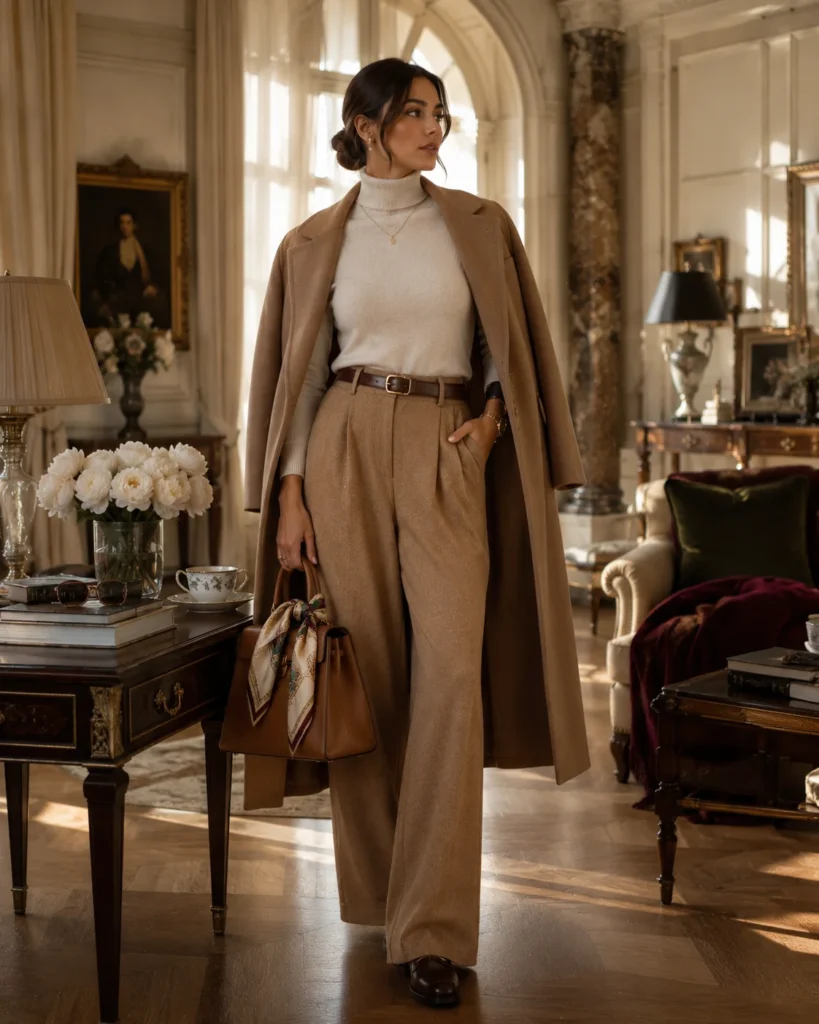

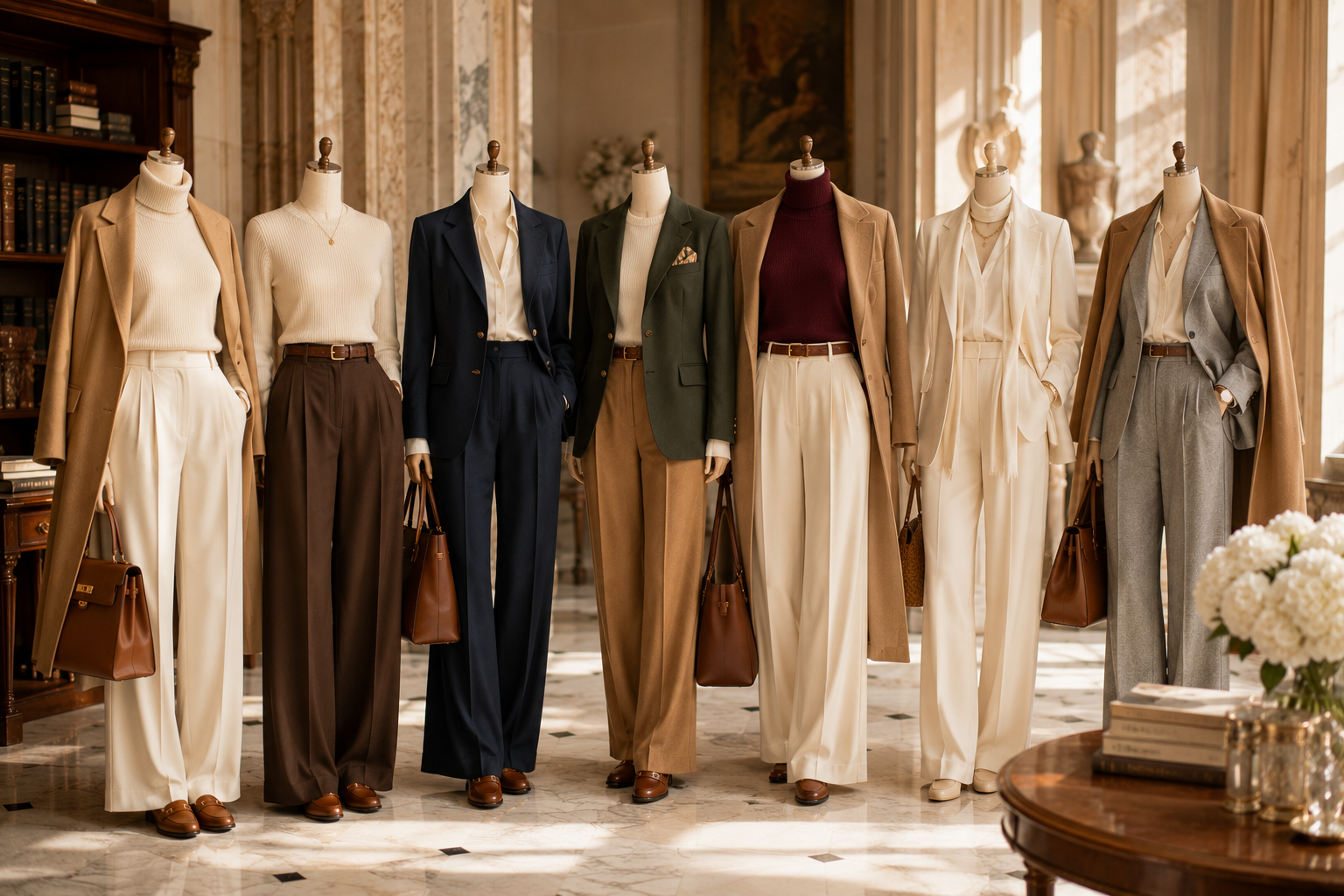
The old money color palette is the single most powerful tool in building an old money aesthetic wardrobe. If you have been saving old money outfit pins on Pinterest and wondering why some women nail the aesthetic while others come close but never quite get there, the answer is almost always the color palette. Get the colors right and even budget pieces read as expensive. Get them wrong and genuinely expensive pieces look out of place. This complete guide breaks down every shade in the old money color palette for 2026 — with specific outfit combinations, styling directions, and exact guidance on which colors to avoid.Old Money Color Palette
Why the Old Money Color Palette Is Everything
The old money color palette communicates wealth, restraint, and generational taste before a single garment detail is noticed. This is not accidental. The specific colors associated with old money dressing — cream, camel, navy, forest green, burgundy, chocolate brown — are all rooted in natural materials. Cream is the color of quality cotton and aged linen. Camel is natural undyed wool and cashmere. Forest green is the English countryside that old money families have inhabited for generations. These colors carry cultural and material associations that immediately communicate the things old money aesthetic is built on.
When you dress within the old money color palette consistently, your wardrobe starts to read as a cohesive whole rather than a collection of individual pieces. Everything works together. Every combination looks intentional. Every outfit photographs beautifully. This is why the old money color palette generates such extraordinary Pinterest save rates — it creates a visual world that is immediately recognizable and endlessly aspirational.
The 10 Core Old Money Colors for 2026
1. Cream and Ivory — The Old Money Backbone
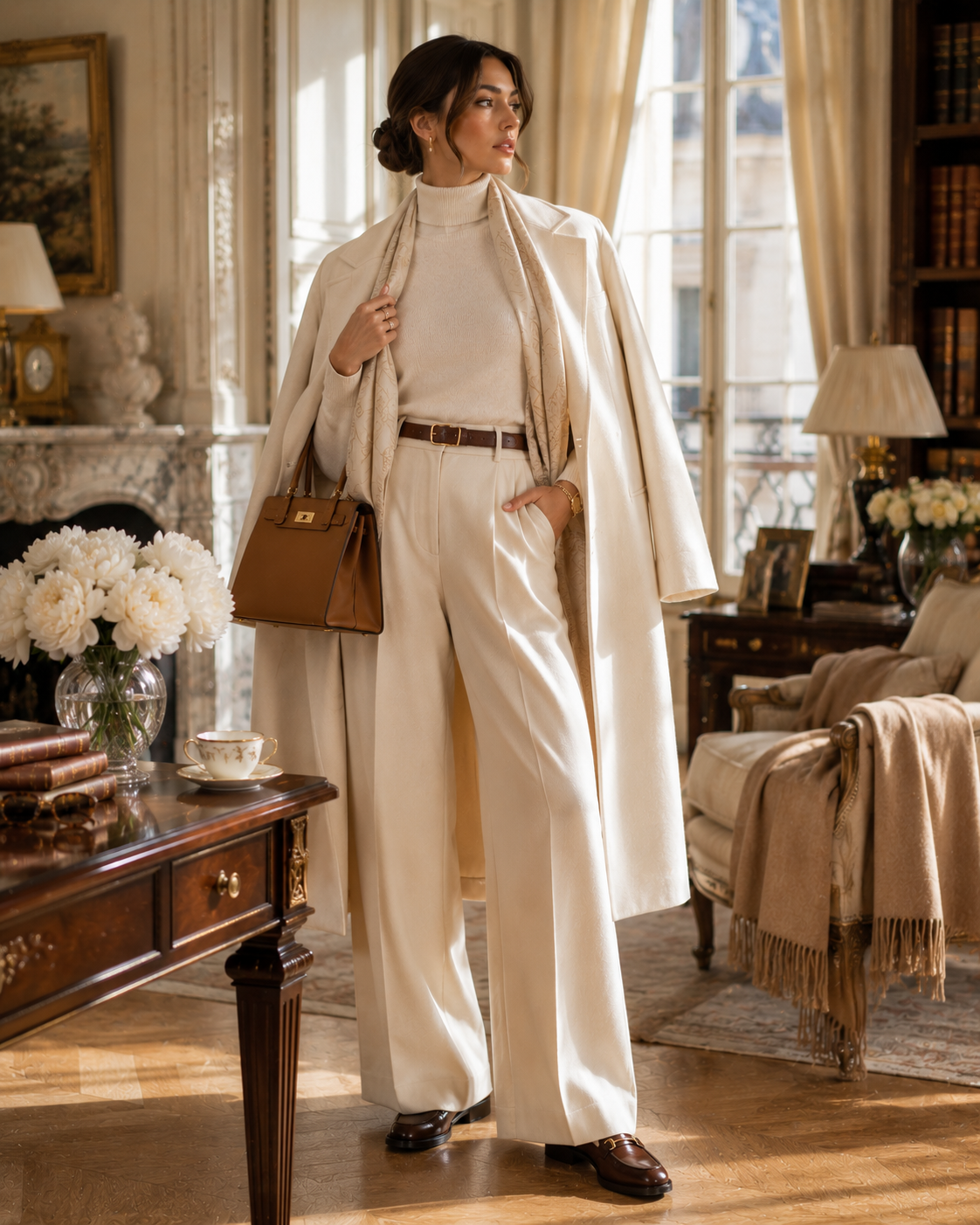
Cream is the most important color in the old money color palette. Not stark white and not warm yellow — cream. The specific off-white that references aged linen, quality cotton, and natural silk. In 2026 cream appears across every category of old money dressing: cream blazers, cream wide-leg trousers, cream cashmere knits, cream wool coats, and cream silk blouses.
How to wear cream in 2026: Head-to-toe cream in different textures — cream cashmere turtleneck, cream wide-leg tailored trousers, cream wool coat — is the most sophisticated old money color statement. The variation in texture prevents the monochrome from feeling flat while the color consistency creates a unified, luxurious visual.
Key cream pieces to own: Cream blazer, cream wide-leg trousers, cream cashmere or cashmere-feel crewneck, cream wool coat.
Cream pairs best with: Camel, chocolate brown, forest green, navy, burgundy, tan leather accessories.
2. Camel and Warm Tan — The Signature Old Money Neutral
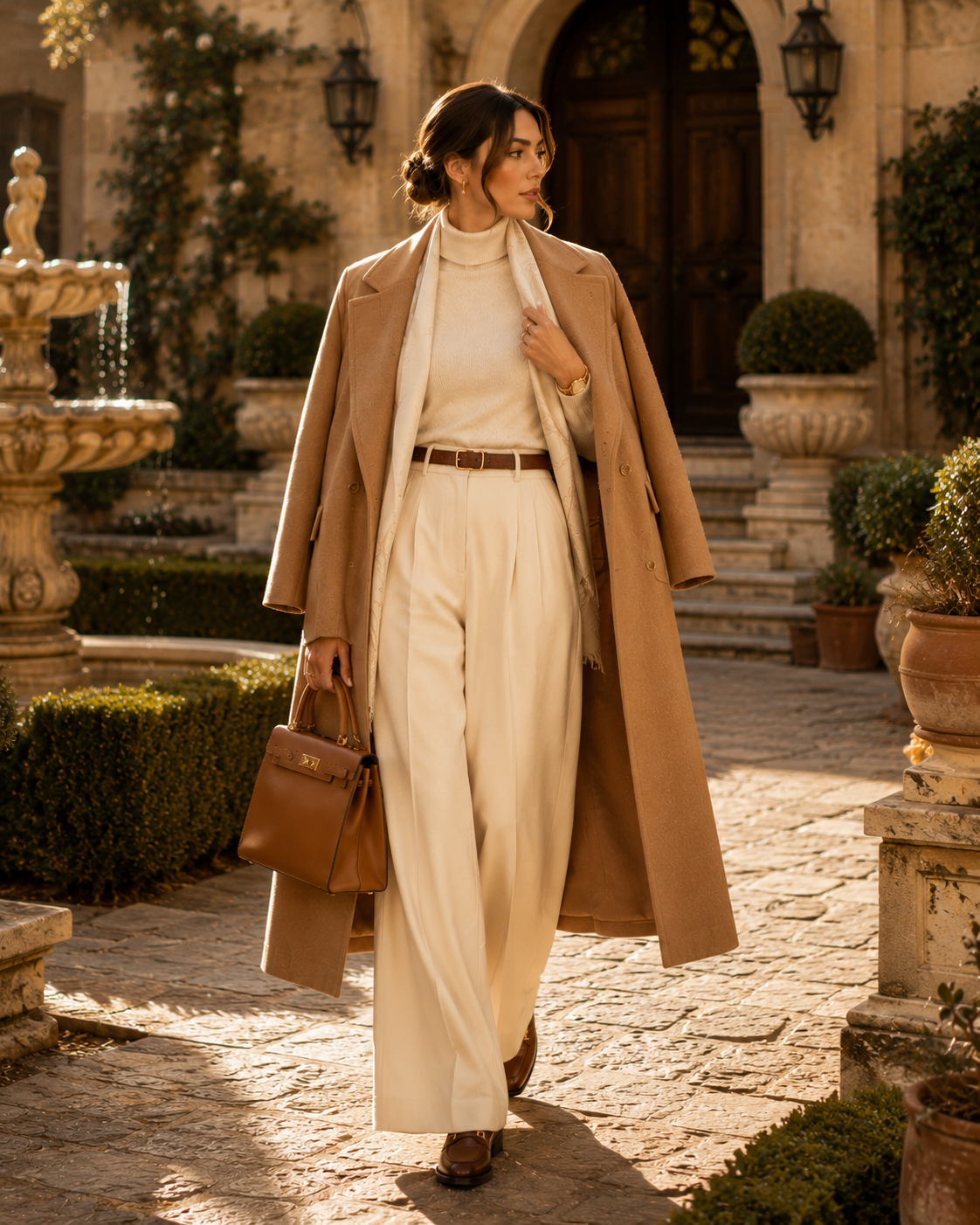
Camel is arguably the most immediately recognizable color in the old money color palette. The camel coat alone has become the most-pinned single old money garment on Pinterest for three consecutive years. Camel communicates warmth, quality, and the color of luxury natural materials at a glance. It is the color of undyed cashmere, aged leather, natural wool, and quality suede — all fabrics deeply associated with genuine old money dressing.
How to wear camel in 2026: A camel wool coat over a cream outfit beneath is the definitive old money color formula. Alternatively camel trousers with a cream or white blouse and tan leather accessories creates a tonal warm look that is completely within the old money color palette.
Key camel pieces to own: Camel wool coat, camel blazer, camel cashmere knit, camel midi skirt.
Camel pairs best with: Cream, white, navy, forest green, burgundy, chocolate brown.
3. Navy Blue — The Heritage Color
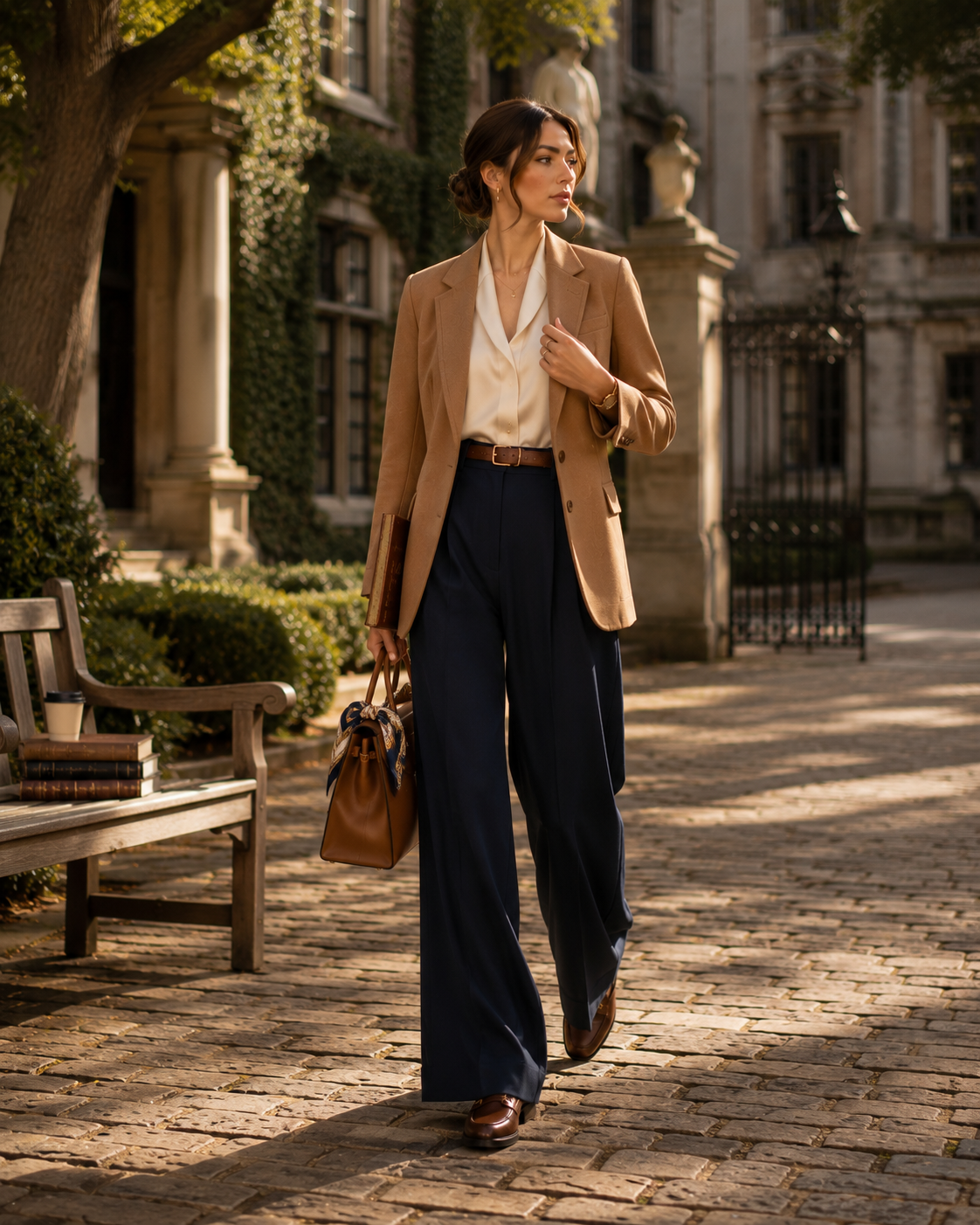
Navy is the only genuine color — as opposed to neutral — that is fully and unconditionally accepted within the old money color palette. It carries centuries of association with maritime heritage, Ivy League tradition, European aristocracy, and the kind of institutional confidence that old money dressing communicates at its best. Deep, serious, authoritative, and endlessly elegant — navy belongs in every old money wardrobe.
How to wear navy in 2026: Navy tailored trousers with a cream silk blouse and a camel blazer is the most classic old money navy combination. Navy and cream together reference the Ivy League color story most directly. Navy blazers over white Oxford shirts with dark trousers reference the heritage suiting tradition that old money aesthetic is built on.
Key navy pieces to own: Navy tailored wide-leg trousers, navy blazer, navy fine-knit sweater, navy coat.
Navy pairs best with: Cream, white, camel, tan leather, gold accessories.
4. Forest Green — The Underused Old Money Gem
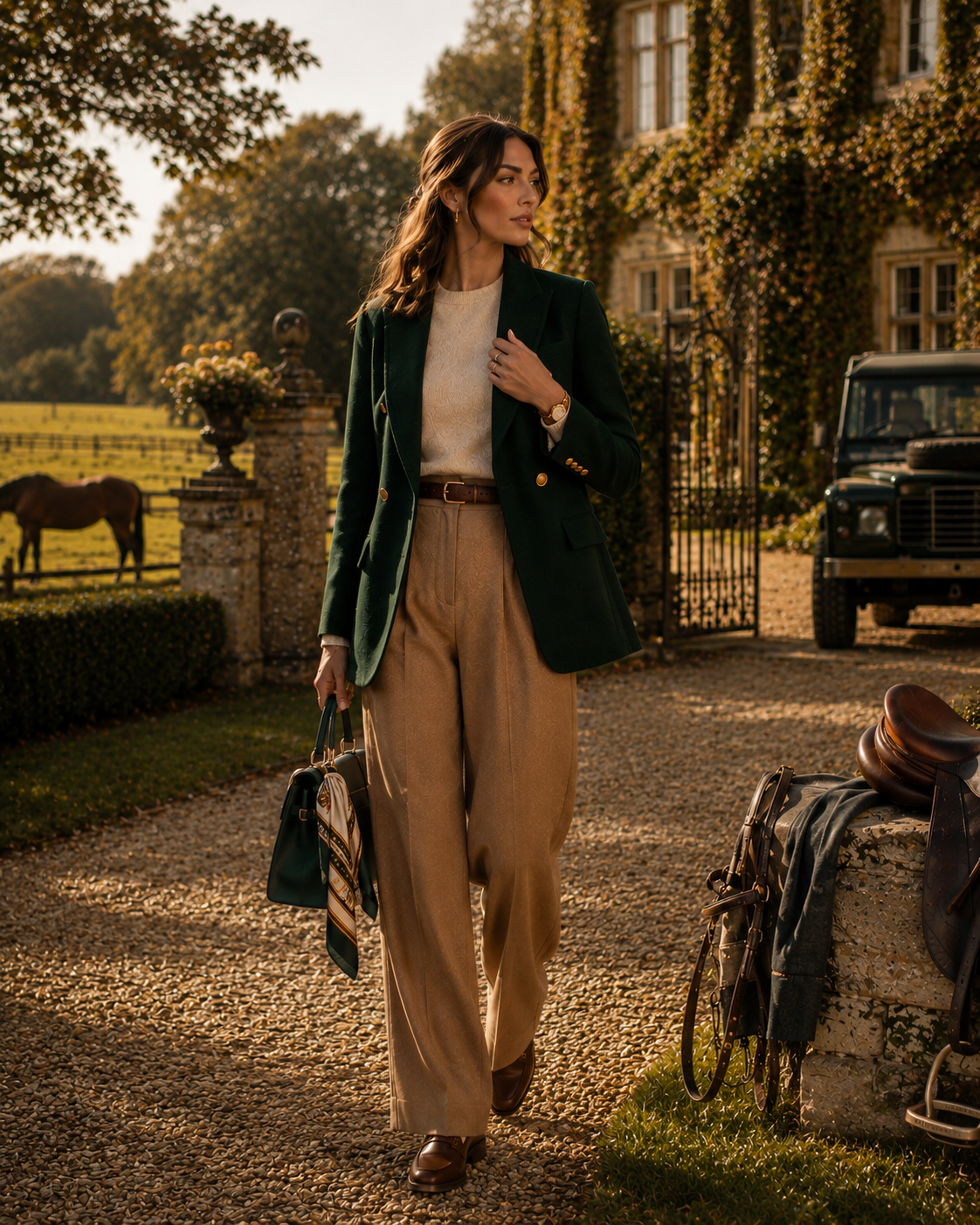
Forest green is the most underused and most rewarding color in the old money color palette. Associated with the English and Scottish countryside, estate life, hunting and equestrian heritage, and the natural world that old money families have traditionally inhabited, forest green communicates old money sensibility with extraordinary immediacy when worn correctly. It is rich, earthy, and visually striking against the neutral palette that surrounds it.
How to wear forest green in 2026: A forest green blazer or knit sweater with camel or cream trousers is the most distinctive old money color combination available. The forest green and camel pairing in particular references English countryside old money dressing more directly than any other color combination. Forest green also works beautifully in accessories — a forest green bag or silk scarf against a neutral old money outfit adds depth without disrupting the palette.
Key forest green pieces to own: Forest green blazer, forest green knit sweater, forest green midi skirt, forest green accessories.
Forest green pairs best with: Cream, camel, chocolate brown, burgundy, tan leather.
5. Burgundy and Deep Wine — The Romantic Old Money Color
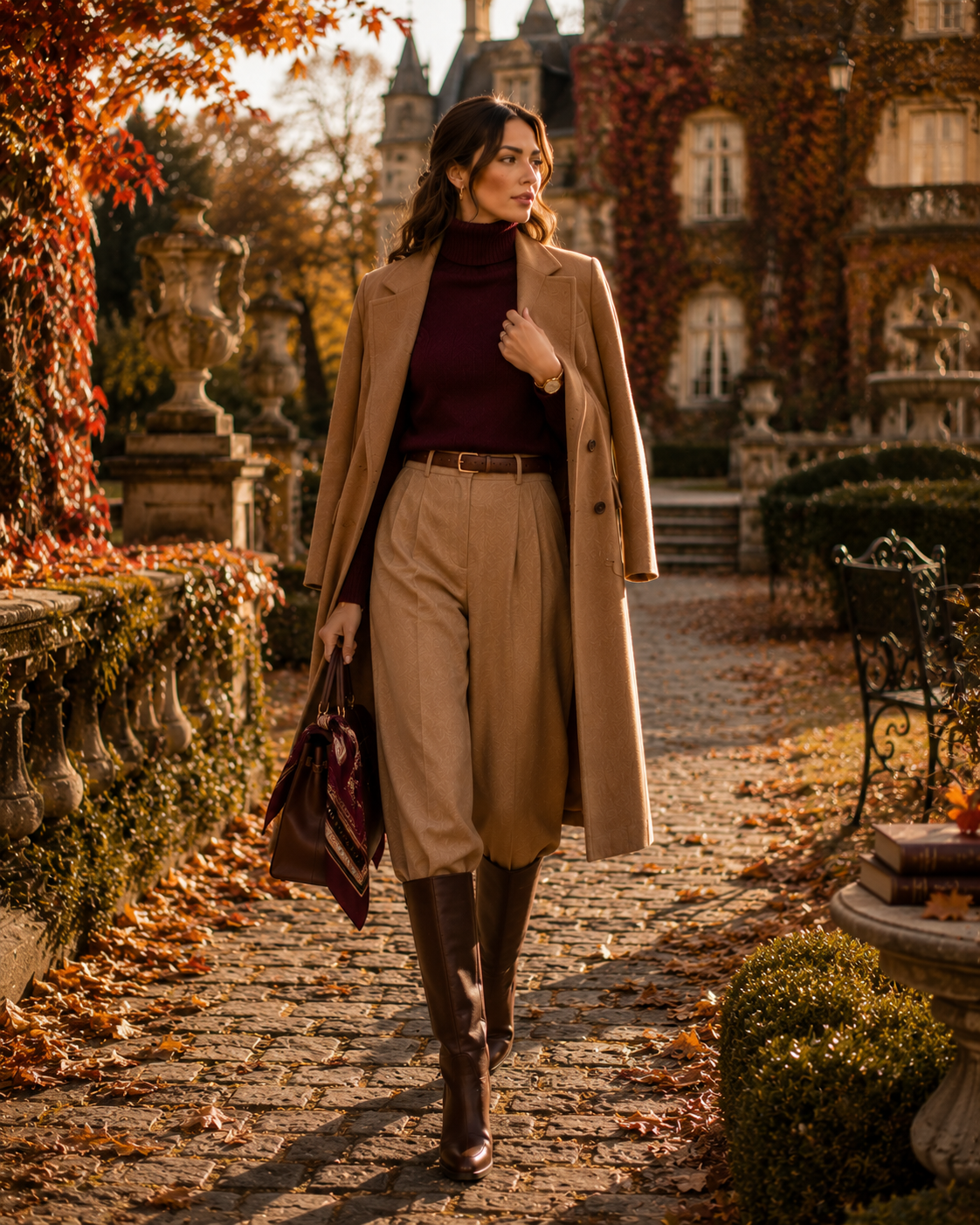
Burgundy is the old money color palette’s most emotionally resonant shade. It carries the warmth and richness of aged wine, antique velvet, and autumn leaves — all images deeply associated with old money dressing at its most luxurious. In autumn and winter burgundy belongs in every old money wardrobe, adding warmth and depth that the lighter neutrals cannot provide.
How to wear burgundy in 2026: A burgundy cashmere turtleneck with camel wide-leg trousers and brown leather boots is the most classic old money burgundy combination. For occasions requiring more formality a burgundy velvet midi skirt with a cream blouse and a camel coat creates a beautiful layered autumn look within the old money color palette.
Key burgundy pieces to own: Burgundy cashmere knit, burgundy velvet midi skirt, burgundy accessories and scarves.
Burgundy pairs best with: Cream, camel, forest green, chocolate brown, navy.
6. Chocolate Brown — The 2026 Old Money Breakout Color
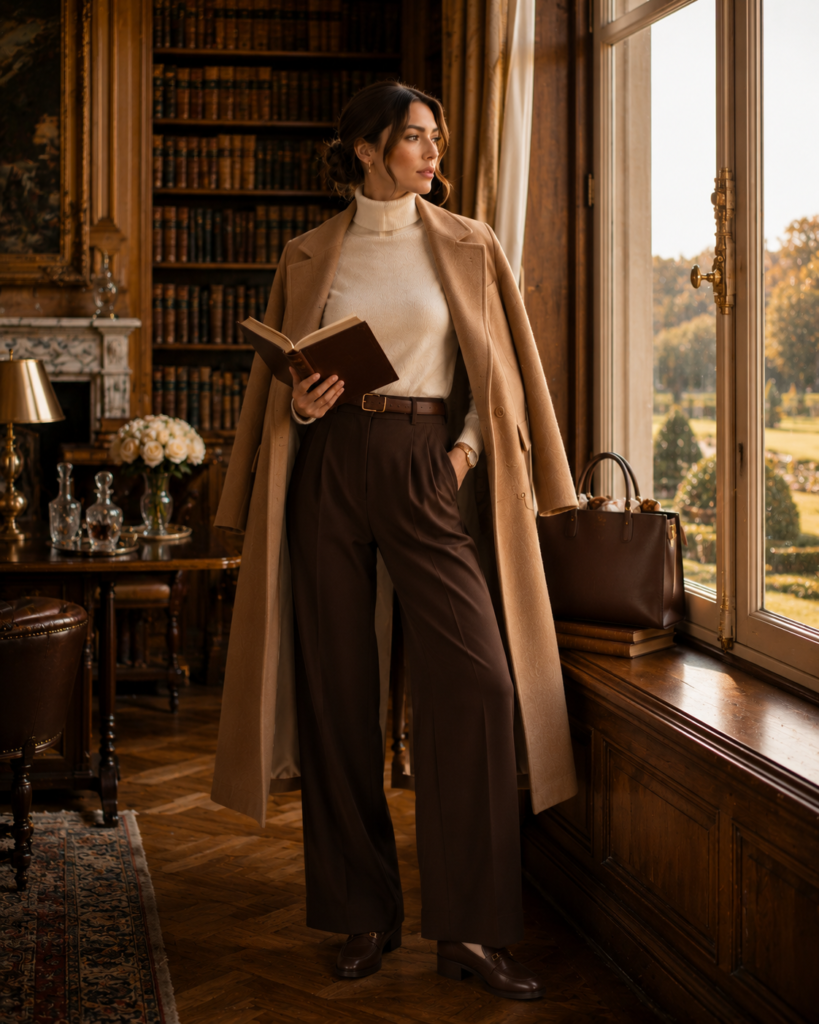
Chocolate brown has become the most talked-about color addition to the old money color palette in 2026. Richer than camel, warmer than charcoal grey, more sophisticated than standard black — chocolate brown brings depth and modernity to old money dressing that no other neutral quite replicates. The chocolate brown and cream color combination has become one of the most-saved old money outfit pairings on Pinterest this year.
How to wear chocolate brown in 2026: Chocolate brown wide-leg trousers with a cream cashmere turtleneck is the standout old money color combination of 2026. The richness of deep brown against the lightness of cream creates a beautifully warm and visually balanced look. Chocolate brown also excels in leather accessories — a chocolate leather tote, brown leather loafers, or a brown leather belt all add quiet quality signals to any old money outfit.
Key chocolate brown pieces to own: Chocolate brown wide-leg trousers, chocolate brown leather accessories, chocolate brown cashmere knit.
Chocolate brown pairs best with: Cream, ivory, camel, forest green, warm white.
7. Warm White — Brighter Than Cream, Softer Than Pure White
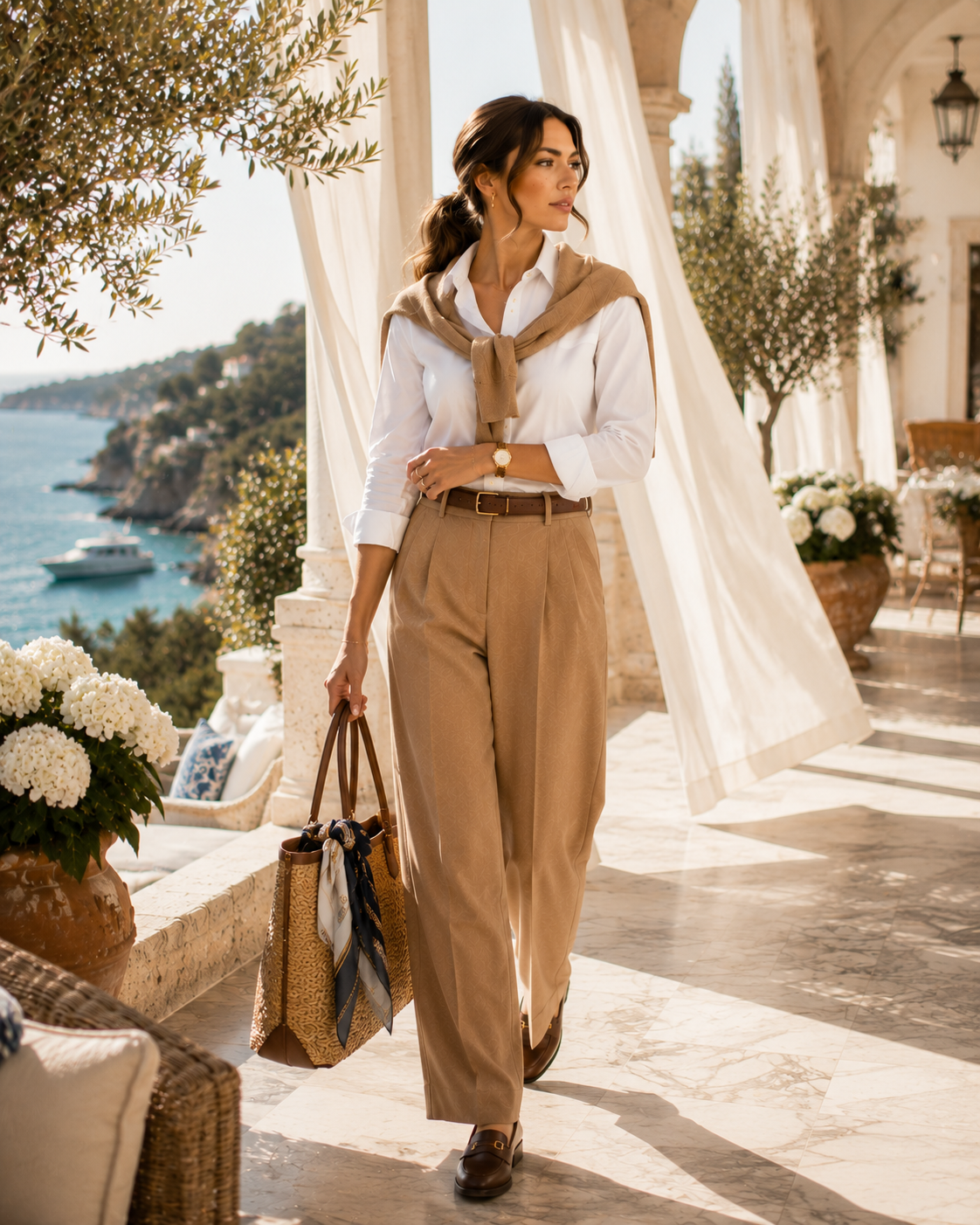
Warm white occupies the specific tonal space between cream and pure bright white in the old money color palette. It is the color of quality poplin shirts, summer linen trousers, and the clean freshness of coastal old money dressing. Where cream carries warmth and age, warm white carries cleanliness and clarity — making it the dominant old money white for warm weather dressing and shirt-based outfits.
How to wear warm white in 2026: A warm white Oxford shirt tucked into camel or navy tailored trousers is one of the most reliable and most photographed old money color combinations. In summer warm white linen wide-leg trousers with a warm white linen blouse creates the all-white coastal old money look that performs exceptionally on Pinterest throughout the warmer months.
Key warm white pieces to own: Oxford cloth shirt, linen wide-leg trousers, linen blouse, summer dresses.
Warm white pairs best with: Every color in the old money palette. Particularly striking with navy and camel.
8. Soft Grey — The Modern Old Money Neutral
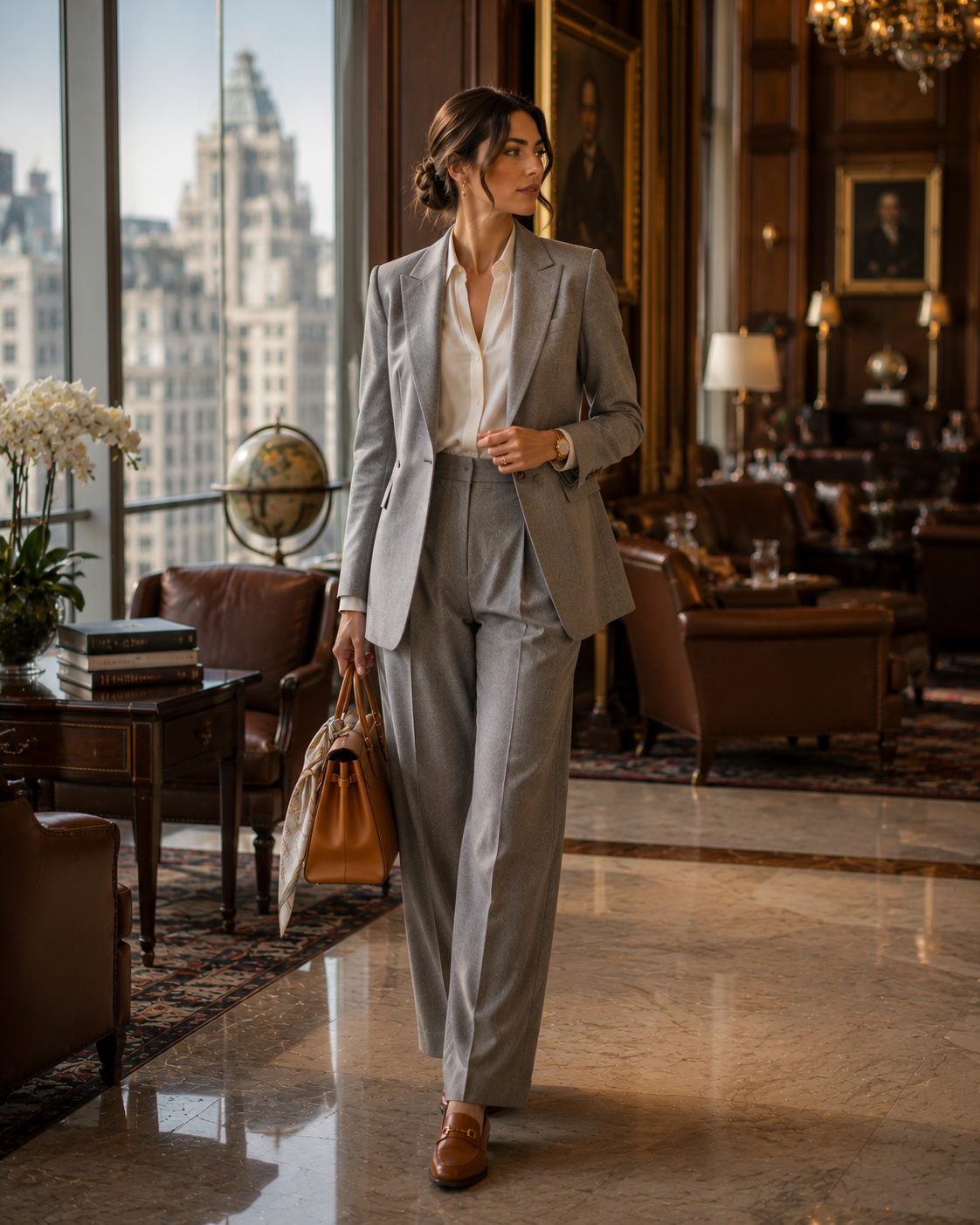
Soft grey is the old money color palette’s most contemporary addition — less warm than cream and camel, cleaner and more urban in feeling. Grey introduces a slight modern edge into old money dressing without disrupting the palette’s overall warmth. In 2026 soft grey appears most frequently in tailored suiting, fine-knit sweaters, and outerwear within the old money wardrobe.
How to wear soft grey in 2026: A soft grey tailored suit — blazer and wide-leg trousers — with a cream silk blouse and tan leather loafers creates one of the most powerful old money work outfits available. The grey suit reads as authoritative and modern while the cream blouse and tan leather keep the look firmly within the old money color world.
Key soft grey pieces to own: Grey tailored suit or separates, grey fine-knit sweater, grey outerwear.
Soft grey pairs best with: Cream, camel, white, navy.
9. Dusty Rose and Blush — The Feminine Accent
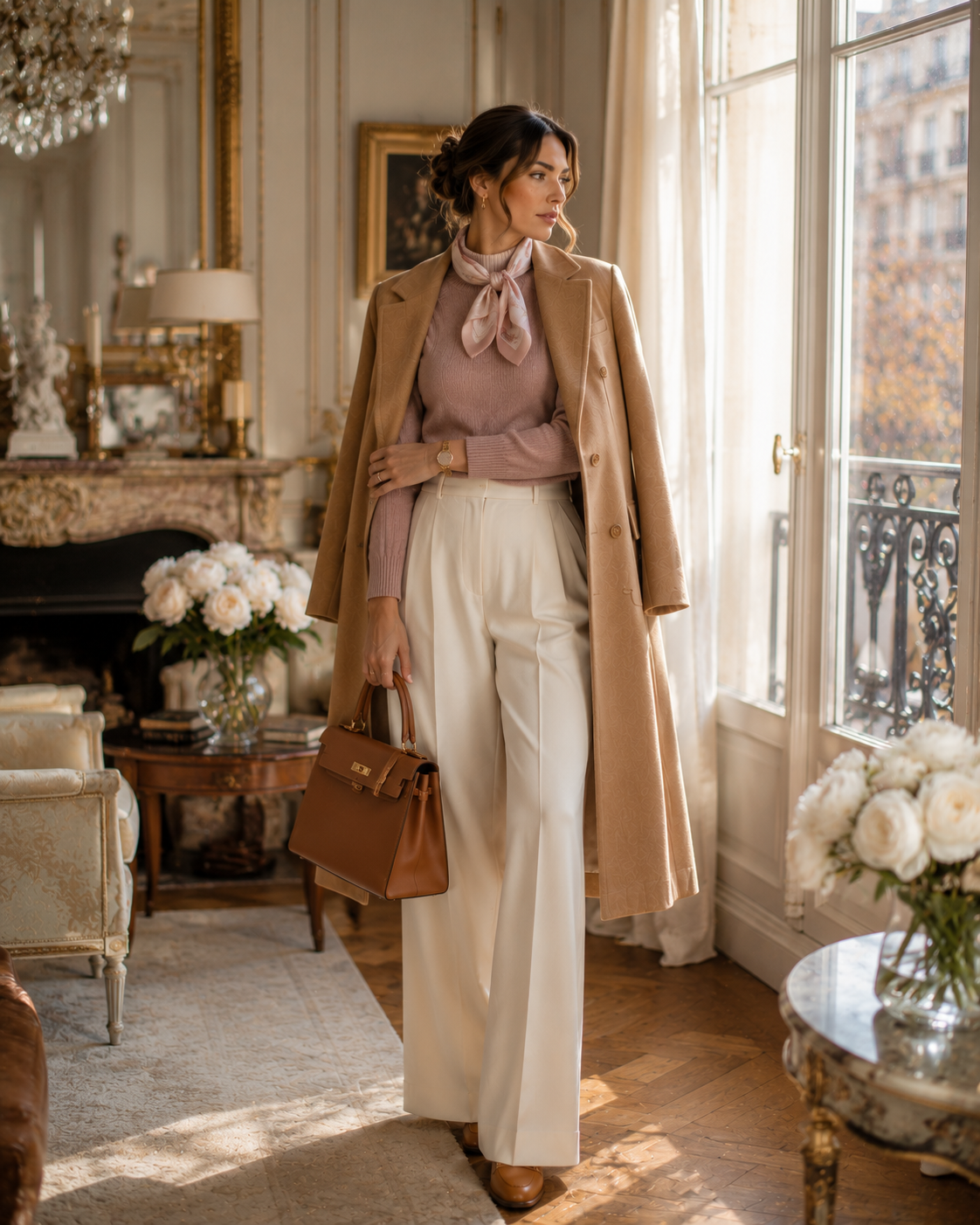
Dusty rose and blush are the old money color palette’s feminine accent colors — used sparingly to introduce softness and femininity without disrupting the palette’s overall restraint. These are not hot pink or bright pastel pink — they are specifically muted, dusty, slightly grey-toned pink shades that read as sophisticated rather than playful.
How to wear dusty rose in 2026: A dusty rose fine-knit sweater with cream wide-leg trousers and tan leather loafers introduces feminine warmth into an otherwise neutral old money outfit. Dusty rose also works beautifully in silk blouses and in accessories — a blush silk scarf against a camel coat is a particularly beautiful old money accent.
Key dusty rose pieces to own: Dusty rose knit sweater, blush silk blouse, dusty rose accessories.
Dusty rose pairs best with: Cream, camel, white, soft grey.
10. Pale Blue — The Quiet Heritage Accent
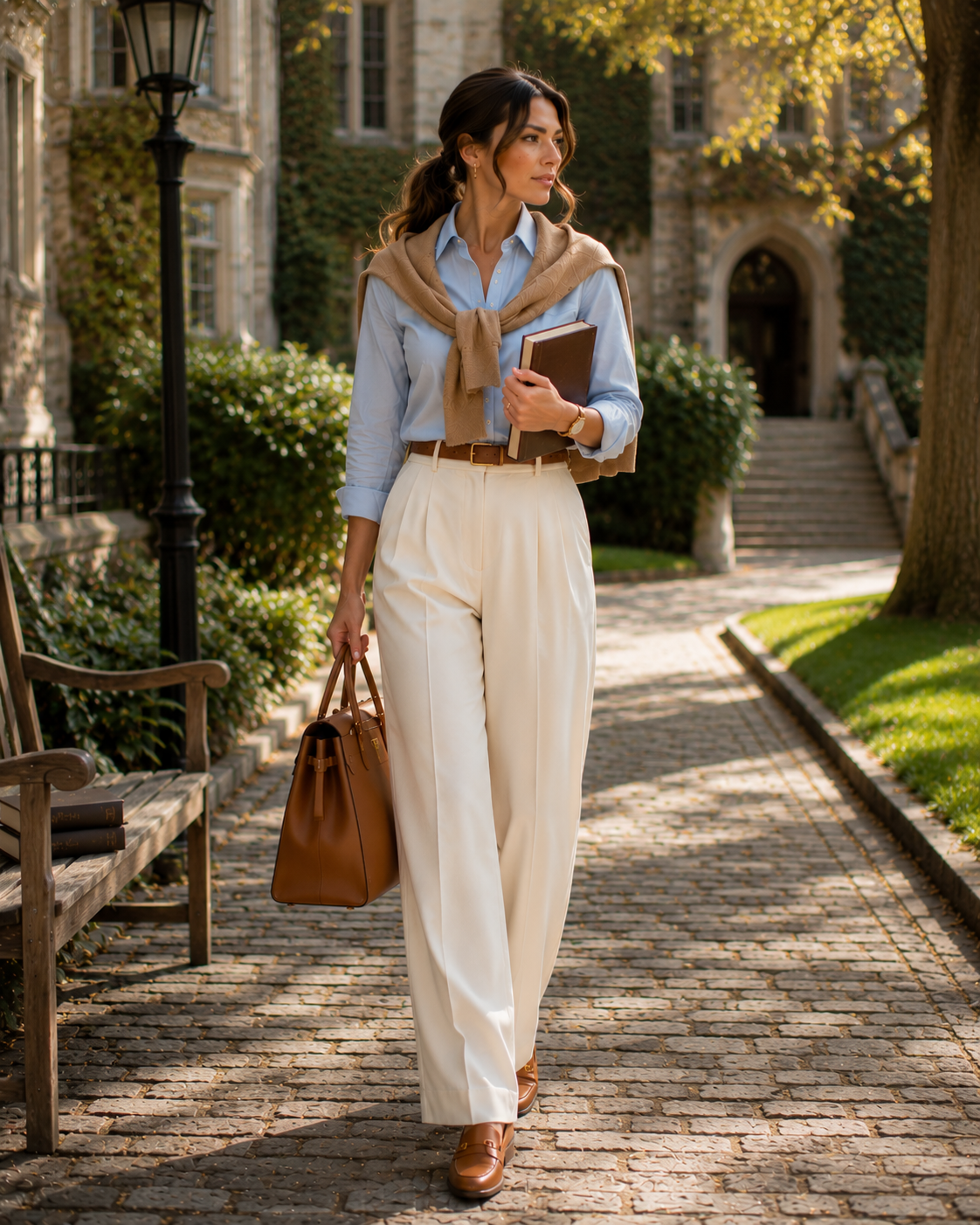
Pale blue in the old money color palette references the Oxford cloth shirts, chambray fabrics, and coastal nautical heritage that have been part of old money dressing since the mid-twentieth century. It is used most frequently in shirt fabrics and as a subtle accent color rather than as a dominant color statement.
How to wear pale blue in 2026: A pale blue Oxford shirt tucked into navy or cream tailored trousers with tan loafers is an Ivy League old money classic that photographs beautifully and works across all seasons depending on fabric weight. Pale blue also appears in summer linen pieces and as a chambray option within the old money summer wardrobe.
Key pale blue pieces to own: Pale blue Oxford shirt, chambray blouse, pale blue fine-knit sweater.
Pale blue pairs best with: Navy, cream, camel, tan leather.
Old Money Color Combinations That Always Work
These are the old money color palette pairings that consistently generate the highest Pinterest save rates and the most aesthetically satisfying results:
- Cream and Camel (The Gold Standard) — tonal, warm, immediately expensive-looking. Both neutrals in the same warm family, different textures for depth. This is the single most Pinterest-viral old money color combination.
- Chocolate Brown and Cream (The 2026 Breakout) — the combination generating the most new interest in 2026. Rich and warm with beautiful tonal contrast.
- Navy and Cream (The Ivy League Classic) — clean, authoritative, heritage-authentic. The color story of Ivy League institutions translated into everyday dressing.
- Forest Green and Camel (The Countryside Formula) — the English estate aesthetic in two colors. Deeply authentic to the heritage of old money dressing.
- Burgundy and Cream (The Autumn Romance) — the richest and most emotionally resonant old money color pairing. Peak performance in autumn and winter.
- All Cream Monochrome (The Power Statement) — head-to-toe cream in different textures. The most immediately recognized old money aesthetic visual and consistently the most saved outfit format on Pinterest.
- Grey and Camel (The Modern Classic) — soft grey suiting with camel outerwear. Urban old money at its most contemporary and most wearable.
Seasonal Old Money Color Guide
The old money color palette shifts with the seasons while always maintaining its core neutral foundation:
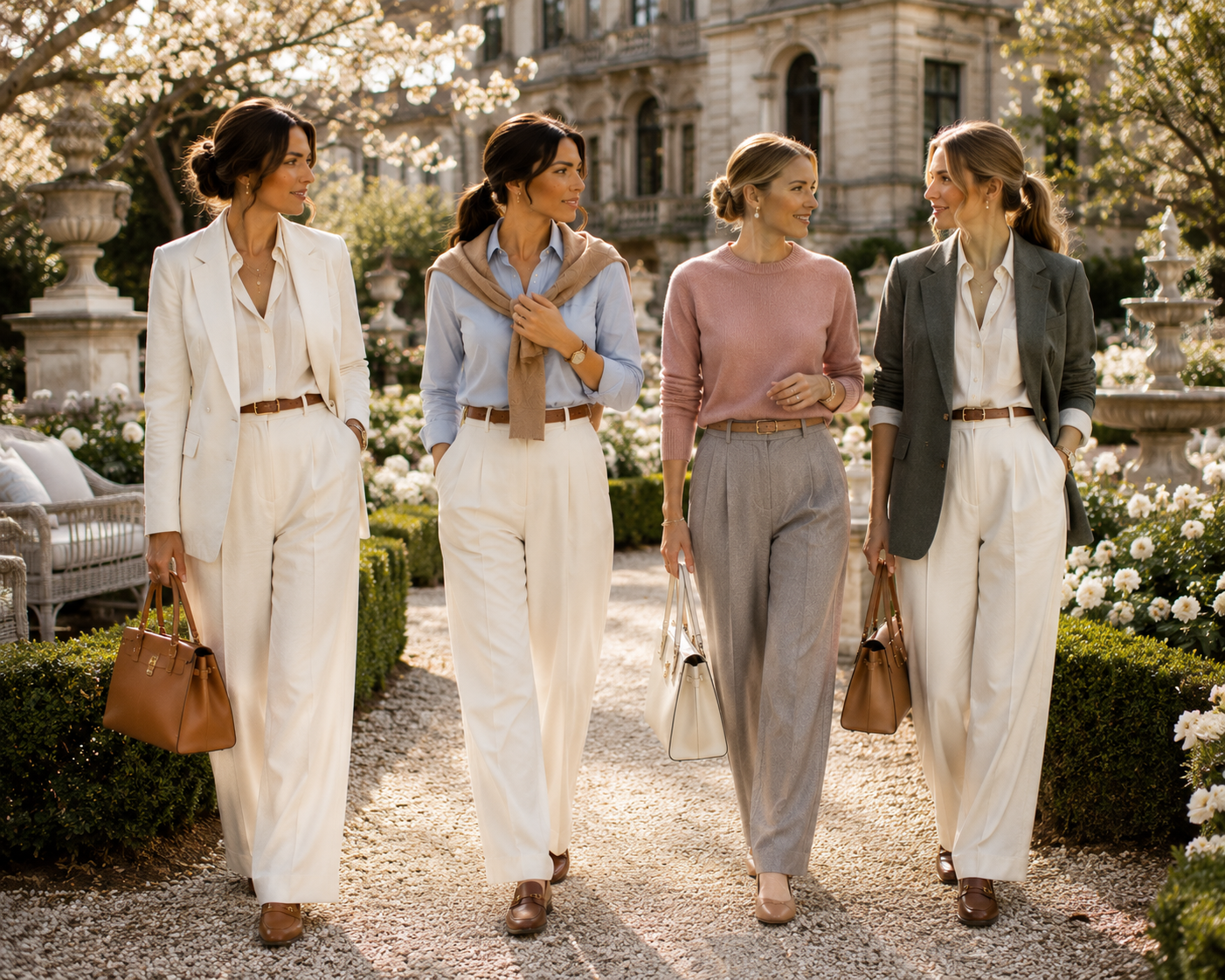
Spring Old Money Colors: Warm white, cream, pale blue, dusty rose, soft grey. The palette lightens for spring — linen fabrics in cream and warm white, pale blue shirts, and dusty rose as a warming accent. Forest green returns in lighter-weight fabrics as spring progresses.
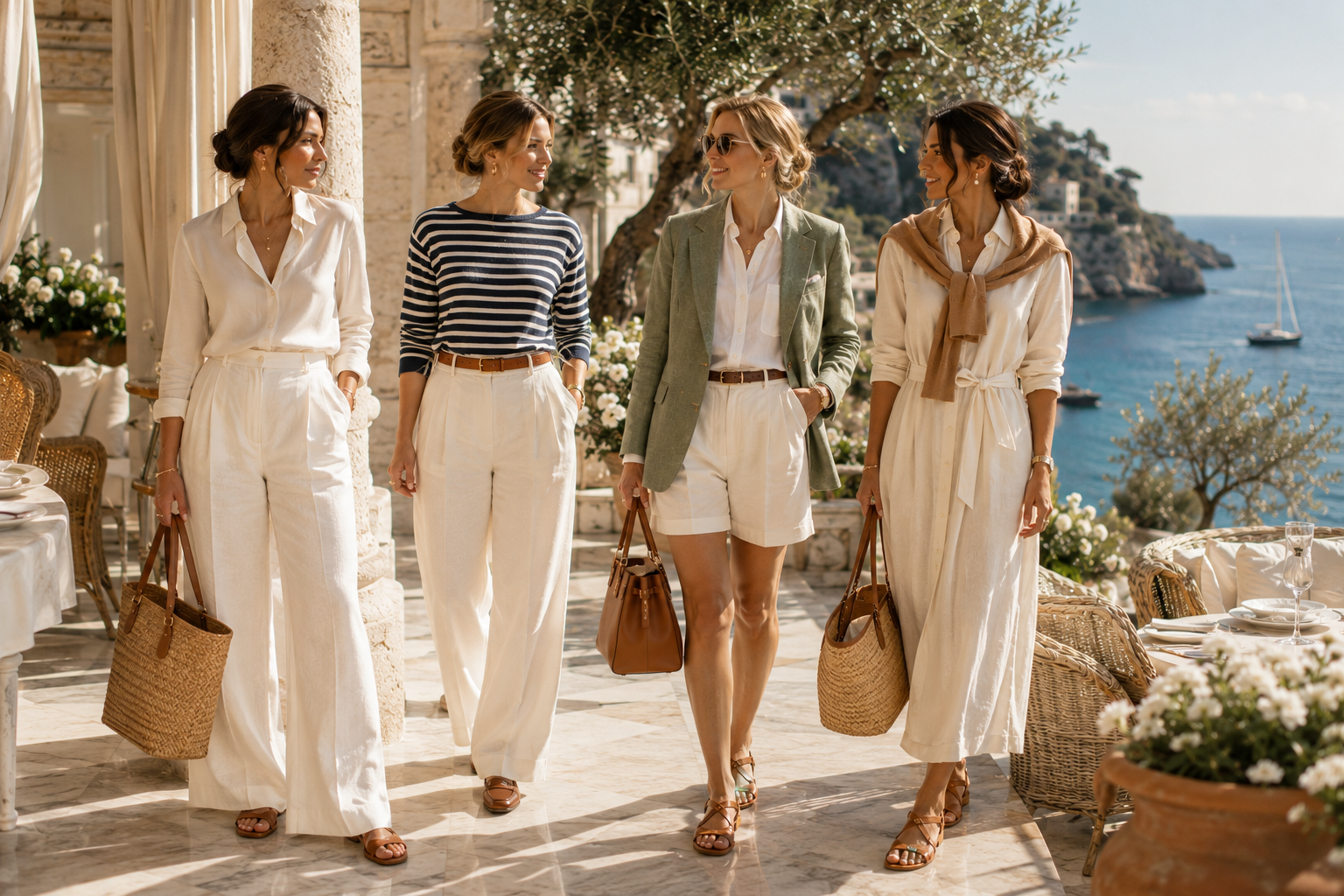
Summer Old Money Colors: Warm white, cream, navy, tan, sage green. Summer old money dressing is at its most relaxed — white linen wide-leg trousers, cream silk blouses, navy and cream Breton stripes, tan leather sandals. The focus is on natural fabric lightness within the same color story.
Autumn Old Money Colors: Camel, chocolate brown, burgundy, forest green, cream. Autumn is the season where the old money color palette reaches its richest and most visually complete expression. The warm neutrals and rich accent colors align perfectly with the natural world outside making every old money autumn outfit feel like it belongs to its environment.
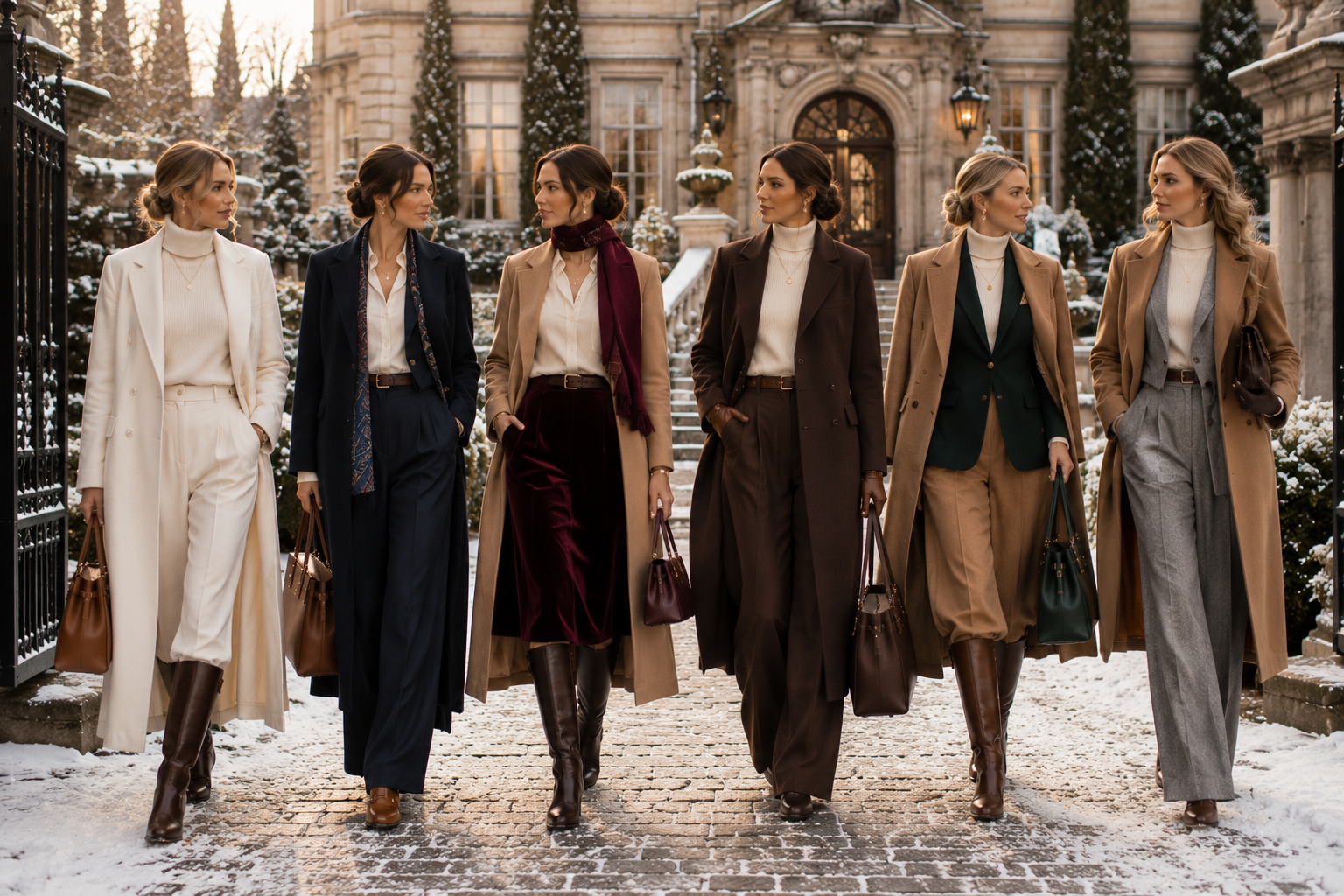
Winter Old Money Colors: Cream, navy, burgundy, chocolate brown, forest green, soft grey. Winter adds depth and richness to the palette — velvet in burgundy, heavy wool in camel and grey, cashmere in cream and chocolate brown. The color story becomes more layered as more pieces appear in each outfit.
How to Build a Wardrobe Around the Old Money Color Palette
Building a wardrobe around the old money color palette is most effective when approached in layers:
Foundation layer — the anchor neutrals: Start with cream, camel, and navy. Every piece you buy in these three colors will work with every other piece you own or will buy in the future. A cream blazer, a camel coat, a pair of navy trousers — these are the pieces that make everything else work.
Depth layer — the rich accent colors: Once your neutral foundation is in place add pieces in forest green, burgundy, and chocolate brown. These colors add depth and personality to the palette while remaining completely harmonious with every neutral foundation piece.
Accent layer — the subtle pops: Finally add dusty rose, pale blue, and soft grey for variety and femininity. These accent colors add interest without disrupting the overall palette harmony.
When you shop for any new piece, ask yourself one question before buying: does this color belong to the old money color palette? If the answer is yes, it will work with everything you own. If the answer is no, return it to the rack regardless of how much you love the garment itself. Color coherence is the foundation of every great old money wardrobe. See our complete old money outfit guide and our investment pieces guide for how to apply these colors to specific garments.
Colors That Kill the Old Money Aesthetic
Knowing which colors to avoid is as important as knowing which to embrace:
- Neon and fluorescent colors — antithetical to every principle of old money dressing. These colors communicate the opposite of restraint.
- Bright red — too attention-seeking and too saturated. Burgundy is the old money alternative that communicates richness without aggression.
- Hot pink or magenta — these belong to coquette and Y2K aesthetics. Dusty rose is the old money alternative.
- Royal blue or bright cobalt — too saturated and too modern. Navy is always the old money choice when blue is needed.
- Orange in any form — rust can occasionally work as a very minor accent but orange broadly has no place in old money dressing.
- Bright purple — deep plum exists at the edge of the old money palette but bright purple belongs to other aesthetics.
- Stark cool white — the bright, slightly blue-tinted white of fast fashion basics reads differently from the warm whites that are authentically old money. If a white garment has a cool blue undertone it will sit awkwardly against cream and camel in the same outfit.
Old Money Color Palette vs Quiet Luxury Palette
The old money color palette and the quiet luxury palette overlap significantly but differ in two important ways. First, old money allows richer accent colors — forest green, burgundy, and navy are more prominent and more actively used in old money dressing than in quiet luxury, which tends toward even more muted and restrained tonal dressing. Second, old money allows the heritage patterns that combine its colors — plaid in camel and burgundy, houndstooth in cream and navy — while quiet luxury avoids pattern almost entirely.
If the old money color palette feels too structured or too heritage-specific for your personal style, the quiet luxury palette offers an even more minimal interpretation of the same neutral foundation. See our quiet luxury guide for the full comparison, and our budget old money guide for accessible shopping within this color palette.
Frequently Asked Questions
Where to find these?
You can check outfit prices on the official Zara website or Zara app, where every item clearly shows its current price along with any discounts or sale offers. Zara keeps both online and in-store prices aligned, so the website is the most reliable place to see updated pricing before purchasing.
What colors are in the old money color palette?
The 10 core colors in the old money color palette are cream and ivory, camel and warm tan, navy blue, forest green, burgundy and deep wine, chocolate brown, warm white, soft grey, dusty rose and blush, and pale blue. Of these, cream, camel, and navy are the three most foundational. See all of them in outfit context in our complete old money outfit ideas guide.
What is the most old money color?
Camel is arguably the single most old money color — the camel coat in particular is the most recognized old money aesthetic garment and the color most immediately associated with the aesthetic. Cream is equally foundational as the universal neutral that pairs with every other old money color. Together cream and camel form the backbone of the entire old money color palette.
Is black an old money color?
Black exists in old money dressing but is not a central old money color. It appears in accessories, shoes, and occasional pieces but is never the dominant color in a truly old money outfit. Old money aesthetic prioritizes warm neutrals — cream, camel, chocolate brown — over cool stark black. When black appears in old money dressing it is always as a supporting accent rather than a focal point.
How do I wear the old money color palette on a budget?
The old money color palette is available at every price point — cream and navy pieces exist at Zara, H&M, and Mango at excellent quality. Focus your budget on the pieces most visible in any outfit: outerwear in camel, footwear in tan leather, and one quality cream blazer. These three purchases create the most old money visual impact for the least cost. See our full budget guide for the complete strategy.
What is the difference between old money colors and quiet luxury colors?
Old money colors include richer accent shades like forest green, burgundy, and navy and allow heritage patterns that combine palette colors. Quiet luxury restricts more strictly to stone, greige, cream, and chocolate brown with minimal accent color. Old money is warmer and more varied. Quiet luxury is more minimal and more monochromatic. Both avoid neon, bright, and saturated colors entirely. See our quiet luxury guide for the full comparison.
What old money colors work best in 2026 specifically?
Chocolate brown and cream is the breakout old money color combination of 2026 — generating the most new Pinterest saves and the most fashion editorial coverage. Forest green alongside camel is the second most-discussed old money pairing for 2026. The classic cream and camel tonal combination remains the highest-performing old money palette on Pinterest for the third consecutive year. For 2026 specifically according to Vogue at vogue.com the warm neutral palette that includes chocolate brown is the strongest investment direction for building an old money wardrobe.