

Chelsea boots are the most reliable shoes in a winter wardrobe — and the ones most people wear without thinking about why they work. They slip on, they go with almost everything, and they look considered without any effort. But a Chelsea boots outfit winter women live in still has rules, and getting them wrong is what makes an outfit look heavy, or makes a good pair of boots die in February. The rules are about proportion: how much ankle shows, how long the trousers are, and which materials survive wet weather.
The quick answer: show the boot, keep the leg line clean
A Chelsea boot works when you can see it and the leg line above it is clean. That means: trousers that end just above the boot or just at its top, a small gap of ankle or tight between hem and boot, and nothing bunching over the top of the boot.
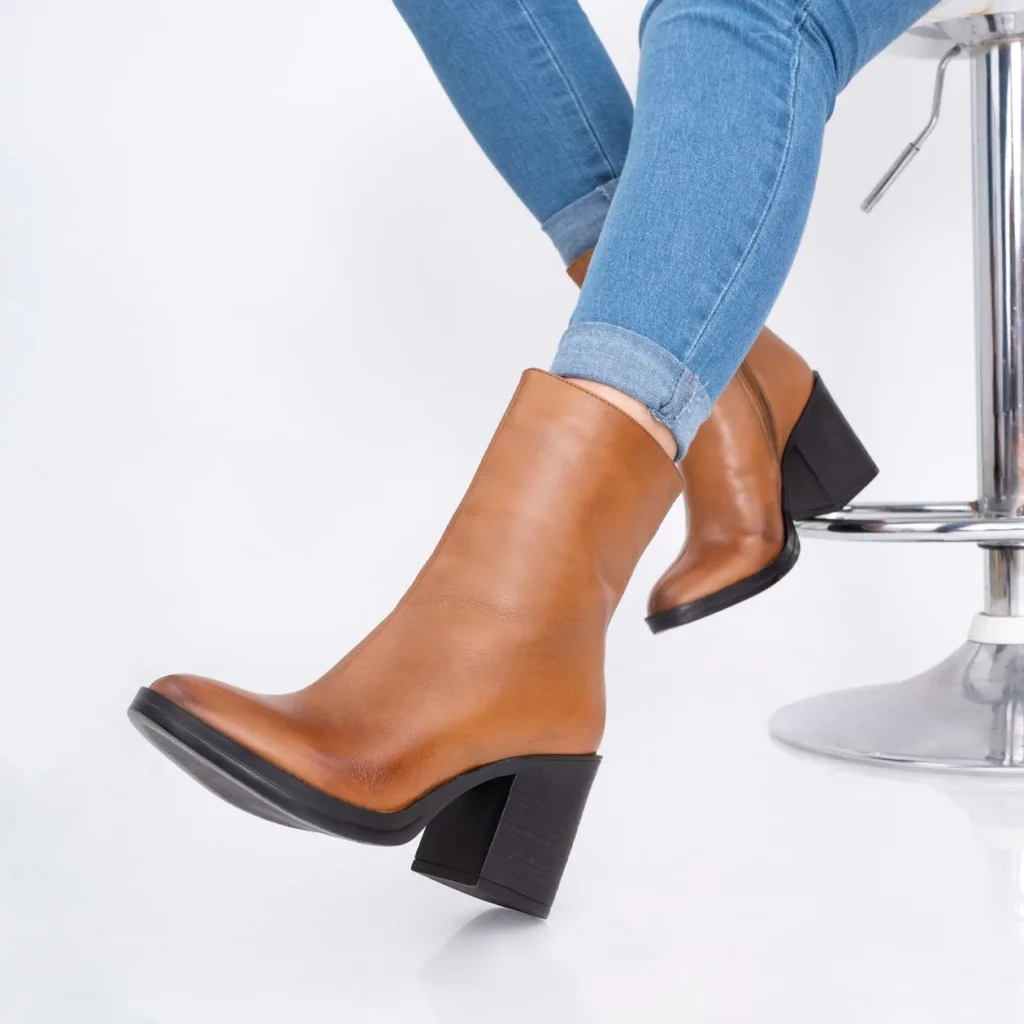
What defines a Chelsea boot
Chelsea boots are close-fitting, ankle-length boots with elastic side panels, a low heel and a snug fit around the ankle. They often have a loop or tab of fabric on the back of the boot, which lets you pull them on. That is the whole definition, and every part of it matters for styling.
The elastic side panels are the signature: two stretch panels at the ankle that let the boot slip on without laces, zips or buckles, and then spring back to hold it snug.
The ankle height is the styling constraint: the boot ends at the ankle, so the gap between your hem and the top of the boot is part of the outfit. A small gap of skin, tight or sock keeps the line from looking heavy.
The low heel is the practical part: most Chelsea boots have a low block or stacked heel, which is why they are comfortable for walking and standing all day.
For the wider ankle-boot picture, see the guide to ankle boots in winter.
Colours and materials: leather vs suede
Black leather is the first pair to buy. It goes with everything — dark jeans, grey trousers, black tights, navy coats — and it is the easiest to keep clean in wet weather. Black leather Chelsea boots with dark jeans and a chunky knit is the winter uniform, and it works for work, weekends and evenings with only the top half changed.
Brown leather is the second pair, and the warmer-looking one. Brown Chelsea boots with blue jeans, with olive trousers, or with a camel coat are the casual, earthy version of the black-boot outfit. Brown also shows scuffs more than black, so it needs a little more care — a quick brush and a wipe after wet days keeps it looking good.
Suede is the beautiful, impractical one. Suede Chelsea boots — in brown, tan or black — look softer and more expensive than leather, and they are the best choice for dry, cold days and indoor-heavy days. But suede and wet weather do not mix: water spots suede, road salt stains it, and once it is stained it is hard to fix. The rule is simple: leather Chelsea boots for wet days, suede Chelsea boots for dry days. Never the other way round.

Chelsea boots with jeans: the everyday formula
Jeans are the natural partner for Chelsea boots, but the jean shape and length decide whether the outfit works.
Straight-leg or cropped jeans are the easiest place to start, as they show off the boots best. A straight-leg jean that ends just above the boot, or a cropped jean that ends an inch or two above it, gives you the ankle gap that makes the outfit work. Pair with a T-shirt, or a fine knit and a shirt layered underneath, and a coat on top.
Wide-leg jeans are the hardest shape with Chelsea boots: a full-length wide leg covers the boot entirely, so choose cropped wide-leg jeans that end above the ankle if you want the boot to show. For the full jeans guide, see wide-leg jeans in winter.
The trouser-length rule for jeans: the hem should end at the top of the boot or just above it. A small cuff on straight-leg jeans is the easiest fix if your jeans are slightly too long — one neat turn-up that sits above the boot top.

Chelsea boots with trousers: work and smart-casual
Chelsea boots handle smarter dressing better than most ankle boots. The sleek profile sits naturally alongside tailored trousers, dark denim or a structured jacket, and a leather Chelsea boot is one of the few boots that works in a smart-casual office.
Tailored trousers: a straight-leg or tapered tailored trouser that ends just above the boot, with a blouse and a blazer, is a work outfit. Black leather Chelsea boots with charcoal or navy tailored trousers and a cream blouse is the formula. The trousers should not be so long that they cover the boot, and not so short that they show bare ankle at work — the hem should sit at the boot top.
Wide-leg trousers: the same problem as wide-leg jeans — the boot disappears unless the trousers are cropped, so with wide-leg trousers the boot is a comfort choice, not a styling choice.
Work outfit formula: black leather Chelsea boots, dark tailored trousers, a white or cream blouse, a structured blazer, and a wool coat. Or brown leather Chelsea boots with navy trousers, a white shirt and a wool vest under a long overcoat for cold office days.
Chelsea boots with skirts and dresses
Chelsea boots and dresses bring refinement to the fluidity of a dress — the structured boot adds balance to flowing dress styles for a grounded look. Midi dresses are a natural fit, especially in cooler months when longer hemlines pair easily with boots.
Midi dresses: a midi dress with Chelsea boots and tights is the winter dress formula. The dress hem ends at mid-calf, the boots start at the ankle, and the tights fill the gap — warm, covered, and the boot is visible. A sweater dress with tights and Chelsea boots in classic neutral hues like grey or black is the simplest version, and it works for work and for evenings.
Midi skirts: a pleated or A-line midi skirt with Chelsea boots is the most polished combination in this section. The skirt’s movement against the boot’s structure is the contrast that makes the outfit interesting. Add a fine-knit jumper tucked in, or a blouse and a cardigan, and the outfit is finished.
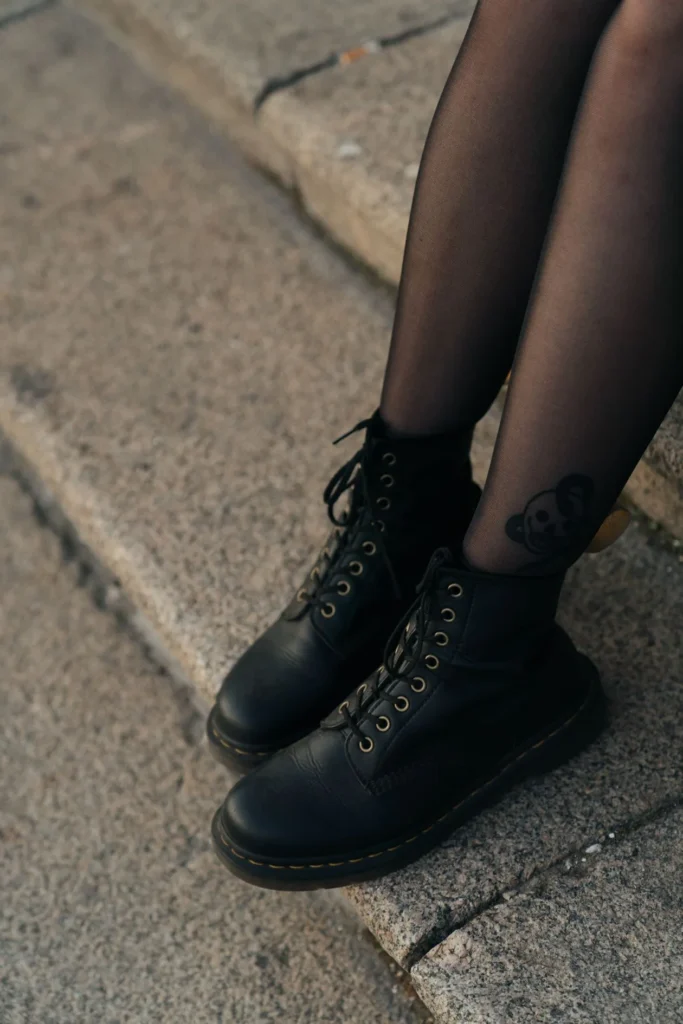
Chelsea boots in wet weather: rain, snow and salt
Chelsea boots are practical winter boots, but they are not waterproof boots, and the material decides how much weather they can take.
Leather Chelsea boots in rain: smooth leather handles rain reasonably well. Water beads on it, and a wipe with a dry cloth when you get indoors is usually enough. For heavier rain, a leather protector spray applied before the season helps, and it should be reapplied after a few wet outings.
Suede Chelsea boots in rain: do not wear them in rain if you can avoid it. Suede absorbs water, and road salt leaves pale stains that are hard to remove. If suede boots do get wet, let them dry naturally, then brush the nap back up with a suede brush once they are fully dry. A protector spray before the first wear is not optional for suede — it is the difference between boots that survive winter and boots that do not. For the full suede method, see how to care for suede boots in winter.
Salt stains: road salt is the real enemy of winter boots, leather and suede alike. Wipe it off as soon as you get indoors — a slightly damp cloth for leather, a dry brush for suede once dry. Salt left on leather draws out moisture and leaves pale marks; on suede it leaves a crust that is hard to shift.
Proportion: the ankle gap, the trouser length, the coat length
Proportion is the section that makes Chelsea boots work or not, and it comes down to three measurements.
The ankle gap: the gap between your hem and the top of the boot should be small — a few centimetres of ankle, tight or sock. That gap keeps the line from looking heavy.
The trouser length: trousers should end at the top of the boot or just above it. Straight-leg and tapered trousers are the easiest; wide-leg trousers need to be cropped to work; skinny jeans tuck in or end just above. If your trousers are too long, a single neat cuff is better than letting them pool over the boot.
Chelsea boots outfit winter women: formulas for jeans, trousers, skirts and dresses
For more cold-weather ideas beyond these four formulas, see these winter outfit ideas for women.
Everyday: black leather Chelsea boots, dark straight-leg jeans, a chunky cream knit, a long camel coat, a crossbody bag. The uniform — warm, simple, finished.
Work: black leather Chelsea boots, charcoal tailored trousers, a cream blouse, a navy blazer — see how to style a blazer for the tailored layer — and a wool coat. Smart, comfortable, and the boots survive the commute.
Weekend: brown leather Chelsea boots, blue straight-leg jeans, an oversized grey jumper, a puffer jacket, a knit beanie. Casual, warm, and the brown boots do the warming.
Evening: black heeled Chelsea boots, a black midi skirt, opaque tights, a satin blouse, a fitted blazer. The boots take the satin out of party territory and make it wearable.
For the alternative boot length — when a Chelsea boot is not enough coverage — see knee-high boots in winter. Knee-high boots are the right choice when you want more warmth and more coverage, and they pair with the same dresses and skirts.
Common mistakes and how to fix them
- Trousers covering the boots entirely. If no one can see the boots, the Chelsea is wasted. Fix: a hem that ends at the top of the boot, or a single neat cuff.
- Trousers bunching over the boot top. Fabric pooling on the boot looks untidy. Fix: a tapered or straight leg, or a cuff; avoid a wide leg that is not cropped.
- Suede Chelsea boots in rain and salt. Water spots suede and salt stains it. Fix: leather for wet days, suede for dry days — and a protector spray before the first wear.
- Bare ankle in January. A cropped trouser with no sock and a Chelsea boot is cold and looks accidental. Fix: a ribbed wool sock, or opaque tights, or a longer trouser.
Buying guide: what to look for
Fit is everything with a Chelsea boot, because there are no laces to adjust. The boot should be snug around the ankle — the elastic panels should hold it without pinching — and there should be a little room at the toe for a thick sock. Walk in them before you buy: the heel should not slip, and the boot should not gap at the ankle when you step.
Barbour’s guide to styling Chelsea boots covers the same ground from the heritage side — dresses, jeans, wax jackets and smart-casual outfits — and it is worth reading if you want the traditional version of these rules.
Frequently asked questions
Can you wear Chelsea boots in winter?
Yes — Chelsea boots are at their best in autumn and winter. Leather Chelsea boots handle cold and light rain well, and lug-sole versions handle wet pavements. Suede Chelsea boots are for dry winter days only. Wear thick socks and pair them with jeans, trousers, skirts or dresses with opaque tights.
What do you wear Chelsea boots with?
Straight-leg or cropped jeans, tailored trousers, midi skirts, midi dresses and sweater dresses. The rule is a hem that ends at the top of the boot or just above it, with a small gap of ankle, tight or sock. They also work with leggings and an oversized jumper on cold days.
Are Chelsea boots good in rain?
Leather Chelsea boots cope with light rain — water beads on smooth leather and can be wiped off — especially if they have been treated with a protector spray. Suede Chelsea boots should not be worn in rain, because water spots suede and road salt stains it. Neither is a waterproof boot; for heavy rain, wear a waterproof boot instead.
How should Chelsea boots fit?
Snug around the ankle, with the elastic panels holding the boot without pinching, and a little room at the toe for a thick sock. The heel should not slip when you walk, and the boot should not gap at the ankle when you step. Try them on with the socks you will wear in winter, not thin summer socks.
Conclusion
Chelsea boots are simple on purpose: elastic panels, ankle height, low heel, no laces. That simplicity is why they work with almost everything — but only if the proportions are right. Keep the hem at the top of the boot, leave a small gap of ankle or tight, choose leather for wet days and suede for dry ones, and let the boots be the quiet, reliable base of the outfit.