

Suede boots are one of winter’s best-looking choices — soft, warm-looking, and richer in texture than smooth leather. They are also one of the most demanding. Suede absorbs water, salt and dirt fast, and a single walk through slush can leave stains that take real work to remove. Learning how to care for suede boots in winter is mostly about prevention: protect them before the season, brush them after every wear, and know what to do when they get wet.
This guide covers the whole routine — what suede is and why it stains, how to protect boots before winter, the daily habit that matters most, how to clean salt and water marks, and how to store boots at the end of the season.
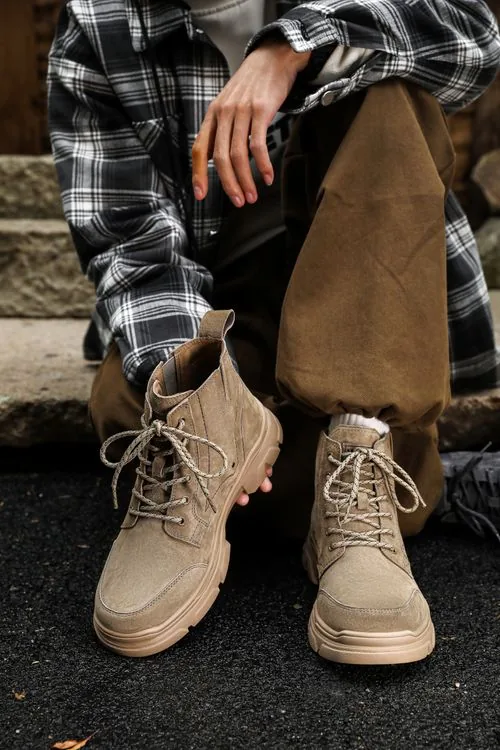
The quick answer: protect first, brush often, dry slowly
Before the first wear, spray new suede boots with a protector spray made for suede, following the maker’s instructions, and let them dry fully. After every wear, brush them with a suede brush to lift dust and salt. If they get wet, stuff them with paper and let them dry slowly at room temperature, away from radiators and direct heat. Never wash suede with soap and water, and never tumble dry or force-dry boots.
That is the routine in one paragraph. The detail below is what makes it work.
What suede is — and why winter is hard on it
Suede is a type of leather with a fuzzy, napped finish, made from the underside of animal skin. It is softer and more pliable than smooth leather, but its open, fibrous surface absorbs liquids quickly. That is the whole problem in one sentence: the texture that makes suede beautiful is the same texture that drinks in water, road salt, mud and oil.
Winter adds three specific threats. Water soaks into the nap and leaves dark marks as it dries unevenly. Road salt dries into white rings that stiffen the fibres. Grit and slush grind into the nap, flattening it and dulling the colour. None of this means suede boots cannot be worn in winter — it means they need protection before they meet the weather, and cleaning after they do.
Check the care label or the maker’s instructions first: some suede is treated at the factory, some is not. The GINETEX care symbols on the box or label give the manufacturer’s guidance, and it overrules general advice.
Step 1: protect suede boots before winter
Protection is the highest-value step in suede care, and it takes ten minutes. A protector spray made for suede creates a light barrier on the nap that makes water bead instead of soaking in, and gives you time to brush salt and dirt off before they set.
- Start with clean, dry boots. Brush them first with a suede brush to lift dust, then check for any marks. Spraying over dirt seals it in.
- Spray evenly in a ventilated space. Hold the can about 15–20 cm away and spray in light, even passes over the whole boot, including the seams and the sole edge. Do not soak one spot.
- Let them dry fully. Leave the boots for at least a few hours, overnight is better, in a ventilated room before wearing them. The spray needs to dry to work.
- Repeat through the season. One application does not last all winter. Reapply every few weeks, and always after a deep clean or a very wet day.
Choose a spray made specifically for suede or nubuck, not a general leather waterproofing product, and follow the instructions on the can. Test it first on a small, hidden area.
The daily habit: brush after every wear
If protection is the most valuable step, brushing is the most frequent one. A suede brush lifts dust, salt and surface dirt out of the nap before they settle in. It takes less than a minute per boot, and it is the habit that separates boots that last from boots that look tired by January.
Brush in one direction with short, light strokes, following the nap. For stubborn marks, brush against the nap first to lift the fibres, then with the nap to smooth them back. Keep a suede brush by the door, so the habit is easy. A suede eraser — a small rubber block — deals with light scuffs: rub gently, then brush the dust away.
Do not brush wet suede. Let wet boots dry first, then brush. Brushing a wet nap pushes dirt deeper into the fibres and can flatten the texture permanently.
Can you wear suede boots in snow and rain?
Yes, in light snow and dry cold — and no, not in heavy slush, deep snow or steady rain. Protected suede handles a dusting of snow and a dry, cold day well. It does not handle standing water, slush puddles or a wet commute, where water soaks through the nap and salt dries into rings.
The practical rule is to check the weather before choosing suede. Dry cold, light snow, a clear evening: suede is fine. Wet snow, slush, rain, or a day on gritted pavements: choose a waterproof leather or rubber boot instead. If your suede boots get soaked, dry them properly (below) and brush them once dry, and most of the damage is avoidable.
For days when the forecast is uncertain, wear a weatherproof pair for the journey and change into the suede boots indoors. The boots only meet the weather they can handle. For the outfits to wear them with, see winter outfit ideas for women.
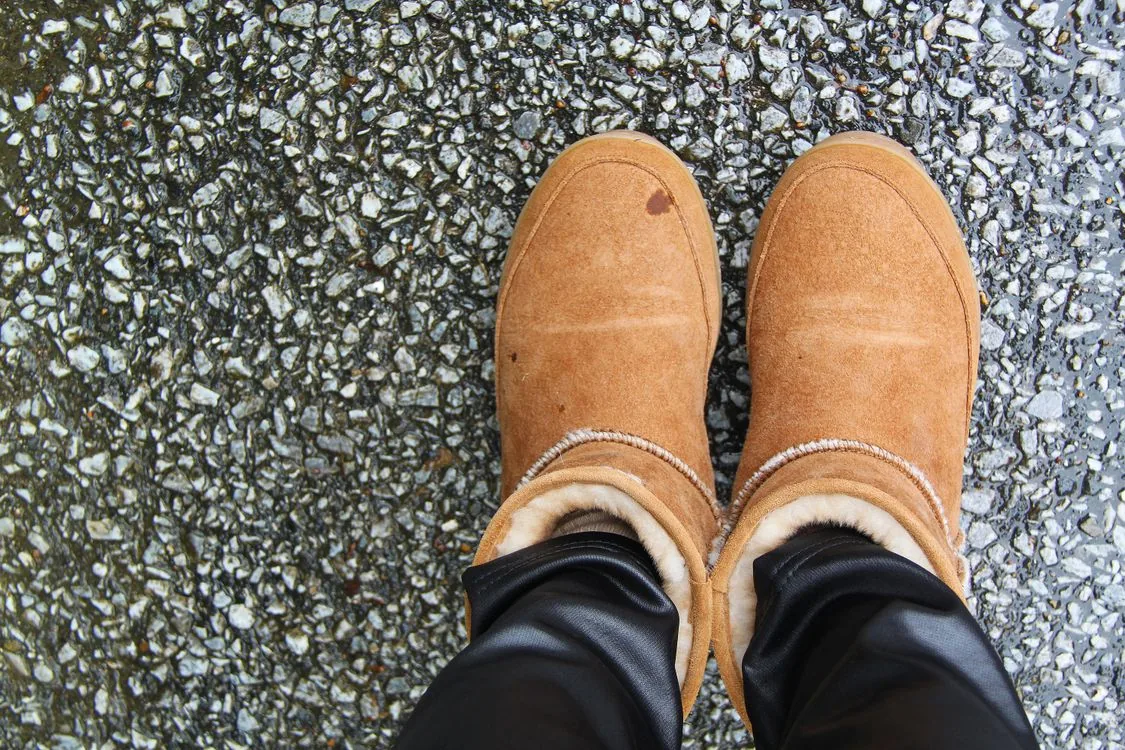
How to clean suede boots: salt stains, water marks and dirt
Clean suede boots when they are dry, and work gently — suede does not forgive scrubbing. Start with the brush, and only move to a targeted method if brushing alone does not work.
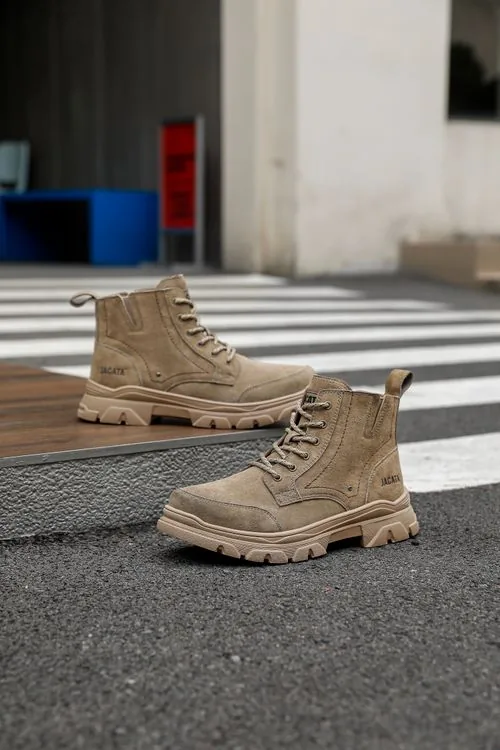
Salt stains. Road salt leaves white rings and stiff patches. Let the boots dry fully first. Then dampen a clean cloth with a little white vinegar diluted in water, dab the stained area lightly — do not soak it — and let it dry. Once dry, brush the nap back into shape. For light salt marks, brushing alone after drying is often enough; vinegar is for marks that brushing will not shift. Never use coloured vinegar or coloured cloths, which can transfer dye.
Water marks. A water stain is usually a patch where the nap dried unevenly. The fix is to even out the moisture: lightly dampen the whole boot with a clean, damp cloth so the colour dries uniformly, then let it dry slowly at room temperature and brush once dry. It feels wrong to add water to a water stain, but an even dampening dries evenly, while a single wet patch dries with a ring.
Mud and dirt. Let mud dry completely, then brush it off with the suede brush. Wet mud rubbed into suede becomes a stain; dry mud brushes away. For a stubborn dry mark, use a suede eraser, then brush.
Grease or oil. Blot — do not rub — with a clean cloth, then sprinkle cornstarch or talcum powder on the mark and leave it for a few hours to absorb the oil. Brush the powder off and repeat if needed. Oil marks are the hardest suede stains to remove fully, and a professional clean is worth considering for a bad one.
What not to use: soap and water, household cleaners, bleach, or a washing machine. Excess moisture damages suede, and soap leaves residue that attracts more dirt. If a stain resists every gentle method, take the boots to a professional cleaner who works with suede, rather than trying a stronger product at home.
How to dry wet suede boots
Drying is where good boots are saved or ruined. Wet suede dried too fast — on a radiator, next to a fire, with a hairdryer — goes stiff and loses its nap. Dried slowly, it usually recovers well.
- Shake off loose water and wipe gently. Blot with a clean, dry cloth. Do not rub.
- Stuff the boots with paper. Acid-free tissue paper, plain newspaper or clean cloth holds the shape and absorbs moisture from inside. Replace the stuffing once it gets damp.
- Dry at room temperature, away from heat. A ventilated room is ideal. Never put suede boots on a radiator, near a fire, or in front of a heater.
- Wait until fully dry — then brush. This can take a full day. Once dry, brush the nap with a suede brush to lift it back, and reapply protector spray before the next wear.
If the boots have a leather sole, let that dry slowly too: fast drying can crack leather soles and loosen the glue. If the boots smell damp after drying, stuff them with dry paper and baking soda overnight, then brush and air them out.
How to care for suede boots in winter: the mistakes to avoid
- Skipping the protector spray. Unprotected suede absorbs the first puddle it meets. Spray before the season, and reapply through it.
- Wearing suede in slush or heavy rain. No spray makes suede waterproof. Choose the right boot for the weather.
- Washing with soap and water. Soap and excess water damage suede and leave residue. Brush, dab and use a suede eraser instead.
- Drying on a radiator. Fast heat stiffens and cracks suede. Dry slowly at room temperature.
- Brushing wet suede. Wait until the boots are dry, then brush.
- Rubbing stains. Rubbing pushes dirt deeper into the nap and felts the surface. Dab and blot instead.
- Storing dirty boots. Salt and dirt left over the summer stiffen and stain. Clean and brush before storing.
- Using the wrong spray. General leather waterproofing products are not made for suede. Use a spray made for suede or nubuck, and test it first.
Storing suede boots at the end of winter
End-of-season storage decides whether suede boots are wearable next winter. Clean them first: brush thoroughly, deal with any salt marks, and let them dry fully. Never store suede boots dirty — salt and dirt left for months stiffen the fibres and can stain permanently.
Stuff each boot with tissue paper or a boot shaper so the shaft stands upright and the toe keeps its shape, and store them in a breathable cotton bag or their original box. Keep them in a cool, dry, dark place, away from direct sunlight, which fades suede. Do not store suede in sealed plastic bags: suede needs air, and trapped moisture causes mustiness and mildew.
Check the boots once over the summer. A quick brush and a look for mould or stiffness takes a minute, and catching a problem early is the difference between a brush and a repair. Before the next winter, reapply protector spray — the old coat will have worn off — and the boots are ready again. A good pair of boots is a capsule staple, and care is what protects it — see how to build a capsule wardrobe on a budget. For the rest of the winter wardrobe, the same end-of-season routine applies to knits and coats; read how to care for silk, cashmere, velvet and wool for the fabric side, and the investment pieces worth buying guide if you are choosing your next pair.
Frequently asked questions
Can you wear suede boots in winter?
Yes, in dry cold and light snow, especially if they have been treated with a protector spray. Avoid heavy slush, deep snow and steady rain — suede absorbs water and salt, and no spray makes it fully waterproof.
How do you waterproof suede boots?
Spray them with a protector made for suede or nubuck before the first wear, in light even passes, and let them dry fully. Reapply every few weeks through winter, and always after a deep clean or a very wet day. Test the spray on a hidden area first.
How do you get salt stains out of suede boots?
Let the boots dry fully, then brush off loose salt. Dab the mark lightly with a cloth dampened with diluted white vinegar, let it dry, and brush the nap back. For light marks, brushing alone is often enough.
Can you wash suede boots with soap and water?
No. Soap and excess water damage suede and leave residue in the nap. Clean suede by brushing, dabbing with a damp cloth, or using a suede eraser. For stubborn stains, use a professional cleaner who works with suede.
How do you dry wet suede boots?
Stuff them with paper, and dry them slowly at room temperature, away from radiators and direct heat. Once fully dry, brush the nap to lift it back, and reapply protector spray before wearing them again.
Conclusion
Caring for suede boots in winter is a short routine: protect them before the season, brush them after every wear, choose dry days for suede and wet days for waterproof boots, dry them slowly when they get wet, and store them clean and stuffed. None of it needs expensive products — a protector spray, a suede brush and a suede eraser cover almost everything. Do those few things, and suede boots will look good for more than one winter. Suede boots are a classic quiet-luxury piece, and the quiet luxury capsule wardrobe guide shows how to build around them.