
Pick up two jumpers that look identical on the rail. One feels dense and soft, holds its shape when you hold it up, and springs back when you stretch a cuff. The other feels light and slippery, looks thin when you hold it to the light, and already has loose threads at the seams. Learning how to spot quality knitwear is mostly about noticing those differences before you pay — and they take less than a minute to check.
This guide covers the checks in the order that matters: fibre first, then the knit itself, then the seams and finish, then the fit. It works in a shop, where you can touch the garment, and online, where you have to read the listing instead.
How to spot quality knitwear: the quick answer — fibre, density, seams
A good winter knit is made from a good fibre, knitted densely and evenly, and finished with neat seams. Check the label for fibre composition first — wool, cashmere, cotton or a sensible blend. Then hold the knit up to the light: a dense knit blocks the light, a thin one lets it through. Then check the seams at the shoulders and cuffs, and stretch a cuff gently to see if it springs back.
If a knit passes those three checks, it is usually worth its price. If it fails two of them, put it back — however good it looks on the hanger.

What knitwear actually is
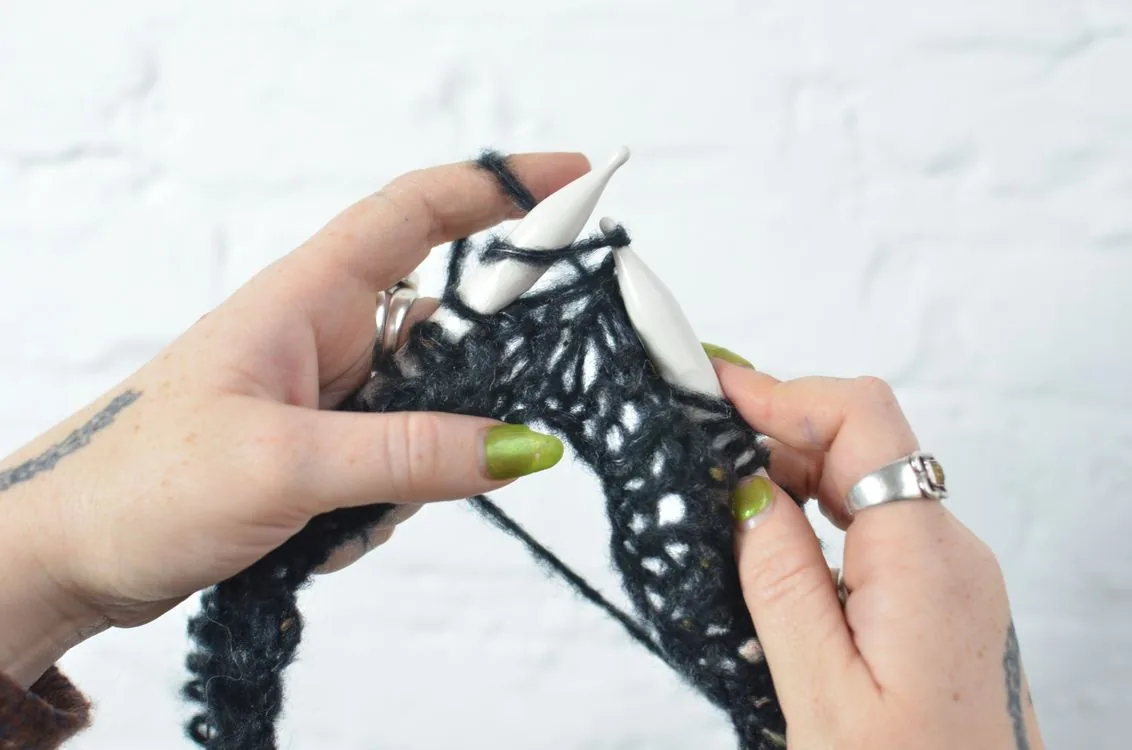
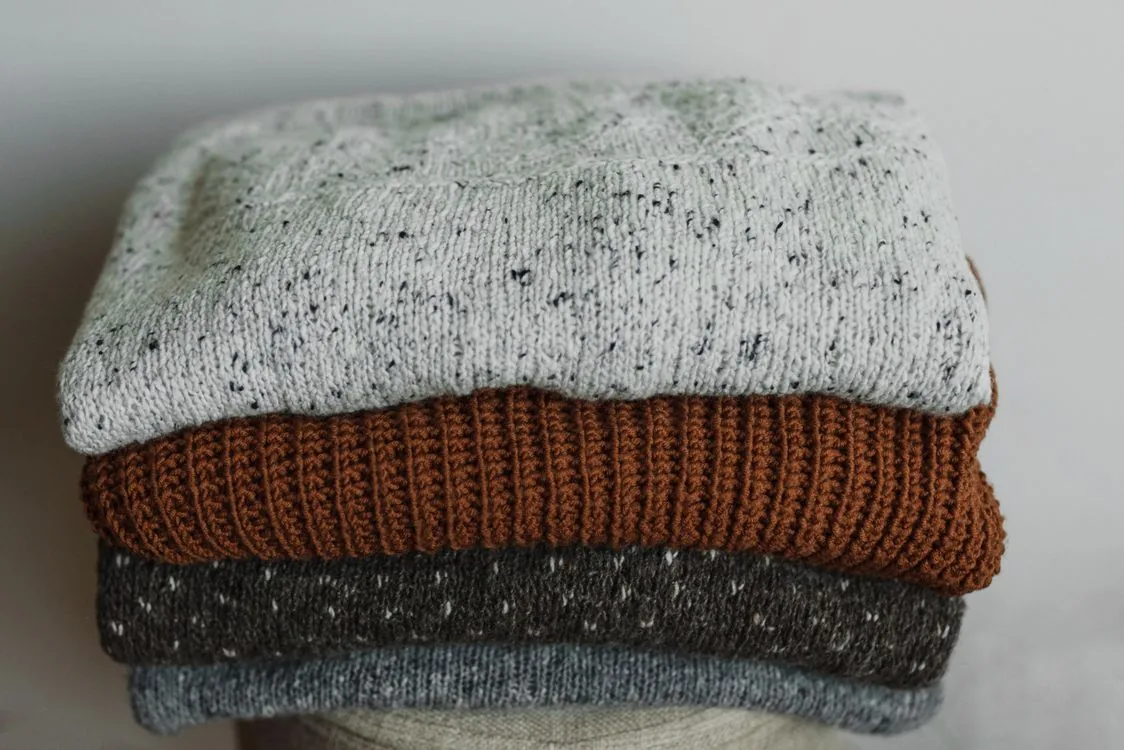
Knitting is the process of interlooping a continuous length of yarn to create textile fabric made of rows of interconnected loops. That simple fact explains almost everything about quality: a knit is only as good as its yarn and as good as the loops made from it. Differences in yarn — fibre type, yarn weight, twist — and in stitch type change the texture, thickness, warmth and durability of the finished fabric.
Fibre first: reading the label
The fibre is the single biggest quality factor, and the label tells you what it is. Read the composition, not the product name: a jumper called a “wool jumper” may be mostly acrylic, and a “cashmere-feel” jumper may contain no cashmere at all. The fibres are usually listed in order of proportion, with the largest share first.
Wool. Wool is the textile fibre obtained from sheep and other mammals, and it is the standard winter-knit fibre for good reasons: its natural crimp traps air, which is what keeps you warm, and it is elastic, so it holds its shape. Merino wool is the finest and softest common wool; lambswool is slightly coarser and very warm. A wool content of 70% or more, with the rest a fibre like nylon for durability, is a good sign.
Cashmere. Cashmere is very soft and very warm for its weight, which is why it costs more. A pure cashmere jumper is a luxury buy; a blend with wool is a good compromise. Be wary of very cheap “cashmere” — if the price seems too low for the fibre, the cashmere content is probably small or the fibre is short, which means it will pill quickly.
Acrylic and other synthetics. Acrylic is cheap, light and easy to wash, and it is the main fibre in most low-priced knitwear. It is not automatically bad — a well-made acrylic blend can be a practical everyday jumper — but it pills more easily than wool, feels less warm for its weight, and can look tired faster. A jumper that is 100% acrylic and very cheap is the most likely to disappoint.
Blends. Most good affordable knitwear is a blend: wool with a little nylon or acrylic for strength, or cotton with a little cashmere for softness. A blend is not a compromise to be suspicious of — it is often the sensible choice. What matters is that the main fibre suits the job: wool for warmth, cotton for breathability, cashmere for softness.
The touch test: softness, weight and recovery
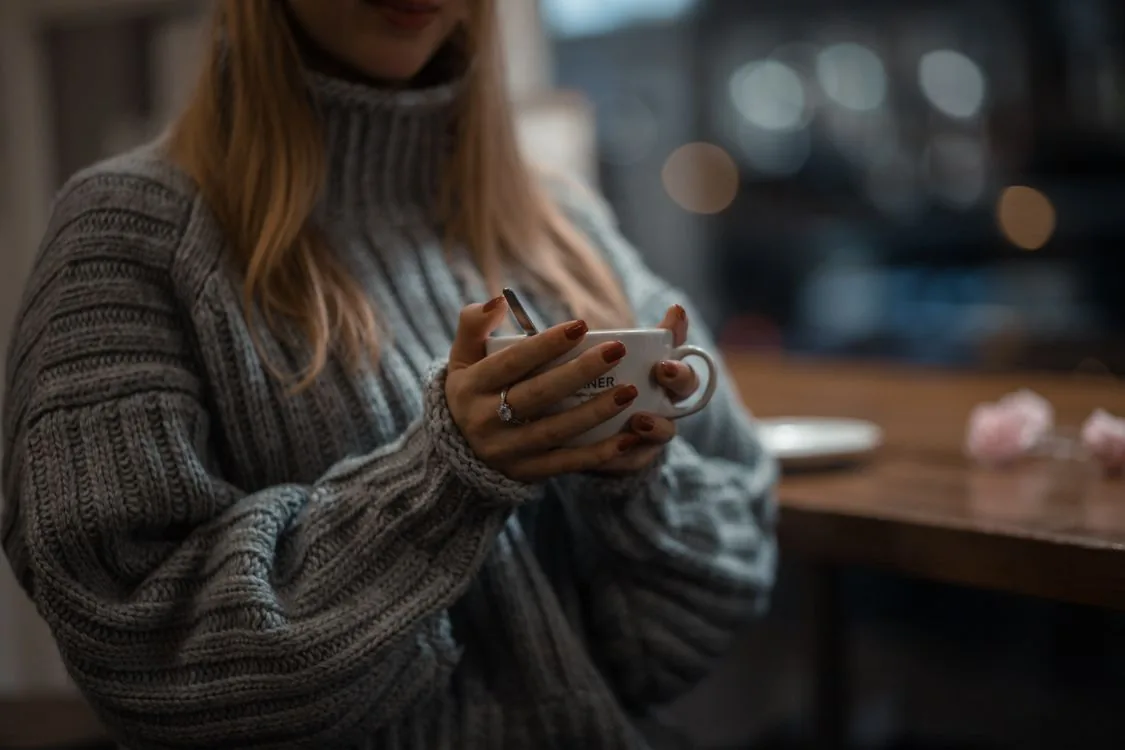
You can learn a lot in ten seconds with your hands. First, feel the inside of the cuff against the inside of your wrist, where the skin is sensitive. A good knit feels soft, not scratchy. Scratchiness usually means coarse fibres, and it will not get better with wear — if anything, it gets worse as the fibres break.
Second, feel the weight. A good winter knit has some heft to it. It does not need to be heavy — a fine cashmere jumper is light and warm — but it should feel substantial for its thickness. A jumper that feels almost weightless for its size is usually made from a loose knit or a light synthetic, and it will not keep you as warm as it looks.
Third, test the recovery. Gently stretch a cuff or a hem and let go. A good knit springs back to its shape. A poor one stays stretched, or recovers slowly. Do the same at the shoulder seams: pull the fabric gently across the chest and see whether the stitches distort. Even, tight stitches hold their shape; loose ones gap and show the skin or the layer underneath.
The light test and the gauge check
Hold the knit up to a light. A dense, well-knitted fabric blocks most of the light; a thin, loosely knitted one lets it through in a visible pattern. This is the fastest single check for knit density, and it works for jumpers, cardigans and scarves alike.
Look at the stitches themselves. They should be even in size and regular in spacing, with no dropped stitches, no thin patches and no places where the yarn looks much thinner than elsewhere. Run your eye along a row: if the row wanders or the stitches change size, the knitting is uneven, and the garment will not wear evenly either.
Seams, edges and finishing: where cheap knits give themselves away
Seams are where the difference between good and poor knitwear is most visible, because finishing is labour, and labour is what cheap manufacturing cuts first.
Check the shoulder seams first. On a good knit, they are flat, neat and lie smoothly, with no puckering and no loose threads. On a poor one, they are bulky, wavy or already fraying. Check the cuffs and the hem: a ribbed cuff should be firm and even, and the ribbing should match on both sleeves. A cuff that is already loose on the rail will only get looser.
Look at the neckline. A ribbed crew neck or a roll neck should hold its shape when you hold the jumper up; if it flops or gapes, the ribbing is too loose. Check the buttons on a cardigan: they should be sewn on firmly, with a thread shank that lets them sit flat, and there should be a spare button sewn inside or attached to the label.
Pilling: what it means and how to predict it
Pilling — the small balls of fibre that form on the surface of a knit — is the most common complaint about knitwear, and it is partly predictable before you buy. Short fibres pill more than long ones, because their ends work loose and tangle. That is why cheap cashmere, made from short fibres, pills more than good cashmere, and why loose, fluffy knits pill more than dense, smooth ones.
You can test for pilling risk in the shop: rub a small, hidden area — the inside of the hem, or under the arm — briskly with your palm for ten seconds, then look at it. If small balls are already forming, the knit will pill quickly in wear. If the surface stays smooth, it is a better bet.
Buying online: reading a listing instead of touching the knit
Online, you cannot do the touch test or the light test, so the listing has to do the work. Look for the fibre composition in the product details, and be suspicious of listings that do not give it. Look for a weight, a gauge or a GSM figure if one is given. Read the reviews — especially the three- and four-star ones — for repeated mentions of pilling, thin fabric, scratchiness or stretching. And look at buyer photos, which show the real colour and the real drape far better than studio photos.
Once you have bought a good knit, look after it: how to care for silk, cashmere, velvet and wool covers washing, drying and storing. And for outfit ideas once the knit is yours, see these winter outfit ideas for women.
The shopping checklist: ten checks before you pay
- Label: fibre composition listed, with the main fibre first.
- Softness: the inside of the cuff feels soft against your wrist.
- Weight: the knit feels substantial for its thickness.
- Recovery: a stretched cuff springs back.
- Light test: the fabric blocks most light when held up.
- Stitches: even, regular, no dropped stitches or thin patches.
- Seams: flat, neat shoulder seams with no loose threads.
- Cuffs and hem: firm, even ribbing that matches on both sides.
- Neckline: holds its shape when the jumper is held up.
- Pill test: ten seconds of rubbing a hidden area leaves the surface smooth.
If a knit passes eight or more, buy it. If it passes fewer than six, leave it — however good the colour is.
When to spend more and when to save
Not every knit needs to be expensive. A simple, everyday acrylic-blend jumper in a colour you wear often is a reasonable cheap buy, because you will replace it in a season or two anyway. But the knits you wear most — a neutral roll-neck, a classic crew-neck, a warm cardigan — are worth paying more for, because the cost per wear falls with every winter they survive.
A useful rule: spend more on the knits in neutral colours that go with everything, and save on the trend colours and patterns you may tire of. That is the same logic as investment pieces worth buying — pay for the pieces that do the most work — and it is the backbone of a quiet luxury capsule wardrobe, where a few good knits carry the whole winter. If you are working to a budget, build a capsule wardrobe on a budget first, and put the knit money where it earns the most wears.
Common mistakes and how to fix them
- Buying on colour alone. Fix: check the fibre and the seams before you fall for the colour.
- Assuming a high price means high quality. Fix: run the same ten checks on an expensive knit — price is not a quality guarantee.
- Assuming a low price means poor quality. Fix: run the checks too — a well-made blend at a low price is a genuine find.
- Ignoring the label. Fix: read the composition every time; “wool” in the name is not the same as wool in the fabric.
- Keeping a knit that pills on day one. Fix: return it if the shop allows it, or use a fabric shaver — but remember the pilling will probably continue.
- Washing a good knit like a T-shirt. Fix: follow the care label, and read the care guide linked above before the first wash.
Frequently asked questions
How can you tell if a jumper is good quality?
Check the fibre composition, the density of the knit (hold it to the light), the neatness of the seams, and whether a stretched cuff springs back. A good knit passes most of those checks.
What is the best fibre for a winter jumper?
Wool is the best all-round winter fibre for warmth and shape, with merino the softest common wool. Cashmere is softer and warmer for its weight but costs more; a wool blend is the best affordable compromise for most people.
Why does my jumper pill?
Pilling happens when short fibres work loose and tangle on the surface. Short-fibre yarns, loose knits and fluffy finishes pill most. A fabric shaver removes pills, and a dense, smooth knit will pill less in the first place.
Is acrylic knitwear bad?
Not necessarily. Acrylic is cheap, light and easy to wash, and a well-made acrylic blend can be a practical everyday jumper. It pills more easily than wool and feels less warm for its weight, so it is best for everyday knits rather than your warmest one.
How do I check knitwear quality online?
Read the fibre composition, look for weight or gauge details, read the three- and four-star reviews for repeated complaints about pilling or thin fabric, and look at buyer photos for the real colour and drape.
Should I buy a more expensive knit?
If it is a neutral colour you will wear often, usually yes — a good knit that lasts three winters costs less per wear than a cheap one that lasts one. Spend more on the core knits and save on trend pieces.
Conclusion
Spotting quality winter knitwear is a skill, not a talent: read the label, feel the cuff, hold the knit to the light, check the seams, and test whether it springs back. Those five checks take a minute, and they will save you from the jumper that pills in a week, the cardigan that loses its shape, and the roll-neck that never keeps you warm. Buy fewer knits, buy better ones, and look after them — the best winter wardrobe is a small one, made of pieces that last.