

A skirt suit is the most efficient outfit a working wardrobe can own. It is a complete look in two pieces, it reads as polished in almost any office, and — with a change of top, shoes and jewellery — it becomes an evening outfit without a second purchase. The reason many skirt suits sit unworn is not the suit itself; it is the fit, or the feeling that one outfit cannot do two jobs. Learning how to style a skirt suit from work to evening is mostly about getting the fit right, then knowing exactly what to change at 6pm.
This guide covers the suit itself first, then the work formula, the evening switch, shoes and tights, and the mistakes to avoid.
The quick answer: fit first, then change the top and shoes
Buy a skirt suit that fits at the shoulders and the waist, with a skirt that ends at or just above the knee. For work, wear it with a plain blouse or fine knit, tights, heels or loafers, and a structured bag. For evening, keep the suit and change three things: the top (to silk or lace), the shoes (to heeled boots or strappy heels) and the jewellery (add earrings or a bracelet). The suit does not change; the feeling does.
The simplest work formula is a black skirt suit, a cream blouse, black tights, black heels and a structured tote. The evening version is the same suit, a black silk camisole, the same heels, a small clutch and stud earrings.
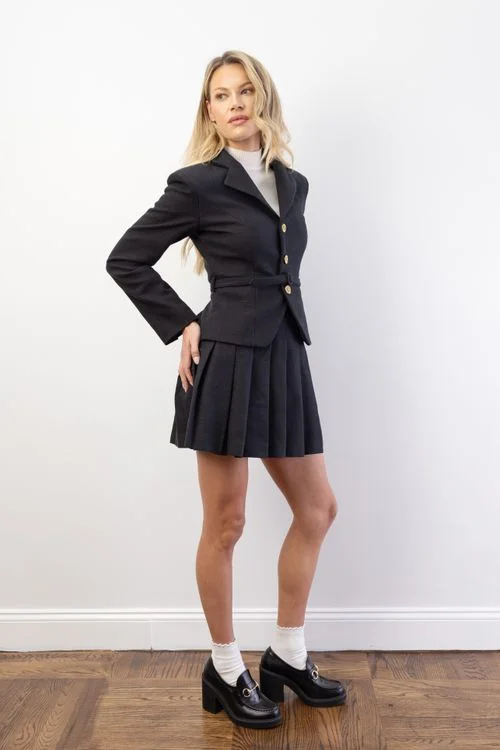
What is a skirt suit?
A suit is a set of garments made from the same cloth, and a skirt suit is the version where the bottom half is a skirt rather than trousers: a matching jacket and skirt, cut from the same fabric. The jacket is usually a single-breasted blazer with a collar and buttons; the skirt is usually a pencil skirt, an A-line skirt or a pleated skirt.
The pencil skirt is the most common shape. A pencil skirt is a slim-fitting skirt with a straight, narrow cut, usually ending at or just above the knee, and it is the most formal option. An A-line skirt flares gently from the waist and is more comfortable to walk and sit in. A pleated skirt adds movement and softens the tailored look, which suits evening wear.
The fabric decides the season. Wool and tweed are the winter fabrics — warm, structured, and the right weight for a jacket that holds its shape. A tweed skirt suit is the classic winter version, and it works for work and for smart daytime events. Linen and light crepe are summer fabrics and look wrong in winter. For a first skirt suit, wool in black, navy or charcoal is the most useful choice, because it works for work, interviews and evenings.
Fit: the four checks before you buy
Fit is everything with a skirt suit, because tailoring shows every mistake. Check four things before buying. First, the jacket shoulder seam should sit on your shoulder — not beyond it, which looks borrowed, and not short of it, which pulls. Second, the jacket should close without pulling at the button; if it pulls, the size is too small, and sizing up is better than squeezing in.
Third, the skirt should sit at your natural waist and fall straight, without riding up when you walk or pulling across the hips when you sit. Sit down in the skirt before you buy it — a pencil skirt that is comfortable standing and impossible sitting is the wrong skirt.
If the jacket fits and the skirt does not, or the other way round, buy separates in the same fabric rather than a matched set — many brands sell the jacket and skirt separately for exactly this reason. And if the length is the problem, the how to dress petite without tailoring guide covers proportion fixes that do not need a tailor.
How to style a skirt suit for work
The work formula is the suit, a plain top, tights and closed shoes. A cream or white blouse is the classic top — crisp, simple, and it lightens the dark suit. A fine-knit roll-neck in black, cream or grey is the winter alternative, and it is warmer than a blouse.
Tights should be plain and dark: black opaque tights in winter, sheer black or nude in warmer months. Avoid patterned tights with a skirt suit for work — the pattern competes with the tailoring. Shoes should be closed: heels, heeled ankle boots, or loafers. The heel height is a personal choice, but a mid-heel is the most comfortable for a full day, and it keeps the outfit looking professional without tiring your feet.
The bag should be structured — a tote or a top-handle bag in black or brown. A slouchy bag or a backpack fights the tailored lines of the suit. Jewellery should be small for work: studs, a thin chain, a plain watch. Keep the whole outfit to two or three colours: the suit, the top, and one accent at most.

How to style a skirt suit for the evening
The evening switch changes three things and nothing else: the top, the shoes and the jewellery. Swap the work blouse for a silk camisole, a lace top or a fine-knit top in a dark colour. Swap the work shoes for heeled boots or strappy heels. Add earrings — studs become drops, or add a bracelet. Take the structured tote and replace it with a small clutch. The suit stays the same; the outfit becomes an evening outfit.
The top is the biggest change. A black silk camisole under a black suit jacket is the simplest evening look, and it works for dinners, theatre and parties. A lace top under the jacket adds romance for a date night. A velvet top under a tweed jacket is the winter-evening version — two soft textures that sit well together.
Makeup can change too: a dark lip — burgundy or deep red — with the rest of the face calm, turns the same suit into an evening look without any new clothes.
Shoes and tights: the details that decide the outfit
Shoes set the tone of a skirt suit more than any other piece. Heels make it formal and polished — the work and evening choice. Heeled ankle boots make it practical for winter, and they work with tights in cold weather. Knee-high boots with a knee-length skirt suit look elegant and keep legs warm, but the boots should be slim, not slouchy. Loafers or ballet flats make the suit casual and comfortable, good for a smart day out but too relaxed for a formal office.
Tights deserve the same attention. Black opaque tights are the winter default — warm, simple, and they make the legs look like one clean line with the shoes. Sheer black tights are the smarter option for evenings and formal events. Nude tights work with a light-coloured suit, but they should match your skin tone closely, or they look like an afterthought. Bare legs with a skirt suit are a summer choice, not a winter one.
One practical note: carry a spare pair of tights. A ladder in tights ruins a tailored outfit faster than anything else.

Outfit formulas: work, evening and weekend
Work: black wool skirt suit, cream blouse, black opaque tights, black heels, structured tote, stud earrings. More work outfit ideas are in these old money work outfits.
Interview: navy skirt suit, white shirt, sheer black tights, black heels, structured bag, no visible jewellery beyond a watch.
Evening dinner: same black skirt suit, black silk camisole, sheer black tights, heeled ankle boots, small clutch, drop earrings.
Date night: tweed skirt suit, black lace top, black tights, heeled boots, small bag, dark lip.
Smart weekend: tweed or plaid skirt suit, fine-knit roll-neck, black tights, loafers or knee-high boots, cross-body bag.
Each formula keeps the suit as the base and changes only the pieces around it. The how to style a blazer guide covers the jacket half in more detail, and the quiet luxury outfits guide shows the same understated approach applied across a whole wardrobe.
Coats and layers for winter
A skirt suit in winter needs a coat, and the coat should be long enough to cover the skirt. A long wool coat in black, camel or navy is the best choice — it keeps the legs warm, it does not compete with the tailoring, and it looks right when you take it off at the door. A coat that ends above the skirt hem looks unfinished, because the skirt pokes out below it.
A faux fur coat works for evenings if it is plain and mid-length or long. A puffer jacket is practical for the commute but looks wrong over a tailored suit — if the weather is very cold, wear the puffer to the office and change into the wool coat at the door, or keep a long wool coat at work for meetings.
Under the jacket, the layer matters too. A fine-knit roll-neck is the warmest work top, and it sits flat under a tailored jacket. A thermal layer under the blouse adds warmth without showing.

Common mistakes and how to fix them
- A jacket that pulls at the button. The size is too small, and no styling fixes it. Fix: size up, or buy the jacket and skirt as separates.
- A skirt that rides up when you walk. The skirt is too tight or too short for your stride. Fix: an A-line skirt, or a pencil skirt with a back vent, which gives room to walk.
- Wearing the same top day and night. The outfit cannot do two jobs if nothing changes. Fix: change the top, the shoes and the jewellery — three small changes, one new outfit.
- Patterned tights with a tailored suit. The pattern fights the tailoring. Fix: plain black tights for work, sheer black for evenings.
- A coat shorter than the skirt. The skirt pokes out below the coat and the outfit looks unfinished. Fix: a long wool coat that covers the hem.
- Too much jewellery at work. A skirt suit is already a strong, structured outfit. Fix: small jewellery for work, and save the statement pieces for the evening version.
Shopping guidance: what to buy first
If you do not own a skirt suit yet, buy one in black or navy wool, with a pencil or A-line skirt that ends at or just above the knee. That one suit covers work, interviews, formal events and — with a change of top — evenings. Add a second suit in tweed or plaid if you wear suits often, because the pattern gives you a different character without a different shape.
Check the quality before buying: the fabric should feel smooth and hold its shape, the lining should be complete (an unlined jacket will not sit properly), and the buttons should be sewn on firmly. Try the suit on with the shoes you will actually wear — the skirt length looks different in heels than in flats, and the jacket sits differently over a blouse than over a knit.
The pieces you wear with the suit deserve care too. Wool suits and silk blouses need proper cleaning and storage, so read how to care for silk, cashmere, velvet and wool before the season’s first clean. A good skirt suit lasts years if the fabric is cared for — which is why the first one is worth buying well rather than cheaply.
Frequently asked questions
Can you wear a skirt suit to work?
Yes — a skirt suit is a classic work outfit. Choose wool in black, navy or charcoal, a skirt that ends at or just above the knee, a plain blouse, dark tights and closed shoes. Keep jewellery small and the bag structured.
How do you style a skirt suit for the evening?
Keep the suit and change three things: the top (to silk or lace), the shoes (to heeled boots or strappy heels) and the jewellery (add earrings or a bracelet). Swap the work tote for a small clutch, and the outfit becomes an evening look.
What shoes go with a skirt suit?
Heels for work and evenings, heeled ankle boots for winter, knee-high boots for cold days, and loafers or flats for smart casual days. The choice is about the occasion — heels are the most formal, flats the most relaxed.
What top do you wear with a skirt suit?
For work: a plain blouse, a shirt or a fine-knit roll-neck. For evening: a silk camisole, a lace top or a velvet top. The top should be fitted and tucked in, so the jacket sits cleanly over it.
Can you wear a skirt suit in winter?
Yes. Choose wool or tweed, wear opaque tights and heeled boots, and add a long wool coat that covers the skirt hem. A fine thermal layer under the blouse adds warmth without showing.
Conclusion
A skirt suit earns its place in a wardrobe because it is two outfits, not one. Get the fit right — shoulders, waist, skirt length — wear it with a plain blouse and heels for work, and change the top, the shoes and the jewellery for the evening. One black wool suit, a cream blouse, a silk camisole and good shoes will carry you from the office to dinner all winter, without a second outfit.


