

Animal print is having a proper winter. Leopard, croc and python are all over the autumn/winter 2026 collections, and the difference this season is that the prints are being worn as neutrals — a leopard coat instead of a camel one, a croc bag instead of a plain black one, python boots instead of brown ones. That is what animal print outfits winter 2026 comes down to: restraint — one print, the right neutrals, and nothing else competing.
This guide covers the three prints separately, because they behave very differently, then the rules that apply to all of them: the one-print rule, the neutrals that calm each print, and formulas for work, weekends and evenings.
The quick answer: one print, plain neutrals, real materials
Wear one animal print at a time. Pair it with plain neutrals — black, camel, cream, chocolate or grey — and let the print be the only pattern in the outfit. Start with the print in the piece you are most comfortable with: a coat for leopard, a bag or boots for croc and python.

Why animal print is back this winter
Animal print never really leaves, but this winter it has moved from accent to main event. Who What Wear’s 2026 guide sets out the eight key animal print trends of 2026, including leopard and mock croc, and notes that designers are moving toward more abstract and unexpected interpretations — blurred patterns, hybrid prints and animal motifs in unusual colourways. Dior has used leopard since its debut show in 1947, and Chanel’s creative director Matthieu Blazy has revived the house’s animal-print codes in its 2026 Métiers d’Art show.
What matters for an ordinary wardrobe is the shift in how the prints are styled: not as a wild statement, but as a warm neutral. A leopard coat does the job of a camel coat with more personality. A python boot does the job of a brown boot with more texture.
Leopard: the print to start with
Leopard is the most recognisable animal print and the easiest to wear, because it already behaves like a neutral: black and brown rosettes on a gold or cream base go with almost everything black or brown goes with.
The best first leopard piece is a coat. A leopard coat over black trousers and a black knit, or over dark jeans and a cream roll-neck, is a complete outfit — the print does the work and everything else stays quiet. A faux-fur leopard coat is the warmest version; for the full guide, see how to style a faux fur coat.
If a coat feels like too much, start smaller. A leopard skirt with a black knit and knee-high boots is polished and easy. A leopard scarf with a camel coat is the lowest-commitment version, and a leopard bag works the same way — it goes with every coat you own.
What to avoid with leopard: pairing it with another strong pattern, wearing it head to toe, and choosing a print that is too large and too high-contrast for the piece. A small, muted rosette reads as more expensive than a huge, orange-toned one.

Croc: the texture, not the pattern
Croc is different from leopard, because it is usually a texture rather than a printed pattern: leather — real or faux — embossed with a crocodile-scale surface. That makes it the most grown-up of the three prints. It reads as luxury rather than as pattern, which is why it shows up most on bags, boots and belts rather than on coats and dresses.
The best first croc piece is a bag. A croc-embossed tote or top-handle bag in black, chocolate or burgundy works with a plain camel, grey or black coat, and it is the piece that makes an ordinary outfit look expensive. Grazia’s autumn/winter 2026 report shows the direction: Chanel’s flap bags got a croc-embossed update for Fall/Winter 2026, shown in high-shine croc-embossed leather in cherry red and khaki green, with croc textures across several houses’ bag collections.
Croc boots are the second option. A croc-effect ankle boot or knee-high boot in black or chocolate adds texture to dark jeans or a plain skirt, and because the print is a surface rather than a picture, it never looks busy. A croc belt is the smallest step — it breaks up a plain coat or a knit dress with one band of texture.
Python: the neutral reptile
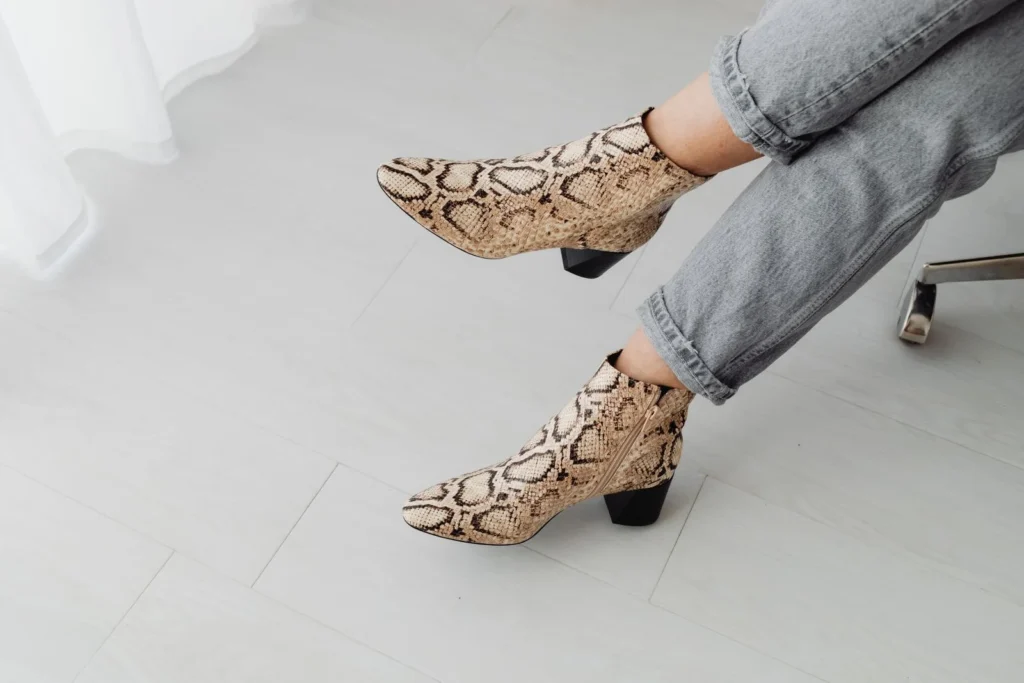
Python — snake print — is the quietest of the three prints, and the one that works most like a neutral. Its scales are small, its colours are usually muted — grey, taupe, black and cream — and it sits easily next to plain colours.
Boots are the best first python piece. Snake-print ankle boots with dark straight-leg jeans and a black coat, or python knee-high boots with a plain skirt, give you the print at the bottom of the outfit, where it behaves like a brown or black boot with more interest. For the boot guidance, see how to style knee-high boots in winter.
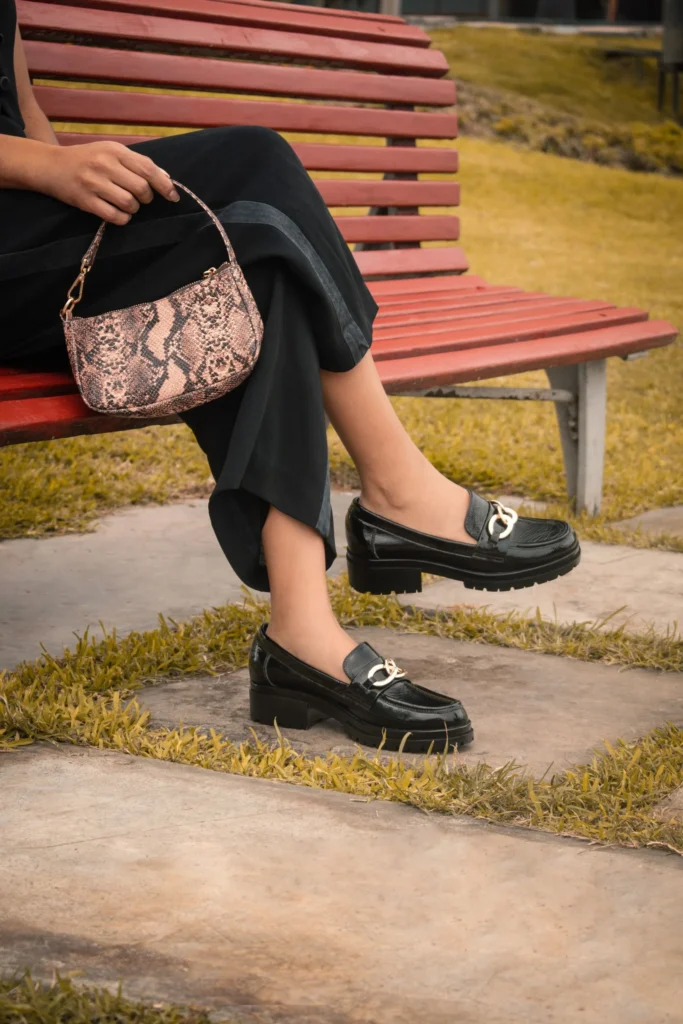
A python bag is the second option, and it works the same way as a croc bag — a small, textured bag that lifts a plain coat. A python skirt is the bolder choice: pair it with a plain black or cream knit and black boots, and keep everything else unpatterned.
Animal print outfits winter 2026: the one-print rule
The single rule that makes animal print look grown-up is this: one print per outfit. Leopard plus python, croc plus leopard, or two different leopards in different scales all fight each other, and the outfit reads as a collection of prints rather than an outfit.
That does not mean the rest of the outfit must be black. It means the rest must be plain: solid colours, no stripes, no checks, no florals. Texture is fine — a wool coat, a leather bag, a silk scarf — because texture does not compete with pattern the way a second pattern does.
The exception is when the two prints are the same print in the same scale and colour, used in two small doses — a leopard scarf and leopard gloves, for example. Even then, keep the doses small and the rest of the outfit very plain. When in doubt, take one print off.
The neutrals that calm each print
Every animal print has neutrals that calm it and neutrals that fight it. The table is the shortcut.
| Best neutrals | Avoid pairing with | |
|---|---|---|
| Leopard | Black, cream, camel, chocolate, burgundy | Bright red, orange, busy patterns |
| Croc | Black, chocolate, burgundy, navy, charcoal | Pale pastels, casual jersey |
| Python | Grey, black, cream, taupe, navy | Warm camel, orange browns |
Burgundy and chocolate deserve a special mention, because they are the two colours that warm up animal print without competing with it. A leopard coat over a burgundy knit, or a croc bag with a chocolate coat, is richer than the same outfit in black — and how to wear burgundy and chocolate brown covers both colours in detail. For the wider colour picture, see the best colours to wear in winter.
Work vs evening: where each print fits
Work: leopard works at work when the piece is tailored and the print is the only pattern: a leopard pencil skirt with a black knit, or a leopard scarf with a camel coat and dark trousers. Croc works best as a bag or a belt — professional and polished. Python works as boots or a bag. Avoid a leopard coat at a formal office unless the dress code is relaxed.
Weekend: this is where all three prints relax. A leopard coat over jeans, python boots with a knit dress, a croc bag with a plain wool coat — all easy, as long as the one-print rule holds. For more cold-weather ideas, see these winter outfit ideas for women.
Evening: animal print comes into its own after dark. A leopard top under a black blazer, a python clutch with a black dress, croc heels with tailored trousers — the prints read as glamour in evening light. Keep the jewellery simple: one strong piece, like a gold cuff.
Outfit formulas
Leopard coat day: leopard faux-fur coat, black roll-neck, dark straight-leg jeans, black ankle boots, black leather bag.
Croc bag work: camel wool coat, cream knit, chocolate straight trousers, croc-embossed bag in burgundy, dark ankle boots.
Python boot weekend: black coat, grey knit, dark jeans, python ankle boots, plain black cross-body bag.
Leopard skirt evening: black silk blouse, leopard midi skirt, black knee-high boots, small black clutch, gold earrings.
Animal print at the office: black blazer, cream shirt, dark tailored trousers, leopard scarf, black ankle boots — the print is a detail, not the outfit.
Accessories: the low-commitment way in
If you are unsure about animal print, start with accessories. A bag, a pair of boots, a scarf or a belt costs less than a coat, changes an outfit you already own, and tells you quickly whether you like wearing the print. The order to try them in is: scarf, bag, boots, belt, then coat. The base under a print matters too: how to wear leather trousers gives the plain, polished base that lets a leopard or python top do the talking.
- Bags: croc and python bags are the most grown-up entry points; leopard bags are the boldest. Choose a structured shape — the structure keeps the print looking deliberate.
- Boots: python ankle boots and croc knee-high boots are the two best bets. Both work with dark jeans and plain coats.
- Scarves: a leopard scarf warms a camel coat; a python scarf cools a black one. Keep the scarf the only print.
- Belts: a croc belt over a plain coat or a knit dress is the smallest dose of the trend.
Common mistakes and how to fix them
- Two prints at once. Leopard plus python reads as noise. Fix: take one off and replace it with a plain neutral.
- Head-to-toe leopard. A leopard coat, skirt and boots together is a costume. Fix: one leopard piece, the rest plain.
- The wrong neutral. Leopard with bright red or orange fights the print. Fix: black, cream, camel, chocolate or burgundy.
- Cheap-looking print. A huge, orange-toned rosette on thin fabric looks like fancy dress. Fix: smaller scale, muted colours, good fabric — wool, faux fur, leather.
- Real exotic skin confusion. Most high-street animal print is printed fabric or embossed faux leather, not real skin. Check the label if it matters to you; “mock croc” and “croc-effect” mean embossed, not real crocodile.
Shopping guidance: what to buy first
You do not need a new wardrobe. Start with what you own — a black coat, dark jeans, a cream knit — and add one print piece in this order:
- A leopard scarf or a croc bag. The cheapest entry, and the piece you will use most.
- Python or croc boots. The print at the bottom of the outfit, where it behaves like a neutral.
- A leopard coat or skirt. The statement piece, bought once you know you like wearing the print.
Buy the coat in the best quality you can afford, and check the print in daylight — leopard can look orange and python can look grey under shop lighting. No prices or availability are promised here, because both change by store and season.
Frequently asked questions
Is animal print still in fashion for winter 2026?
Yes. Animal print is across the autumn/winter 2026 collections — Who What Wear’s 2026 guide lists leopard and mock croc among the season’s key prints, and Grazia’s autumn/winter 2026 bag report shows croc-embossed leather at Chanel. The styling has shifted: the prints are worn as neutrals, not as loud statements.
How do you wear leopard print without looking overdone?
One leopard piece per outfit, with plain neutrals — black, cream, camel or chocolate — and no other pattern. A leopard coat over black trousers, or a leopard scarf with a camel coat, are the two easiest versions.
Can you wear animal print to work?
Yes, when the piece is tailored and the print is the only pattern. A leopard skirt with a black knit, a croc bag, or python boots all work. Avoid a full leopard coat at a formal office, and keep the rest of the outfit plain.
Can you mix leopard and snake print?
It is best not to. Two different animal prints in one outfit compete with each other and the result reads as busy. Keep it to the same print in two small doses — a scarf and gloves, for example.
What colours go with animal print?
Black, cream, camel, chocolate, burgundy, grey and navy, depending on the print. Leopard likes black, cream, camel and burgundy; croc likes black, chocolate and navy; python likes grey, black, cream and taupe.
Conclusion
Animal print worn grown-up is animal print worn quietly: one print at a time, in a good fabric, with plain neutrals. Start with a scarf or a bag, add boots when you are ready, and save the coat for the print you know you love.