
Elegant winter dressing is mostly a colour decision. The cut of a coat matters, and the fabric matters, but the colour is what people notice first — and in winter, when the coat covers almost everything else, the colour is the outfit. The best colours to wear in winter for an elegant look are not the brightest ones and not the safest ones. They are the deep, warm, muted tones that look expensive in wool, cashmere and velvet: burgundy, chocolate brown, navy, cream, grey, and a few deep accent colours used sparingly.
This guide names those colours, explains why each one works, shows how to pair them, and gives outfit formulas so you can use the palette with the wardrobe you already own.
The quick answer: deep neutrals plus one rich colour
The elegant winter palette is simple: a base of deep neutrals — chocolate brown, navy, charcoal grey and cream — plus one rich colour, usually burgundy. Wear one rich colour at a time, keep the rest neutral, and add a light layer (cream or camel) so the dark colours have contrast. That is the whole system. Black is optional, not required: chocolate and navy do black’s job in winter, and both are softer next to the face.
If you are buying one thing this winter, make it a coat in burgundy or chocolate. If you are buying nothing, start with what you own: a cream knit, grey trousers, dark jeans and a navy or camel coat are already most of the palette.
What makes a winter colour look elegant?
Three things make a colour read as elegant in winter: depth, warmth and restraint. Depth means the colour is dark enough to hold its own in flat winter light — pale, thin colours wash out in January, while deep colours keep their character. Warmth means the colour has a warm undertone — burgundy, chocolate, camel and cream all sit on the warm side, which suits winter fabrics and winter skin in low light. Restraint means the outfit uses one or two colours, not five: elegance in winter is almost always a limited palette worn well.
Fabric is part of the colour. The same burgundy looks different in wool, velvet and thin jersey: in wool and velvet it has depth, in thin fabric it can look flat and washed out. That is why the elegant winter colours are the ones that appear most in coats, knits, velvet and suede — the fabrics that give colour somewhere to live. A colour that only works in a T-shirt is not a winter colour.
Light matters too. Winter light is low, grey and flat for much of the day, and colours behave differently in it than they do in summer sun. Deep, warm colours hold up in that light; bright, clear colours can look harsh, and pale colours can disappear. When you shop, check the colour in daylight, not just under shop lighting — burgundy can look brown and chocolate can look black indoors.
The best colours to wear in winter: the palette at a glance
| Colour | Role | Pairs best with | Best as |
|---|---|---|---|
| Burgundy | The rich colour | Cream, camel, grey, navy, chocolate | Coat, knit, dress |
| Chocolate brown | The warm neutral | Cream, camel, burgundy, grey | Coat, boots, bag, trousers |
| Navy | The polished neutral | Cream, grey, camel, burgundy | Coat, tailoring, knit |
| Cream / ivory | The light layer | Everything in this palette | Knit, shirt, scarf |
| Charcoal grey | The cool neutral | Burgundy, navy, cream, chocolate | Trousers, coat, knit |
| Camel | The warm light neutral | Burgundy, chocolate, navy, cream | Coat, scarf, bag |
| Deep green / royal purple | The accent | Cream, charcoal, black | One piece only |
Burgundy: the season’s lead colour
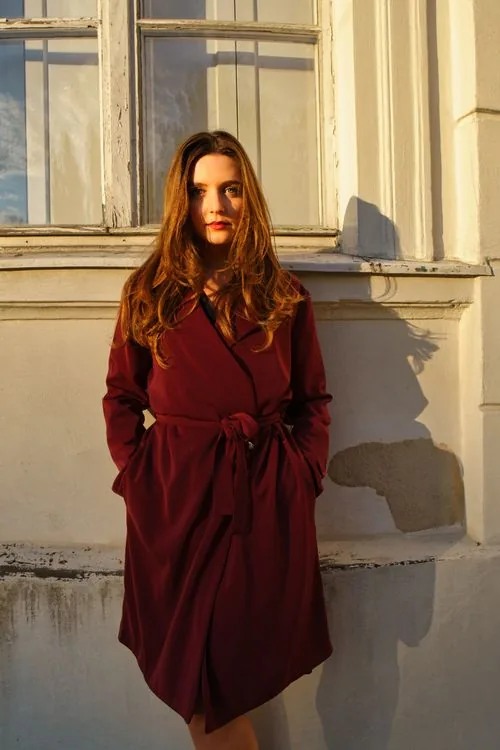
Burgundy is the most elegant winter colour of 2026-27 — the most frequent non-neutral on the season’s runways, and the colour the autumn/winter 2026 colour trends coverage names as the season’s lead. Burgundy is a dark, purplish red named after the wine from France’s Burgundy region, and the family includes wine, oxblood, merlot and Bordeaux.
Wear it first as a coat: a burgundy wool coat over a cream knit and dark jeans is a complete outfit, and over tailored trousers and a cream roll-neck it is a work outfit. A burgundy knit is the next easiest entry — it works with dark jeans, grey wool trousers, navy skirts and chocolate trousers. Keep the knit plain: the colour is the statement, so it does not need a pattern as well.
Burgundy also works in smaller pieces. Burgundy boots add colour to a neutral outfit, and a burgundy bag is the cheapest way to try the colour. For evenings, burgundy comes into its own in velvet and silk: a velvet blazer over black trousers, or a silk blouse under a chocolate tailored jacket, reads as dressy without sequins.
For more ways to make these colours look expensive, see how to look expensive: 20 outfit ideas.
Chocolate brown: the new black
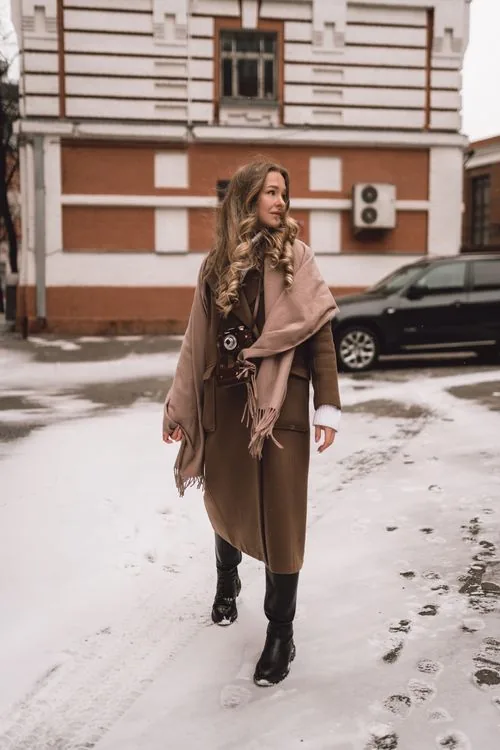
Chocolate brown has replaced beige as winter’s working neutral, doing black’s old job in coats, boots and tailoring — and it is warmer and softer than black against the face. A chocolate wool coat over a cream knit and dark jeans is the everyday version; over grey tailored trousers and a white shirt, a work version.
Chocolate looks best in leather and suede: boots, a suede jacket or a leather bag all gain depth from texture that flat fabric cannot give. Dark wool and cashmere show wear quickly, so read how to care for silk, cashmere, velvet and wool before the season’s first wash — a faded chocolate knit loses the depth that makes the colour work. A chocolate leather bag is the most useful accessory in this palette — it goes with burgundy, camel, grey, navy and black coats alike.
Navy, charcoal and grey: the cool neutrals
Navy is the most polished neutral in the palette. A navy wool coat over cream and grey is elegant in a way black rarely is — navy has depth, it pairs with every other colour here, and it suits both work and evenings. Navy tailoring with a cream shirt is a complete work outfit; a navy knit with grey trousers is the weekend version.
Charcoal grey is the cool balance to all the warm colours in this guide. Grey wool trousers under a burgundy coat, a charcoal coat over a burgundy knit, a grey knit under a chocolate coat — grey stops warm palettes from looking heavy and gives deep colours something cool to sit against.
Cream, ivory and camel: the light layers
Cream is the most useful colour in the whole palette, because it is the light that stops dark winter outfits looking heavy. A cream knit under a burgundy or chocolate coat, a cream shirt under a navy blazer, a cream scarf over a charcoal coat — in each case the cream is doing the same job, lifting the dark colours and giving the outfit contrast.
Camel sits between the light and dark neutrals: a camel coat over cream and chocolate, a camel scarf with a burgundy coat, a camel bag with a navy outfit. Camel is warm, classic and endlessly repeatable, and it is the colour that makes the whole palette feel expensive — which is why it anchors the old money colour palette.
Deep accent colours: green, purple and deep red
One accent colour, worn once, is what stops an elegant winter wardrobe feeling uniform. Deep green — forest or emerald — works like burgundy: a green velvet dress, a green knit under a chocolate coat, or a green scarf with a camel coat. Royal purple works the same way, and it is the boldest colour in this guide: a purple knit with charcoal trousers, or a purple coat over cream and grey, is elegant because the colour is deep, not bright.

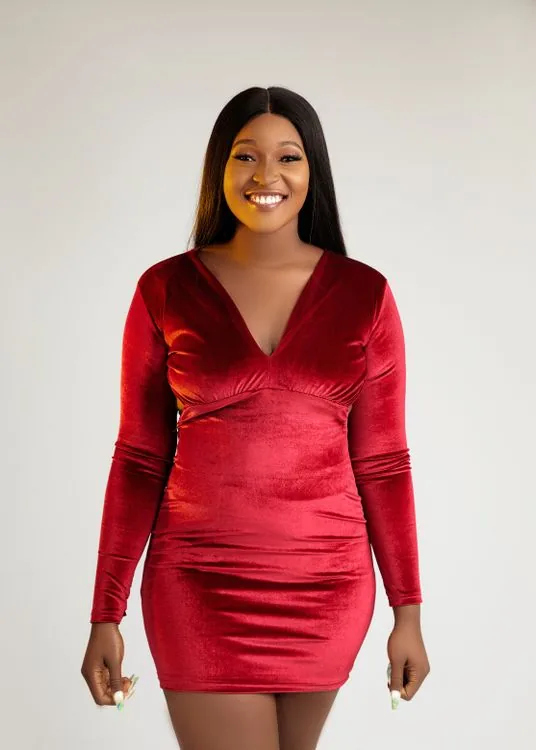
The rule for accents is the same as for burgundy: one accent at a time, everything else neutral. A purple coat with a burgundy bag is two accents competing; a purple coat with a cream knit and charcoal trousers is one accent, worn well. Deep red belongs here too — a red velvet dress for evenings, or a deep red scarf with a navy coat — but keep it deep: bright, clear red is a different register, and it needs a different outfit around it.
Colours to use carefully
Pale pastels — pale pink, baby blue, mint — are the weakest winter colours for most people. They wash out in low light and they fight with heavy winter fabrics. Save them for spring, or wear them only as a scarf or a knit under a dark coat, where the coat carries the outfit.
Outfit formulas: elegant winter outfits by colour
Burgundy: burgundy coat, cream roll-neck, dark jeans, chocolate boots. Or burgundy knit, chocolate trousers, camel coat, dark shoes.
Chocolate: chocolate coat, cream knit, grey tailored trousers, dark shoes. Or chocolate suit, cream shirt, chocolate bag.
Navy: navy coat, cream shirt, charcoal trousers, dark leather shoes. Or navy knit, grey trousers, camel scarf.
Grey: charcoal coat, burgundy knit, dark jeans, black boots. Or grey knit, navy trousers, camel coat.
For more outfits built on these colours, see these quiet luxury outfits for 2026 and these winter outfit ideas for women.
Shopping guidance: what to buy first
You do not need a new wardrobe. Most people already own the light neutrals — cream knits, grey trousers, dark jeans, a camel or navy coat — that make these colours work. Add in this order:
- One coat in burgundy or chocolate. The piece that changes the most outfits.
- One knit in the other rich colour. A burgundy roll-neck with a chocolate coat, or a chocolate jumper with a burgundy coat.
- A cream knit or a cream scarf if you do not already own one — the light layer that stops dark outfits looking heavy.
Buy the coat in the best quality you can afford — it is the piece everyone sees and the one that has to survive the winter. Check the colour in daylight before buying, and remember that no prices are promised here, because both price and availability change by store and season.
Common mistakes and how to fix them
- Wearing all dark colours with nothing light. Burgundy plus chocolate plus black can turn into one dark block. Fix: add cream, camel or grey — a scarf, a shirt or a coat is enough.
- Wearing three strong colours at once. Burgundy, purple and bright red in one outfit is usually too much. Fix: one rich colour per outfit, everything else neutral.
- Choosing the colours in thin, flat fabrics. A thin burgundy top can look washed out, and a flat chocolate fabric can look dull. Fix: choose wool, cashmere, velvet, suede or leather for these colours.
- Matching everything exactly. A burgundy coat, burgundy bag, burgundy boots and a burgundy scarf is a uniform, not an outfit. Fix: let the rich colour appear once or twice, and let the neutrals do the rest.
- Ignoring your own colouring. The palette here suits most people, but the exact shade matters: if burgundy looks heavy on you, try it as a bag or a scarf first, or choose navy and chocolate as your dark neutrals instead.
Frequently asked questions
What is the most elegant colour to wear in winter?
Burgundy is the most elegant winter colour of 2026-27: deep, warm and rich in wool and velvet. Chocolate brown and navy are the most elegant neutrals, and cream is the light colour that makes all of them work.
What colours should you avoid in winter?
No colour is forbidden, but pale pastels wash out in low winter light, and all-black outfits with no light layer can look flat. Bright colours need a calm base and good fabric to look elegant in winter.
Does burgundy go with brown?
Yes. Burgundy and chocolate brown are one of the easiest pairings of the season, because both are deep, warm and muted. Keep the rest of the outfit quiet — cream, camel or grey.
What colour coat is most versatile for winter?
Chocolate brown is the most versatile this season: it does black’s job, pairs with burgundy, cream, camel, grey and navy, and looks good in wool, suede and leather. Navy is the second most versatile choice.
Conclusion
The best colours to wear in winter for an elegant look are not complicated: burgundy for richness, chocolate for warmth, navy and charcoal for polish, cream and camel for light, and one deep accent when you want a change. Wear one rich colour at a time, keep the rest neutral, add a light layer for contrast, and choose good fabrics — wool, cashmere, velvet, suede and leather — where the colours look their richest. Start with a coat in burgundy or chocolate, add a cream knit, and the palette will do the rest.