
The skinny suit comeback women are seeing everywhere this winter is real, and it is sharper than the version most of us remember. After seasons of oversized blazers and wide-leg trousers, tailoring has moved back close to the body: slim trousers, a blazer nipped at the waist, shoulders that sit where they should. It looks precise and deliberate. This guide covers what has changed since the 2010s, how to pick a cut that works on your body, what to wear under it when it is cold, and the formulas for work, evenings and weekends.
Skinny suit comeback women: the quick answer
Wear the 2026 skinny suit fitted, not tight: a blazer that follows your waist without pulling, and trousers slim through the leg but comfortable to sit in. Underneath in winter, wear a fine knit or a silk shirt — never a chunky knit, which fights the tailored line. For work: black, charcoal or navy with a court shoe or heeled boot. For evenings: the same suit with a silk camisole and heels. The one rule: if you have to tug at it, it is the wrong size.
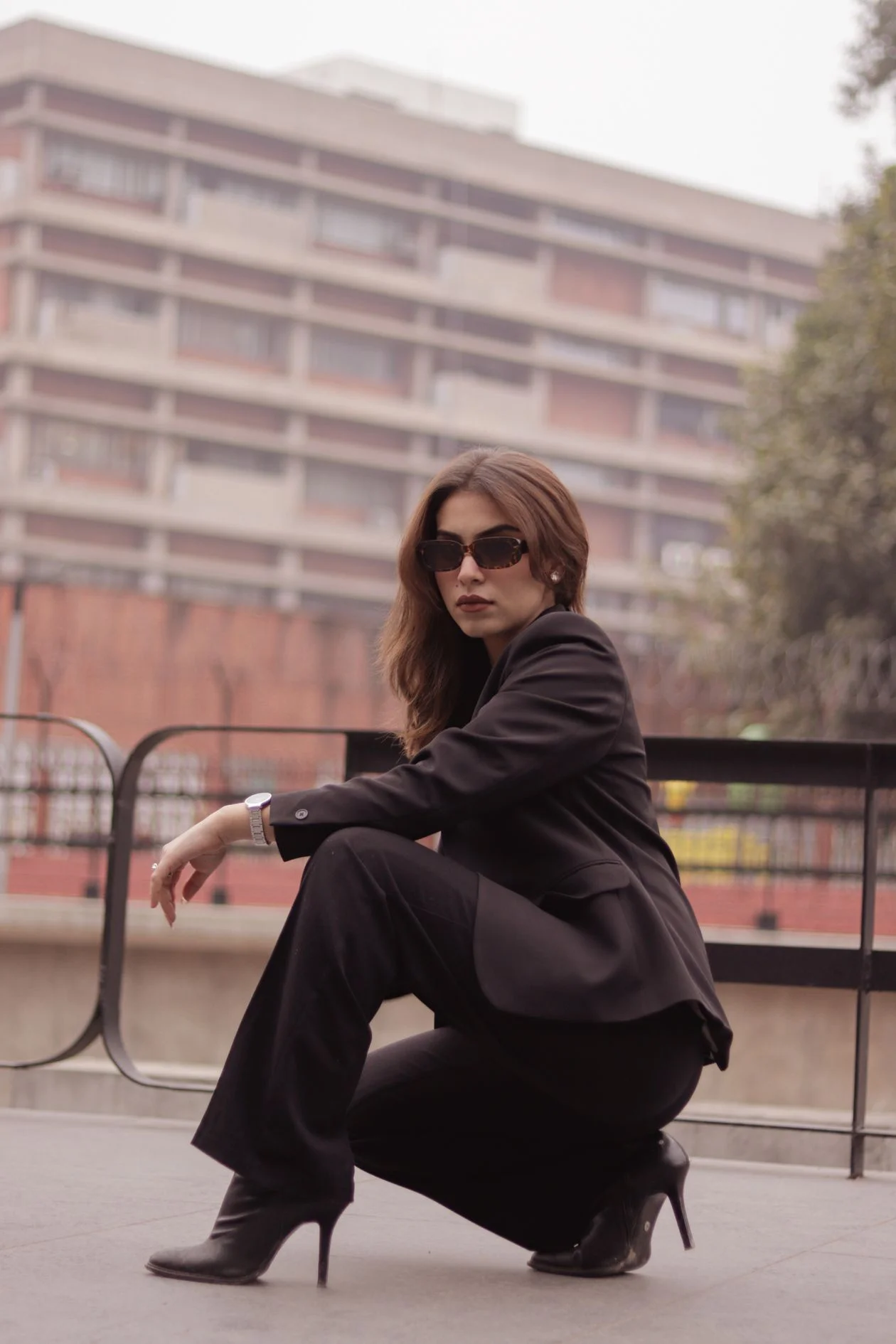
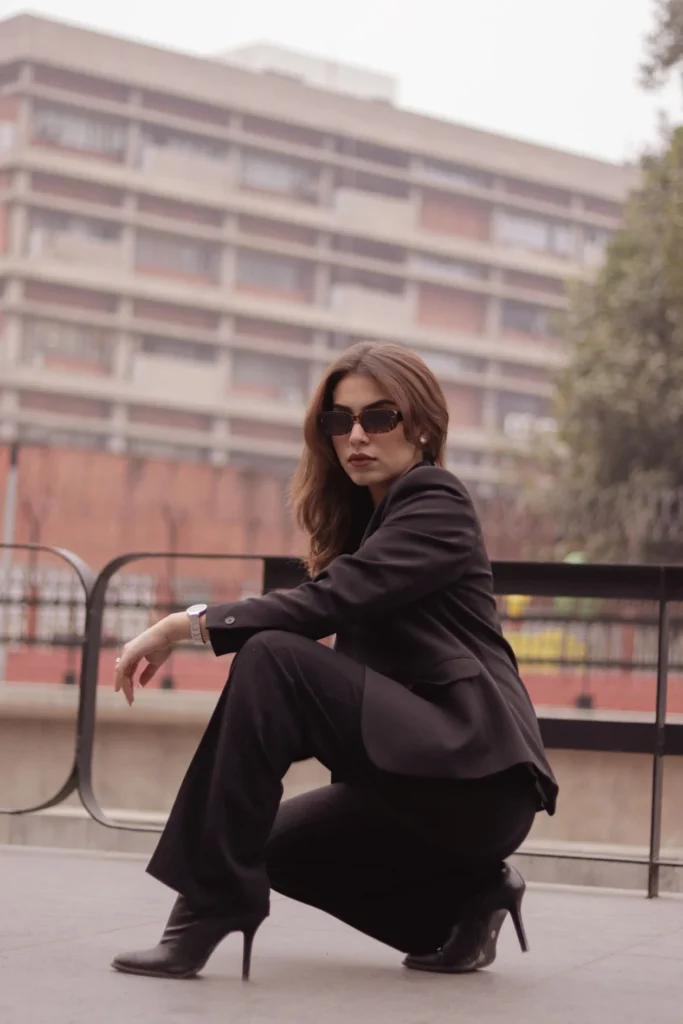
The new skinny suit: a fitted black blazer and slim trousers, worn with nothing extra — the silhouette is the statement.
Why the skinny suit is back now
The shift started on the runways and arrived in shops within a season. Coveteur’s report on the suit trend (4 Nov 2026) puts it plainly: once as oversized as possible, the 2026 suit has been adapted for an increasingly “skinny” approach, with runways offering silhouettes that stay close to the body, and the same in the suit department. At Acne Studios, Dior and Jil Sander’s autumn/winter 2026 shows, skinny suit pants were paired with blazers nipped to the body. Dior’s Jonathan Anderson played with mandarin collars and ample button closures. Beyond the runway, Ynetnews on the slim pantsuit’s return (7 Nov 2026) describes oversized blazers and wide-leg trousers giving way to structured shoulders, cinched waists and increasingly narrow trousers — the same movement behind the question of whether skinny jeans are back.
Oversized tailoring had a long run, and it stopped feeling new. A slim suit reads as a reaction: precise where the last few seasons were slouchy, and deliberately dressed-up in a moment when getting dressed up again feels like the point. What has changed since the 2010s is the styling around it: softer shoes, a looser shirt or a fine knit, and none of the rigid, sprayed-on feeling the old version had. The silhouette is slim, not suffocating.
What is a skinny suit, exactly?
A skinny suit is a matching blazer and trousers cut close to the body — the jacket follows the waist instead of hanging straight, and the trousers are narrow from hip to ankle. The 2026 version has three features that separate it from the 2010s skinny suit. First, the shoulder: defined but not padded, sitting at your natural shoulder, not beyond it. Second, the waist: the blazer is nipped — shaped in at the waist with a single button or a double-breasted closure — rather than boxy. Third, the trouser: slim, not spray-on, tapering gently to the ankle, with room to sit and walk without the fabric straining.

The defining detail of the 2026 skinny suit is the waist: the blazer is cut to follow the body instead of hiding it.
That last point matters most in real life. The 2010s skinny suit was often cut so tight it only worked standing still; the 2026 version is fitted the way good tailoring has always been: close enough to show your shape, loose enough to move.
Choosing the right fit: the rules for every body
Slim tailoring raises an obvious question: does this suit only work on one body type? No — but it demands more from the fit than an oversized suit does, because there is nowhere for a bad fit to hide. The rules below are about the garment, not the wearer: the suit should be fitted to you, never the other way round.
The blazer check. Button the blazer: if the fabric pulls into an X shape, the jacket is too small; if you can pull more than a few centimetres away from your waist, it is too big. The shoulder seam should sit at the end of your shoulder bone, and the jacket should end at your hip bone or just below it.
The trouser check. Sit down in the trousers before you buy them: if the waistband digs in or the pockets gape when you sit, the cut is wrong for you. Slim trousers should skim the thigh, not grip it, and taper to the ankle — and if the fabric strains when you walk, try a straight slim leg rather than a tapered one.
The waist is the whole point. The nipped waist is what makes this suit different from a boxy one, so it has to land at your natural waist — usually just above the belly button. Too high and the jacket looks cropped; too low and it drags your proportions down. Petite frames need a shorter jacket and a higher button stance; taller frames can carry a longer jacket and a lower button.
| Body type | What to look for | What to avoid |
|---|---|---|
| Petite | Shorter jacket, higher button, cropped trouser showing the ankle | Long jackets; wide lapels that overwhelm the frame |
| Tall | Longer jacket, full-length slim trouser, strong shoulder | Cropped jackets; trousers ending above the ankle |
| Curvy | Stretch wool with structure, single button, straight slim leg | Rigid non-stretch fabric; trousers tapered so narrow they flare at the calf |
| Slim frame | Defined waist, with a shirt or fine knit underneath for shape | A suit so slim it reads as a uniform; boxy layers that erase the waist |
| Broad shoulders | Softer shoulder, no extra padding, V-neck layers underneath | Heavy shoulder pads; double-breasted cuts that add width across the chest |
If you are between sizes, size up and tailor down: taking in the waist or shortening the trouser is cheap, and it is what makes an off-the-rack suit look made for you. For more on dressing a slim frame specifically, read how to dress a slim frame.
How to wear a skinny suit in winter: outfit formulas
For work: a black or charcoal skinny suit, a white or cream silk shirt, and a pointed court shoe or a heeled ankle boot. Keep the shirt tucked in and the blazer buttoned as you walk in. If your office is more relaxed, swap the shirt for a fine black roll-neck — the suit keeps it professional. The skirt suit is the other formal option this season; our guide on how to style a skirt suit covers the work-to-evening version.
For evenings: the same black suit with a silk camisole under the blazer — or, if you are comfortable, the blazer on its own, buttoned, with a long necklace. Add heeled boots. This is where the skinny suit earns its place over a dress: sharper, warmer and far less expected. A slim tuxedo-style suit is the natural next step for party dressing — see how to wear a tuxedo suit for the full evening version.
For weekends: break the suit up. Wear the blazer with straight-leg jeans and trainers, the trousers with a chunky knit and boots. The blazer is the piece you will reach for most — it turns jeans and a T-shirt into an outfit in seconds. For the blazer worn on its own, how to style a blazer the old money way is the best next read.
Under a coat: a fitted blazer layers neatly under a long wool coat or a trench, and slim trousers tuck into knee-high boots without bunching.
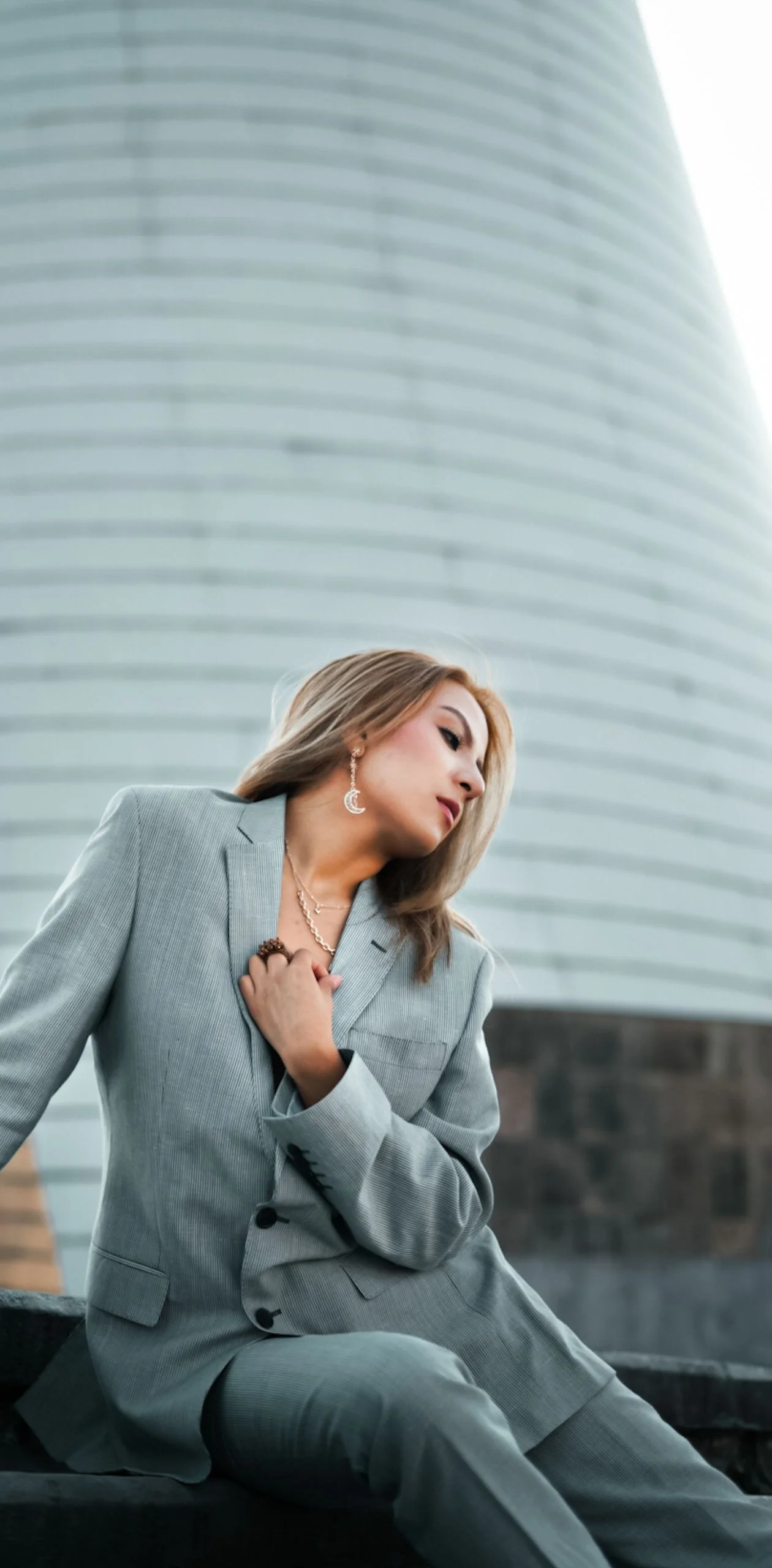
A grey slim suit in daylight: the colour softens the sharpness of the cut, and the fitted line does the work.
What to wear underneath: layering for warmth
A slim suit is not a warm suit on its own, and winter is where most people get it wrong. The rule is simple: everything underneath must be thin. A fine merino roll-neck, a silk shirt or a thin cashmere crew-neck gives warmth without bulk and sits flat under a fitted blazer. A chunky knit bunches at the waist and pushes the jacket open — save it for the days you wear the trousers on their own.
Start with a thermal base layer if you run cold — a thin, long-sleeved thermal under a silk shirt is invisible and adds real warmth. On your lower half, fleece-lined tights under the trousers work on the coldest days without changing the line of the leg. Wool suits hold warmth better than synthetic blends and breathe indoors, which matters when you move between cold streets and heated offices. Colour matters too: cream or white under black is the classic contrast, black under charcoal the quiet version, deep red under navy the one that gets compliments.
Shoes and accessories
Shoes decide whether a skinny suit looks like work, evening or weekend. A pointed court shoe is the most polished choice and lengthens a slim leg best. A heeled ankle boot is the winter workhorse: warmer, more practical on wet streets, and just as sharp. Knee-high boots work with a slim trouser tucked in and are the warmest option by a long way. Trainers only work when the suit is broken up.
Accessories should stay simple, because the suit is already doing the talking: a structured leather bag in black or tan, a slim belt in the same colour as the shoes, and one piece of jewellery. A smooth leather bag contrasts with wool tailoring. A silk scarf at the neck works in place of a shirt on cold days.

The skinny suit after dark: the same slim lines, worn sitting down — note how the trousers stay narrow to the ankle.
Common mistakes and how to fix them
- Buying it too tight. Slim is not tight. Fix: if the button pulls or the pockets gape, size up and tailor down.
- Wearing a chunky knit underneath. It bunches at the waist and pushes the blazer open. Fix: fine knits and silk only under a fitted blazer.
- Wearing the full suit with trainers and a T-shirt. The pieces work separately; together, they need smarter shoes. Fix: break the suit up for casual days, or commit to the court shoe.
- Ignoring the trouser length. Slim trousers that pool at the ankle undo the whole silhouette. Fix: the trouser should end at the ankle bone, and a hem alteration costs very little.
Shopping guidance: what to buy first
Buy the suit in the best fabric you can afford, because slim tailoring shows fabric quality more honestly than any other cut. Before you pay, check three things: the wool should feel smooth and matte, not shiny; the jacket lining should be full and smooth, so the blazer slides over a shirt; and the trousers should have a proper waistband with a button and a hook, not just an elastic pull-on. If the budget only stretches to one suit this winter, make it black — it works for work, evenings and everything in between — and spend the saving on the alterations. Leather trousers are the best second purchase if you want the slim look without a second full suit.
Frequently asked questions
Is the skinny suit actually back, or is it just a runway trend?
It is back in shops as well as on runways. The autumn/winter 2026 shows at Acne Studios, Dior and Jil Sander all showed slim tailoring, and the cut is now widely available at every price point — worn for work and evenings, not just photographed.
Can I wear a skinny suit if I am not slim?
Yes. Slim describes the cut, not the wearer. What matters is the fit: a blazer that buttons without pulling, trousers that skim rather than grip, and a fabric with a little stretch. Size up and tailor down if you are between sizes.
What is the difference between a skinny suit and a slim-fit suit?
They are close, but the skinny suit is the narrower end of slim: a more nipped waist, a narrower trouser leg and a closer shoulder. A slim-fit suit has a little more ease — the same look with more room.
What do I wear under a skinny suit in winter?
A fine merino roll-neck, a silk shirt or a thin cashmere crew-neck — plus a thin thermal base layer on the coldest days. Avoid chunky knits under a fitted blazer: they bunch at the waist and push the jacket open.
Can I wear a skinny suit to the office?
Yes — it is the most office-appropriate tailoring of the season. Keep it in black, charcoal or navy, with a shirt or a fine roll-neck underneath and a court shoe or a heeled boot. In a more relaxed office, the same suit with a fine knit works just as well.
Are skinny suits only for evenings?
No. Evenings are where it looks most dramatic, but its everyday home is the office — and broken up, the blazer and trousers work separately all week. The evening version is simply the same suit with a camisole instead of a shirt and heels instead of boots.
Conclusion
The skinny suit is back because it does something the oversized suit stopped doing: it makes getting dressed feel deliberate. Buy it fitted, not tight, in matte wool — in black if you only buy one. Wear thin layers underneath, keep the shoes sharp, and let the waist do the work. Worn that way, it is the smartest suit in your wardrobe.