
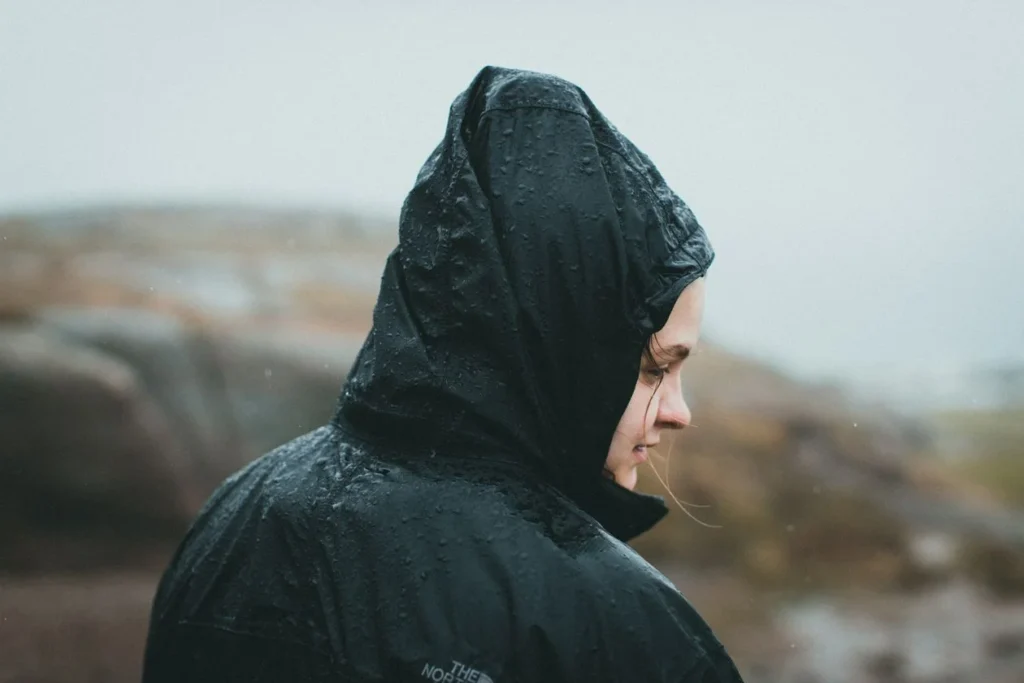

A weatherproof winter coat women stylish enough for the office and tough enough for sleet sounds like a contradiction — until you know what to look for on the label. Most winter coats are warm, and most rain jackets are waterproof, but few coats are both, and fewer still look good doing it. Buy the coat whose weatherproofing matches your actual winter, then style it like the rest of your wardrobe.
Weatherproof winter coat women stylish: the quick answer
Start with the weather, not the look. For a wet city winter — rain, sleet and wet snow, mostly walking and commuting — look for a waterproof rating of at least 10,000mm, fully taped or at least critically taped seams, a DWR finish that makes water bead, a proper hood, and synthetic insulation for sustained wet weather. Down is warmer for its weight in dry cold, but it loses loft when wet, so a down coat needs a genuinely waterproof shell in a wet winter. For the stylish part, choose a longline parka, a belted weatherproof trench or a sleek matte puffer in black, navy, chocolate or olive, over a fine knit and leather boots.

The weatherproof look starts with a hooded, sealed-seam shell: the coat does the work, so the outfit underneath can stay simple.
What “weatherproof” actually means on a label
“Weatherproof” is a promise, not a standard. “Water-resistant” usually means the coat can handle light, brief rain — often a DWR finish on the outer fabric — but it has no waterproof barrier underneath. “Water-repellent” means much the same thing. “Waterproof” should mean there is a real barrier — a membrane or a coated laminate — plus sealed seams, so water cannot push through the fabric or sneak in at the stitching. A coat can be honestly described as weatherproof for a drizzle and fail in an hour of steady rain, so read past the headline word and look for the numbers underneath it. “Windproof” tells you the shell blocks wind, which strips warmth away even when rain is kept out. “Breathable” tells you the coat lets sweat vapour escape, so you do not end up damp from the inside on a brisk walk.

Rain is only half the test. A stylish weatherproof coat also has to handle wind, spray from traffic and the damp that creeps in at the seams.
Read the rating: waterproof ratings and breathability
Waterproof ratings are measured as hydrostatic head — how tall a column of water the fabric can hold back before it leaks, measured in millimetres. A rating of 1,500mm is the legal floor in Britain and Europe for calling a fabric waterproof at all, but it is a floor, not a target: a 1,500mm coat survives a light shower and fails when you kneel on wet ground, shoulder a bag or stand in wind-driven rain. The practical bands, explained in waterproof ratings explained, run roughly like this.
| Rating | What it copes with | Best for |
|---|---|---|
| 1,500–5,000mm | Light rain, short exposure | A short walk in a shower |
| 5,000–10,000mm | Moderate rain, everyday use | Most city winters |
| 10,000–20,000mm | Heavy rain, sustained exposure | Wet winters, sleet, wet snow |
| 20,000mm and above | Severe, wind-driven rain | All-day exposure, hill weather |
For a wet city winter, 10,000mm is the sensible minimum, and 10,000–20,000mm is the comfortable range. Breathability is rated in grams of moisture vapour per square metre per 24 hours, and 10,000–15,000 is a good everyday figure. For the broader choice between coat types, read how to choose a winter coat — the wool, puffer, trench and faux fur comparison this guide builds on.
DWR and sealed seams: the two details that decide everything
A high waterproof rating means very little if water gets in at the seams or the outer fabric soaks through. Every stitch is a tiny hole, and seam sealing closes those holes with waterproof tape or bonding. Fully taped seams mean every seam is sealed, and that is what you want for sustained rain. Critically taped seams mean only the highest-stress seams — shoulders, hood and chest — are sealed, a sensible compromise for moderate city rain. Unsealed seams will leak in real rain no matter how good the fabric is, so check for “fully taped” or “critically taped” before you fall for the colour. DWR, or durable water repellency, is the finish on the outer fabric that makes water bead up and roll off instead of soaking into the weave. It is not the waterproofing itself, but it stops a coat feeling heavy and cold even when the membrane underneath still works. DWR wears off with washing, dirt and abrasion. The fix is reproofing: a wash-in or spray-on DWR treatment, applied to a clean coat, which restores the beading.
Down vs synthetic when wet
Down is the soft plumage beneath a bird’s outer feathers; its clusters trap air, and that trapped air is what keeps you warm. It is the warmest insulation for its weight in dry cold. Its weakness is moisture: when down clusters get wet they clump, lose loft, and the air pockets collapse — and a soaked down coat takes a long time to dry. Modern hydrophobic treatments delay this, but they do not make down waterproof. Synthetic insulation is made from polyester fibres engineered to trap air in a similar way, and it behaves very differently when wet. The fibres do not absorb water the way down does, so a synthetic coat keeps more of its loft — and therefore more of its warmth — when damp, and it dries faster. That is why the standard advice, set out in the down vs synthetic insulation comparison, is simple: choose down for cold, mostly dry conditions, and synthetic for rain, wet snow, damp climates or uncertain forecasts.

A puffer is the warmest weatherproof shape for many winters — as long as the insulation inside still works when the snow turns wet.
Rain, sleet and wet snow are three different tests
Rain is the steady test: water arrives from above and from the side in wind, finds the shoulders and the zip, and keeps coming. A good hood, a storm flap over the zip and fully taped shoulder seams matter most here. Sleet is rain with ice in it, colder and more wind-driven: the hood and the collar matter more, and any gap at the neck lets cold, wet air straight in. A high collar, a chin guard and a hood you can tighten around your face are worth more than a higher waterproof rating on a sleet day. Wet snow is the quiet test. It looks gentle, but it melts as you walk, so the coat has to shed water hour after hour — and the melted snow runs down to the hem, the cuffs and the pockets. This is where DWR earns its keep, and where a longer coat helps: a parka that covers your hips keeps the wet snow off your trousers and your knit.

Wet snow is the quiet test of a winter coat: it melts as you walk, so the shell has to shed water hour after hour, not just for the first ten minutes.
The coat shapes that stay stylish in wet weather
A weatherproof coat does not have to look technical. The longline parka is the most weatherproof shape, and the easiest to make stylish. Look for a matte finish, a clean line, a hood that folds away or sits neatly, and a length that covers your hips or reaches your knees. Black, navy, chocolate or olive in a matte fabric reads as a city coat; shiny nylon in a bright colour reads as a ski jacket. The belted weatherproof trench is the smartest wet-weather shape. The belt gives it a waist, which stops a long waterproof coat looking like a tent. If you love the trench silhouette, read how to wear a trench coat in winter first — the length, belt and proportion rules carry over, and the only change is the fabric. The sleek puffer is the warmest shape, and the one most likely to look bulky if you get it wrong. Choose a matte shell and a straight or gently A-line cut, in a length that hits your hips or mid-thigh. Our guide to how to style a puffer jacket without looking bulky covers the proportions: slim bottoms and boots that balance the volume on top.
How to style a weatherproof coat without looking like you are going hiking
Keep the outfit underneath simple and the coat does the talking. A fine knit in cream, black or camel, straight-leg jeans or tailored trousers, and leather boots are enough for almost every day. A structured leather bag in black or chocolate, rather than a nylon backpack, lifts a parka instantly, and a simple wool scarf — see how to style a scarf with a winter coat for pairings that work with a high collar or a hood — adds warmth the coat’s neckline may not provide. For the layers underneath, the warmest fabrics for winter guide explains why wool and cashmere knits earn their place under a shell that blocks wind but provides no insulation of its own.
Care: drying, reproofing and salt
Wash a weatherproof coat only when it needs it, on a gentle cycle with a technical wash or a mild liquid detergent — never fabric softener, which clogs the membrane and kills breathability — and dry it according to the label, usually low heat, which can help reactivate the DWR. When you come in from rain or wet snow, hang the coat on a wide hanger in a ventilated room and let it air-dry, unzipped, away from radiators. Road salt leaves white marks on the hem and cuffs, and it is worth wiping those off with a damp cloth when you come in — the same salt that marks your boots will mark your coat, and the boots need prompt care too: see how to clean leather boots and remove winter salt stains for the boots’ own routine.
Common mistakes and how to fix them
- Buying “water-resistant” for a wet winter. It handles a shower, not a season. Fix: a waterproof rating of 10,000mm or above and taped seams.
- Trusting the rating and ignoring the seams. A 20,000mm fabric with unsealed seams still leaks at the shoulders. Fix: check for fully or critically taped seams.
- Choosing down for a wet climate. Down is warmer when dry and colder when soaked. Fix: synthetic for wet winters, down only in a waterproof shell.
- Skipping the hood test. A hood that will not tighten around your face is decoration in sleet. Fix: try the hood up, with a hat, before you buy.
- Washing with fabric softener. It clogs the membrane and kills breathability. Fix: technical wash or mild liquid detergent only.
Shopping guidance: what to buy first
Buy the weatherproof coat in the best quality you can afford — it is the piece that decides whether a wet day is comfortable or miserable, and it is the piece everyone sees. Before you pay, check the rating, the seams, the hood and the insulation in that order, and try the coat on over your thickest knit with the hood up. If the budget only stretches to one weatherproof coat this winter, make it a longline parka in black or navy with synthetic insulation: it covers the most weather, styles with the most outfits, and needs the least from the layers underneath. If you already own a coat that has stopped beading, try reproofing it before you replace it — you may already own the coat you need.
Frequently asked questions
What waterproof rating do I need for a winter coat?
For a wet city winter, 10,000mm is the sensible minimum, and 10,000–20,000mm is the comfortable range. Below 5,000mm handles only light, brief rain, and 1,500mm is just the legal floor for calling a fabric waterproof.
Is a water-resistant coat enough for winter rain?
For a short walk in a light shower, yes. For sustained rain, sleet or wet snow, no — water-resistant usually means a DWR finish with no waterproof barrier underneath.
Is down or synthetic better for a wet winter coat?
Synthetic is usually better for a wet winter: it keeps more of its warmth when damp and dries faster. Down is warmer for its weight in dry cold, but it clumps and loses loft when wet, so a down coat needs a genuinely waterproof shell.
How do I know if my coat’s DWR has worn off?
Water stops beading and starts soaking into the fabric, darkening it. The membrane underneath may still be working, but the coat will feel heavy and cold. Wash the coat and apply a spray-on or wash-in DWR treatment to restore the beading.
Can a weatherproof coat look stylish?
Yes — choose a matte finish in black, navy, chocolate or olive, a longline parka or a belted weatherproof trench, and keep the outfit underneath simple: a fine knit, straight-leg trousers or jeans, and leather boots.
Conclusion
A weatherproof winter coat does not have to look like hiking kit, and a stylish winter coat does not have to soak through in the first shower. Start with the weather: a 10,000mm rating or above, taped seams, a real hood and synthetic insulation for wet winters. Then choose the shape in a dark, matte colour, and style it simply. Check the DWR once a season, reproof it when the beading stops, and your coat will stay dry, warm and good-looking through rain, sleet and wet snow alike.


