

White crusty marks on leather boots are the most common winter damage, and the easiest to fix if you act quickly. Road salt, spread on pavements to melt ice, dries into white stains on leather, and if left there it dries the leather out, cracks it, and can leave permanent marks. This guide explains how to clean leather boots salt stains, how to clean and condition the leather, and the simple routine that protects your boots all winter.
The short version: wipe salt off the same day with a damp cloth, remove set-in stains with a diluted vinegar solution, let the boots dry slowly at room temperature, then condition and waterproof them. Prevention — wiping boots down after every snowy walk — matters more than any cleaning product.
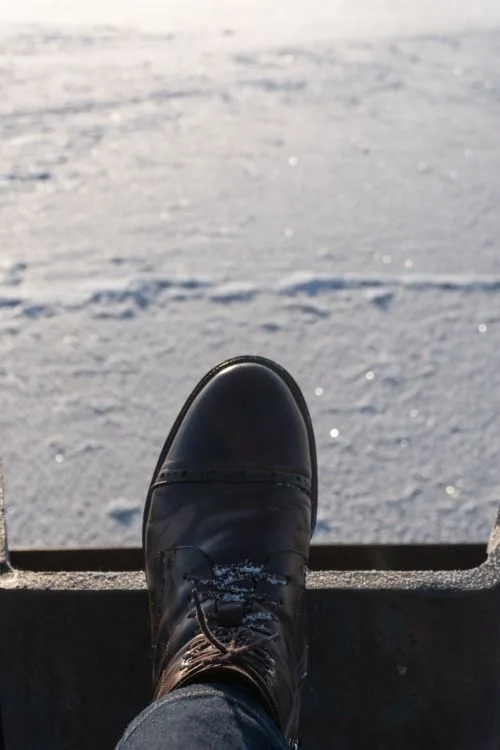
The quick answer: wipe, vinegar, dry, condition
Salt stains need two things: a mild acid to dissolve the salt, and patience while the leather dries. Wipe loose salt and dirt off with a damp cloth first. Then dab the stain with a solution of one part white vinegar to two parts water, using a soft cloth, and wipe it away with a clean damp cloth. Let the boots dry slowly at room temperature — never near a radiator — then apply a leather conditioner. That is the whole method — the rest of this guide explains each step in detail, and how to stop stains forming.
What salt does to leather
Leather is a strong, flexible and durable material made from tanned animal skins, and it lasts for decades when cared for. But it is also absorbent: salt dissolved in slush soaks into the leather, and as the water evaporates, the salt crystallises on the surface as white marks — and inside the leather, where it draws out the natural oils that keep it supple. That is why old salt stains are not just cosmetic: the leather underneath becomes dry, stiff and prone to cracking, and the stain can become permanent.
Salt stains show most on smooth, dark leather, and they form fastest where the boot flexes — around the ankle and across the toes — because the leather there is constantly bending and absorbing slush. Suede and nubuck are a different case (see the suede section below): never use vinegar on them.
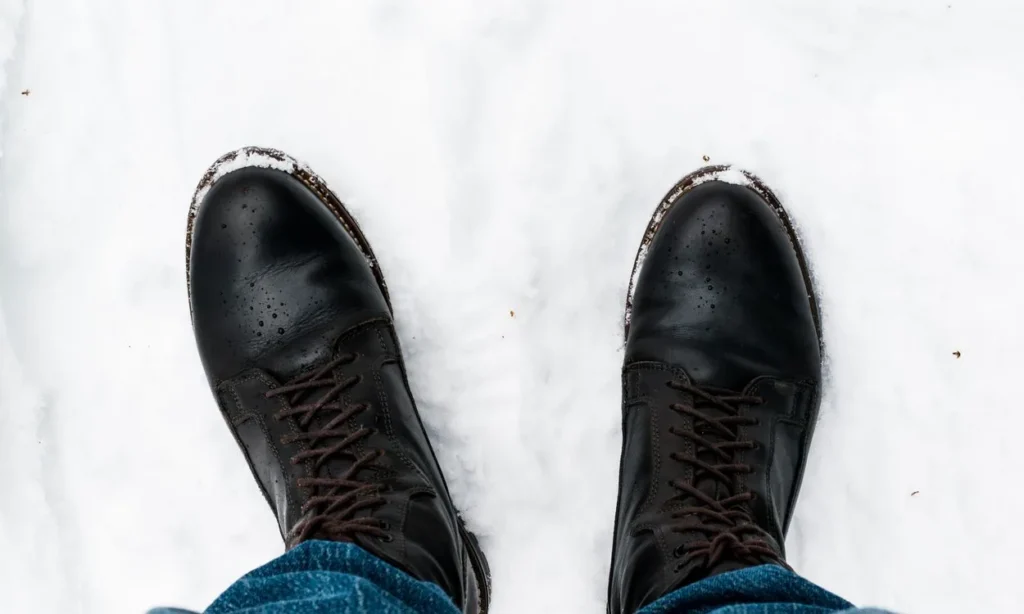
What you need before you start
You do not need specialist products for salt stains — gather these before you start:
- A soft cloth or an old T-shirt, and a soft brush (an old toothbrush works for seams).
- White vinegar and clean water, for the salt-stain solution.
- A leather cleaner, or a mild soap — saddle soap is the traditional choice.
- A leather conditioner, to replace the oils the salt has drawn out.
- A waterproofing spray or wax, for protection after cleaning.
- Newspaper or boot trees, to hold the boots’ shape while drying.
Avoid anything abrasive — stiff brushes, scouring pads and harsh household cleaners can scratch the leather, and scratches hold salt and dirt.
How to clean leather boots salt stains: the step-by-step method
Work on one boot at a time, and finish the whole process — stain removal, cleaning, drying, conditioning — before wearing the boots again.
Step 1: brush off loose salt and dirt. Let any mud dry first, then brush it off with a soft brush, paying attention to the seams and the welt (where the sole meets the upper). Dried mud comes off easily; wet mud smears and pushes salt deeper into the leather.
Step 2: wipe with a damp cloth. Wipe the whole boot with a cloth dampened in clean water. This removes surface salt and shows which stains remain. For fresh stains, this step alone is often enough.
Step 3: treat the stains with vinegar solution. Mix one part white vinegar with two parts water. Dampen a soft cloth in the solution, wring it out, and dab the stained areas — do not soak the leather. Work in small circles, re-dampening the cloth as needed — the vinegar dissolves the salt and the white marks fade as you work. Wipe the area with a clean, damp cloth afterwards.
Step 4: clean the whole boot. Once the stains are gone, clean the entire boot with a leather cleaner or a little mild soap on a damp cloth, working in small circles over the whole surface — not just the stained areas, or you will end up with a clean patch and a dirty boot. Wipe the soap off with a clean damp cloth.
Step 5: dry slowly. Stuff the boots with newspaper or boot trees to hold their shape, and leave them to dry at room temperature, away from radiators, fires and direct sunlight. Drying takes at least overnight; rushing it with heat cracks the leather and sets remaining stains. Change the newspaper after a few hours if it is damp.
Step 6: condition. Once the boots are completely dry, apply a thin layer of leather conditioner with a soft cloth, working it into the leather in small circles. Leave it to absorb for twenty minutes, then buff off the excess. Conditioning replaces the oils the salt drew out and keeps the leather supple — it stops the leather cracking later.
Conditioning: the step that saves the leather
Conditioning is not optional after salt damage. Salt draws oils out of leather, and leather can be oiled to improve its water resistance — frequent oiling keeps it supple and improves its lifespan. A conditioner does the same job in a form made for footwear.
Apply conditioner sparingly: a thin, even layer is enough — too much leaves the leather greasy and attracts dirt. Work it into the whole boot, not just the stained area, because the salt has dried the whole boot. Let it absorb, buff off the excess, and repeat only if the leather still looks dry and dull.
Choose a conditioner that matches your leather: a neutral conditioner works on most smooth leather, while coloured creams can also restore colour to scuffed areas — but test any coloured product on a hidden spot first, because the colour may not match. Avoid conditioner on suede and nubuck entirely; those need a suede protector, not a cream.
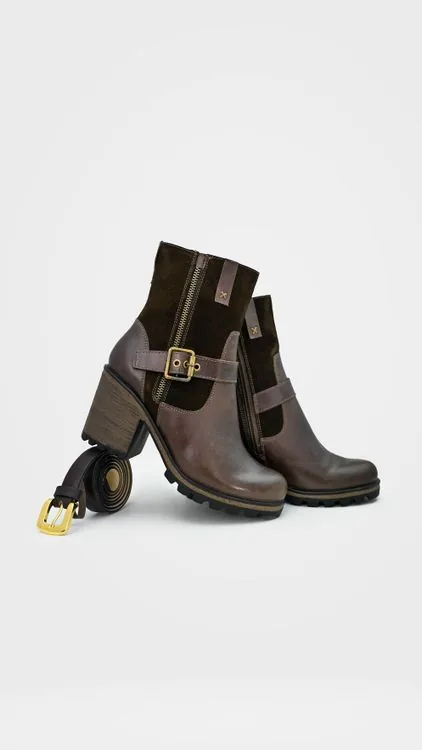
Waterproofing: keep the salt out
Waterproofing does not make boots waterproof in the sense of standing in a puddle — it makes water and slush bead on the surface instead of soaking in, so far less salt reaches the leather. Apply a waterproofing spray or wax after conditioning, once the boots are dry, and reapply through the winter — roughly once a month.
Sprays are the easiest option: hold the can at the recommended distance, spray evenly over the whole boot, and let it dry. Waxes give stronger protection but darken some leathers slightly, so test on a hidden spot first. Waterproof before the first snow of the season, not after the first salt stains appear — protection works best on clean, dry leather.
Drying mistakes that ruin boots
How boots dry matters as much as how they are cleaned. The most common mistake is drying boots near a radiator or a fire: direct heat dries the outside fast while the inside stays damp, which cracks the surface and can shrink the leather. The second mistake is leaving boots wet in a cold hallway or a car boot — damp leather in cold air grows mould, far harder to remove than salt.
The right way is boring: stuff the boots to hold their shape, stand them upright in a room-temperature room, and wait. Newspaper absorbs moisture from the inside, so change it after a few hours if it is wet. Boot trees are better than newspaper for long-term storage. Never use a hairdryer on leather boots, and never put them in a tumble dryer.
A winter routine that prevents salt stains
Prevention is simpler than cleaning, and it takes two minutes. After every walk in snow or slush, wipe the boots down with a damp cloth when you come in — this removes the salt before it dries into stains. Once a week, brush off dried mud and check for white marks. Once a month, clean and condition the boots. And at the start of the season, waterproof them.
It also helps to choose the right boots for the worst days: when the pavements are heavily salted, wear rubber-soled boots or older pairs, and save your best leather boots for drier days. Rotating two pairs through the winter means each gets a day to dry out between wears, and dry leather resists salt far better.
What about suede and nubuck boots?
Suede and nubuck are leather with a napped surface, and they need a different approach: never use the vinegar solution or a leather conditioner on them, because liquids stain the nap and creams flatten it. For salt on suede, let the boots dry completely, then brush the stains away with a suede brush. Stubborn marks can be treated with a suede eraser, a small rubber block that lifts the stain.
Protect suede before winter with a suede protector spray, applied to clean, dry boots and reapplied through the season. If suede boots get soaked, stuff them with newspaper, let them dry slowly at room temperature, and brush the nap back up once dry.
Which boots are worth saving — and when to let go
Salt stains alone are never a reason to throw boots away: if the leather is otherwise sound, the vinegar method and a good conditioning will bring them back. The boots worth saving are the ones you actually wear — a good-quality pair in a shape that works with your jeans for different waist-to-hip proportions and your winter outfit ideas for women, or a pair that was an investment piece worth buying.
Let go of boots when the leather itself has failed: deep cracks across the flex points, a sole that has separated from the upper, or leather that has gone stiff and brittle despite conditioning. Those are signs the leather has dried out beyond recovery, and no conditioner will bring it back. In that case, retire the boots — and when you replace them, waterproof the new pair before the first snow.
Storing boots between winters
At the end of winter, clean and condition the boots before storing them — salt left on over the summer will keep drying it out. Stuff them with newspaper or boot trees to hold their shape, and store them upright in a dry place, out of direct sunlight.
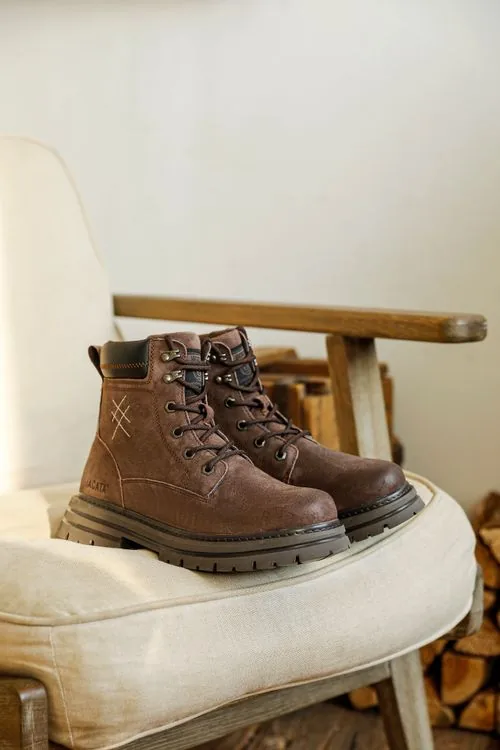
Do not store boots in plastic bags or sealed boxes: leather needs air, and sealed storage traps moisture. A cotton shoe bag or an open shelf is better.
Check the care label before using any product — the symbols on it are standardised by GINETEX, the International Association for Textile Care Labelling. The care advice in how to care for silk, cashmere, velvet and wool applies the same principle to other natural materials: gentle products, no heat, and regular care rather than emergency rescue.
Common mistakes and how to fix them
- Leaving salt on the boots for days. Salt dries leather out and the stains set. Fix: wipe boots down with a damp cloth the same day.
- Drying boots by a radiator. Direct heat cracks leather and sets stains. Fix: dry slowly at room temperature, stuffed to hold their shape.
- Using too much vinegar, or undiluted vinegar. Strong acid can dry and discolour leather. Fix: one part vinegar to two parts water, dabbed on — never soaked.
- Skipping conditioner. Cleaned leather without conditioner dries out and cracks. Fix: condition after every salt-stain clean.
- Using the vinegar method on suede. It stains the nap. Fix: brush suede dry, use a suede eraser, and protect with a suede spray.
Frequently asked questions
How do you remove salt stains from leather boots?
Wipe off loose salt, dab the stains with one part white vinegar to two parts water on a soft cloth, wipe with a clean damp cloth, let the boots dry slowly at room temperature, then condition the leather. For fresh stains, a damp cloth alone is often enough.
Can salt stains permanently damage leather boots?
Yes, if left for weeks: salt draws oils out of the leather, which dries, stiffens and cracks, and the stains can become permanent. If you clean salt off the same day and condition the leather, the damage is usually reversible.
Can I use vinegar on all leather boots?
Vinegar solution is safe on smooth leather when diluted (one part vinegar to two parts water) and dabbed on, not soaked. Do not use it on suede or nubuck — brush those dry instead — and test on a hidden spot first if the boots are light-coloured.
How do I stop salt stains forming in the first place?
Waterproof before the first snow, wipe boots down after every slushy walk, and rotate two pairs so each gets a day to dry. Prevention takes two minutes a day and saves hours of cleaning.
Conclusion
Salt stains look worse than they are — a damp cloth the same day, a diluted vinegar solution for set-in marks, slow drying, and good conditioning will save most leather boots. The real secret is the routine: wipe after every snowy walk, condition monthly, waterproof before the season starts. Boots cared for this way last for years — a quiet luxury capsule wardrobe staple — and they look better every winter, not worse.