


Snow day outfits women can rely on are built like a system, not picked like a look. A snow day is not a normal cold day. Wet snow soaks, slush splashes, road salt stains, and wind finds every gap — all at the same time, while you are trying to get somewhere. The outfits that survive it follow the same rules every time: three layers with a job each, boots that grip and keep water out, and no cotton against the skin.
Snow day outfits women: the quick answer
Wear three layers: a thermal base layer that wicks sweat, a warm middle layer such as a wool sweater or a fleece, and a waterproof or water-resistant outer layer that blocks wind and wet snow. On your feet, wear waterproof winter boots with deep tread and wool socks — not fashion boots, not trainers, and nothing with a smooth sole. Finish with a warm hat, gloves and a scarf. The simplest formula: thermal base + merino sweater + waterproof parka, fleece-lined jeans, wool socks and grippy winter boots, with a beanie and insulated gloves.
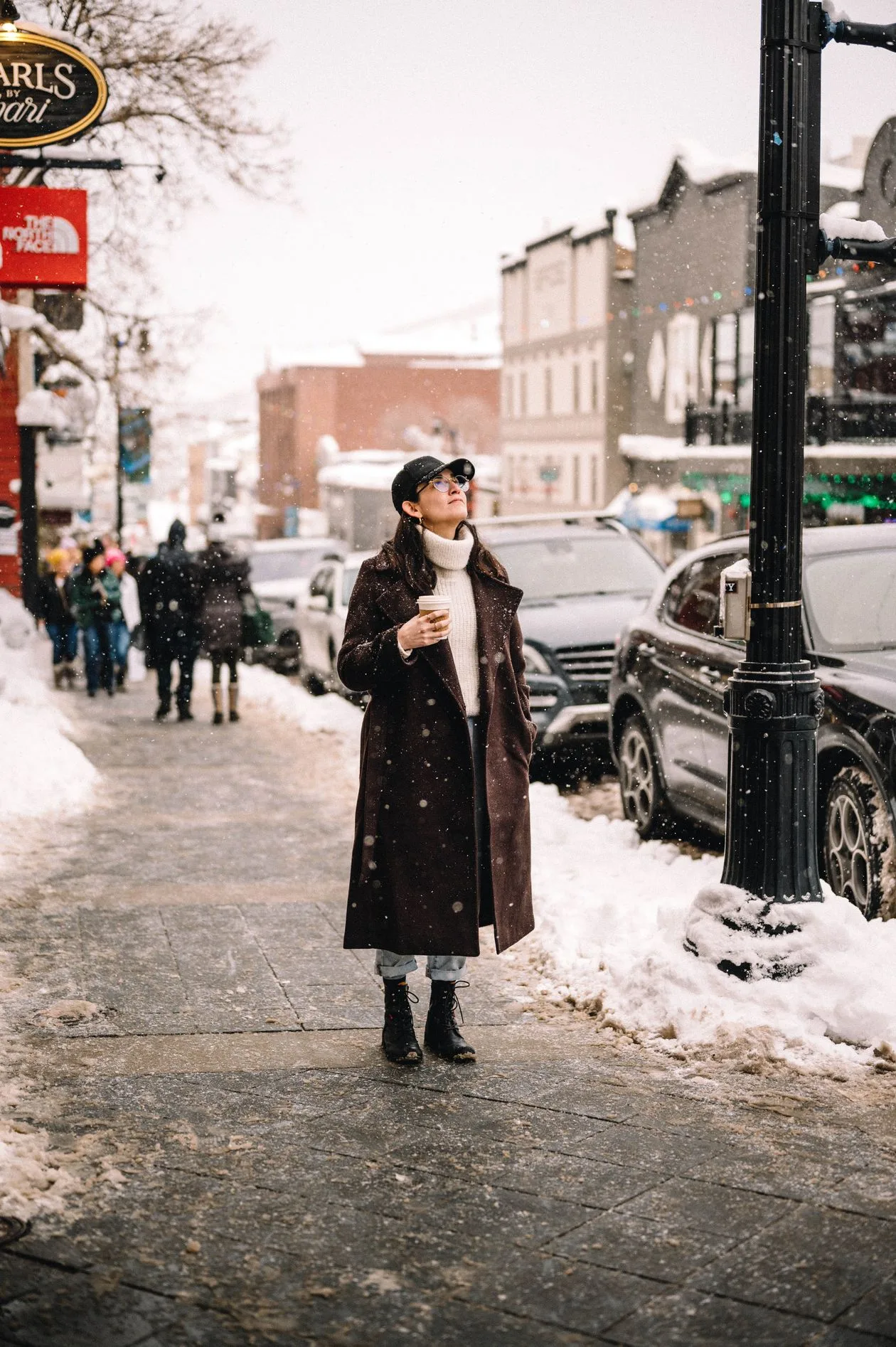
The snow-day uniform done right: a warm coat, a cap, gloves, and boots with grip — practical first, and it still looks good.
The layering system: three layers, each with its own job
Everything on a snow day works or fails as a system. The outdoor world has used the same three-layer system for decades, because each layer does one job and one job only: the three layers, each with its own job are a base layer that wicks sweat off your skin, a middle layer that traps body heat, and an outer shell that shields you from wind and rain — or, on a snow day, from wet snow and slush.
Layer 1 — the base. A thermal base layer sits against your skin and moves sweat away from it. If you sweat into a damp layer and then stop moving — waiting for a bus, standing in a queue — that damp layer turns cold against your skin, and you chill fast. Choose merino wool or a synthetic thermal; both wick and dry quickly. For the full guide, see our thermal base layers for women.
Layer 2 — the middle. The insulating layer traps the heat your body makes. A wool sweater, a fleece or a lightweight puffer all work; under a parka, a midweight wool sweater or fleece layers best. Down is the warmest insulation for its weight, but it loses its loft — and its warmth — when it gets wet, so a down layer belongs under a waterproof shell, never as the outer layer in wet snow.
Layer 3 — the shell. Your coat has to block wind and wet snow. A waterproof or water-resistant parka with a hood is the snow-day standard: long enough to cover the hip, with a hood you can pull up when the snow comes sideways. A wool coat looks better and is warm in dry cold, but wool soaks through in wet snow and takes hours to dry — save it for dry days. For choosing the coat itself, read how to choose a winter coat.
Adjust as you go. The point of layers is that you can take one off: remove the shell the minute you are indoors and warm, and put the middle layer back on at every rest stop before you get chilled. For the no-bulk version of this system, read how to layer clothes in winter without looking bulky.

Heavy snowfall is the test of the layering system: the shell keeps the snow out, the layers underneath keep the warmth in.
Boots first: tread, waterproofing and fit
On a snow day, boots are not an accessory — they are the most important decision you will make, and the one that decides whether you get where you are going upright. Choose them on three things: tread, waterproofing and fit. Tread. The sole has to grip ice and packed snow. Look for deep, widely spaced lugs — the chunky zigzag pattern on a proper winter boot — and a rubber compound that stays flexible in the cold. Check the tread before you buy: press a thumbnail into the rubber — if it feels hard and plasticky, it will be slippery when cold. A smooth sole, a leather sole or a fashion heel has almost no grip on ice, however good the boot looks. Waterproofing. Slush is the real test: water mixed with salt and grit, and it soaks through non-waterproof boots in minutes. The boot needs a waterproof membrane or fully waterproof treated leather, and a gusseted tongue — sewn to the boot up the sides — so slush cannot pour in over the top. A shaft that reaches mid-calf or higher keeps slush out and snow off the ankle. Fit. Wear the socks you will actually wear — thick wool socks — when you try boots on. A boot that fits in thin socks will pinch in wool ones, and a boot that pinches cuts off circulation, which makes feet colder, not warmer. Leave a thumb’s width at the toe and lace snugly around the ankle. For the fabrics that keep each layer warm, see the warmest fabrics for winter.

Boots are the most important decision on a snow day. Lace them snugly, check the tread, and treat them before you go out — not after.
What to wear on your bottom half — and your hands, head and neck
Bottom half. Wool trousers, fleece-lined jeans, or waterproof trousers are the snow-day choices. Fleece-lined jeans are the best everyday compromise: they look like normal jeans and carry a hidden thermal layer. Ordinary jeans are a snow-day trap — denim soaks up slush at the hem, stays wet, and clings cold against the leg. If you must wear ordinary jeans, wear thermal leggings underneath and tuck the hem into the boots. Whatever you wear, the hem belongs inside the boot shaft, not dragging in the slush.
Hands. Insulated, water-resistant gloves — not knit gloves, which soak through in wet snow in minutes and then freeze your fingers. Mittens are warmer than gloves because the fingers share heat; glove liners under shell mittens are the warmest setup of all. Head and neck. A beanie that covers the ears, or a trapper hat with ear flaps on the coldest days. A scarf closes the gap between coat and chin; tuck the ends in, because a long loose scarf is a hazard around car doors and bus doors.
What not to wear on a snow day. This is the list that saves the day:
| Never wear | Why it fails | Wear instead |
|---|---|---|
| Cotton against the skin | Soaks up sweat and snow, dries slowly, chills you | Merino or synthetic thermal base |
| Ordinary jeans in slush | Hem soaks, stays wet and cold | Fleece-lined jeans or wool trousers |
| Fashion boots or trainers | No tread, no waterproofing | Waterproof winter boots, deep lugs |
| Smooth leather soles | No grip on ice | Rubber lug soles, or ice grips |
| Knit gloves | Soak through in wet snow | Insulated water-resistant gloves or mittens |
| A wool coat in wet snow | Soaks through, dries slowly | Waterproof parka with a hood |
| A short jacket, gap at the waist | Snow and wind get in at the waist | Hip-length parka, layers tucked in |
| Suede boots or a suede bag | Salt and slush stain suede fast | Waterproof leather or synthetic boots |
The cotton rule deserves emphasis, because it is the mistake even experienced winter dressers make: cotton is a no-no in any layer — it soaks up water and takes forever to dry out. On a dry cold day cotton is merely less warm; on a wet snow day it is actively cold.
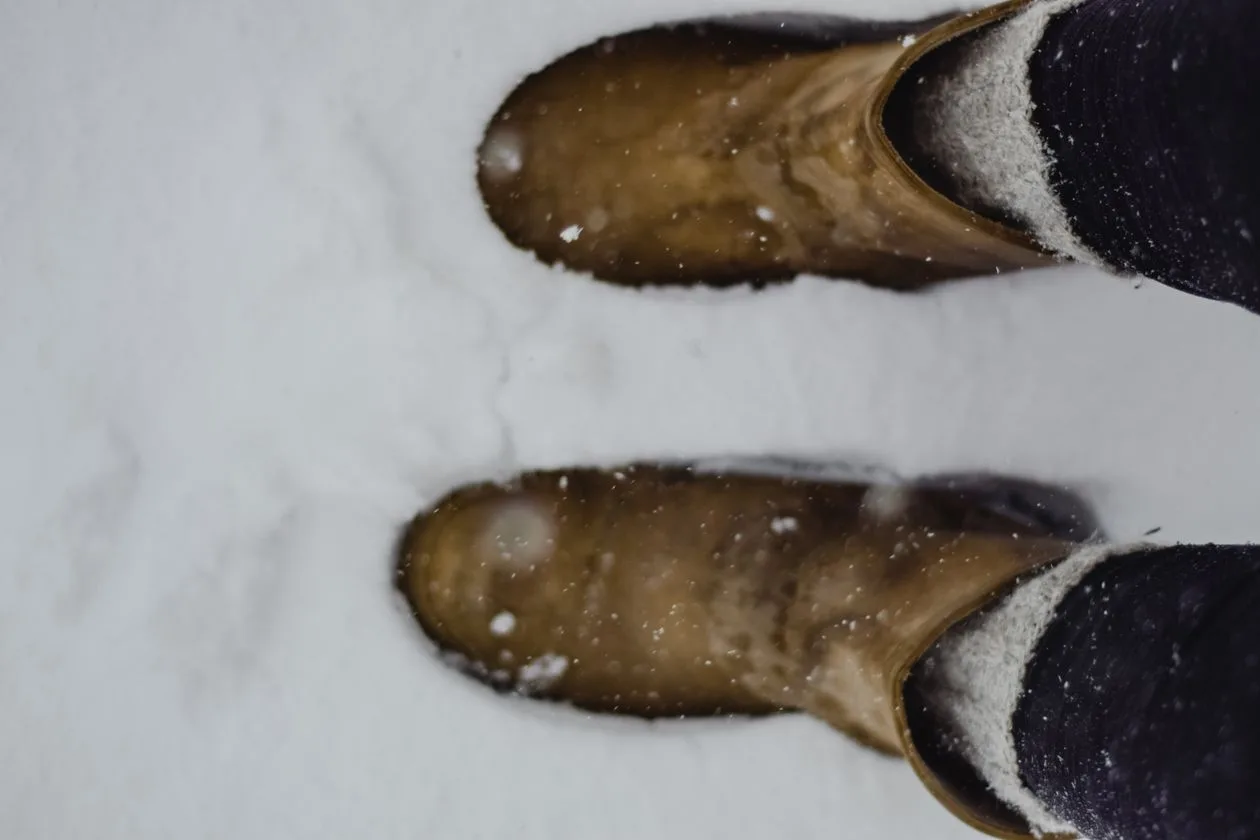
Wool socks inside the boots, tread underneath them: the two details that decide whether a snow day ends warm and upright.
Three snow-day outfits that actually work
The snowy commute. Thermal base top and bottom, a merino sweater, a waterproof hip-length parka with a hood, fleece-lined jeans tucked into mid-calf waterproof boots with deep tread, wool socks, a beanie and insulated gloves. Everything is dark or neutral, so salt marks do not show until you clean them. Our guide to winter work outfits for cold commutes covers the work version of this in detail — this is the snow-day version of the same outfit, with the waterproofing turned up.
Errands and the school run. Thermal base, a fleece mid-layer, a long waterproof parka, wool trousers or fleece-lined leggings under a long coat, waterproof boots, mittens and a neck gaiter.
A day out in falling snow. Thermal base, a chunky knit as the visible middle layer, a waterproof parka worn open over it when the snow eases, straight wool trousers, knee-high waterproof boots, a beanie and a scarf in one accent colour — the snow is the backdrop, so one warm colour (rust, burgundy, mustard) is all the outfit needs.
Coming home: drying, salt stains and storage
What you do when you come in decides whether the outfit survives the season. Boots first. Knock the snow off outside the door, then wipe the uppers with a damp cloth to remove road salt before it dries — salt left on leather draws out moisture and leaves white marks and cracks. For the full method, see how to clean leather boots and remove winter salt stains. Stuff the boots loosely with newspaper to hold their shape and absorb moisture from inside, and let them dry at room temperature, away from radiators: forced heat cracks leather and melts adhesives. Coat and layers. Hang the parka and shake the snow off before it melts into the fabric. Lay wet knits flat to dry, not on a hanger that stretches them. Gloves and hats. Turn gloves inside out to dry, and dry hats flat.
Common mistakes and how to fix them
- Wearing cotton as a base layer. It soaks and chills you. Fix: merino or synthetic thermals, top and bottom.
- Fashion boots on ice. No tread means no grip. Fix: deep-lug winter boots, or ice grips over smooth soles.
- A short jacket with a gap at the waist. Wind and snow get in at the waist. Fix: a hip-length parka, layers tucked in.
- Wearing suede in slush. Salt stains suede fast and is hard to remove. Fix: waterproof leather or synthetic boots for snow days.
- Letting salt dry on boots. White marks set in. Fix: wipe boots with a damp cloth the moment you come in.
- Drying boots on a radiator. Heat cracks leather. Fix: newspaper inside, room temperature, patience.
Shopping guidance: what to buy first
Buy the boots first — they are the piece the snow day is decided by, and the piece you cannot improvise. Spend on waterproofing and tread before you spend on looks: a waterproof membrane, a gusseted tongue, deep rubber lugs and a mid-calf shaft. Then the parka, if yours is not waterproof: hip-length, hooded, with a storm flap over the zip. No prices are promised here, because they change by store and season. If the budget only stretches to one thing this winter, make it the boots — a good coat cannot save a snow day in bad boots, but good boots can save a snow day in an ordinary coat.
Frequently asked questions
What should a woman wear on a snow day?
Three layers — a thermal base, a warm middle layer and a waterproof outer layer — with waterproof winter boots with deep tread, wool socks, a warm hat, gloves and a scarf. Fleece-lined jeans or wool trousers on the bottom half, and no cotton against the skin.
What boots are best for a snow day?
Waterproof winter boots with deep rubber lugs, a mid-calf shaft and a gusseted tongue, worn with wool socks. The tread is what keeps you upright on ice, and the waterproofing is what keeps slush out — fashion boots and trainers fail on both.
Can you wear jeans in the snow?
Fleece-lined jeans, yes — they look like normal jeans and carry a hidden thermal layer. Ordinary jeans, no: the hem soaks up slush, stays wet and clings cold to your leg. If you wear them, wear thermal leggings underneath and tuck the hem into your boots.
What should you not wear in wet snow?
Cotton against the skin, ordinary jeans, fashion boots or trainers, smooth leather soles, knit gloves, a wool coat as the outer layer, and suede boots or bags.
How do I remove salt stains from winter boots?
Wipe the salt off with a damp cloth as soon as you come in, before it dries — then clean, condition and re-waterproof the leather. Our full guide to cleaning leather boots and removing winter salt stains covers it step by step.
Conclusion
A snow day is a system, not a look: a base layer that wicks, a middle layer that insulates, a shell that blocks wind and wet snow, and boots with real tread worn over wool socks. Keep cotton out of every layer, keep the hem inside the boot, and wipe the salt off the moment you come in. Dress that way and a snow day stops being something to endure — it becomes a day you can walk through warm, dry and upright, and still look good doing it.