

White in winter sounds like a mistake. White shows dirt, white looks cold, and there is an old rule — no white after Labour Day — that still makes people hesitate. But the rule was about summer whites, not winter ones, and winter white is one of the season’s best looks: cream knits, ivory coats, white jeans and white boots all work in cold weather, and they do something dark winter outfits cannot — they brighten the whole outfit in flat winter light. Learning how to wear white in winter is mostly about picking the right white, the right fabric, and the right amount.
This guide covers all three: the shades of white that work in winter, the fabrics that keep you warm, the outfit formulas for work, weekends and evenings, and how to keep white clean when the streets are not.
The quick answer: cream is the easy white, bright white is the accent
If you want one rule, it is this: wear cream and ivory as your main whites in winter, and use bright white as an accent — a shirt, a knit, a pair of boots — rather than as a full outfit. Cream and ivory are warm, forgiving and easy to pair with the dark colours of winter; bright white is sharper, shows dirt faster, and needs a darker base around it to look deliberate.
The simplest winter white outfit is a cream knit, dark jeans and a dark coat. The cream is the light in the outfit, the dark pieces are the frame, and nothing about it is difficult. From there you can add more white — white jeans, an ivory coat, white boots — one piece at a time.

What is winter white?
Winter white is not one colour. It is a family of whites — bright white, ivory, cream, off-white, oatmeal and ecru — worn in winter fabrics and winter outfits. White is the lightest colour, the colour of snow, chalk and milk, and that is exactly why it works in winter: against snow, grey skies and dark coats, white reads as clean and bright, not as summery.
The old “no white after Labour Day” rule came from a time when white meant lightweight summer linen and cotton, worn in a season when it made sense. Winter white is the opposite: heavy wool, cashmere, denim and leather, in shades that suit cold weather. The rule does not apply, because the clothes it was about are not the clothes in this guide.
Three shades matter most:
- Bright white — the sharpest white, like a fresh shirt. Best as an accent: a shirt under a dark coat, a knit with dark trousers, white boots with dark jeans.
- Cream and ivory — warm whites with a yellow undertone. The easiest winter whites: cream knits, ivory coats, cream scarves. They pair with everything dark in a winter wardrobe.
- Off-white and oatmeal — whites with a grey or beige undertone. The most forgiving whites: they hide marks better than bright white and sit comfortably with camel, grey and chocolate.
Mixing whites is fine, but keep them in the same family: cream with ivory works, cream with oatmeal works, bright white with cream can look like a mistake — as if one piece was meant to match and does not. When in doubt, hold the two pieces together in daylight before you wear them out.
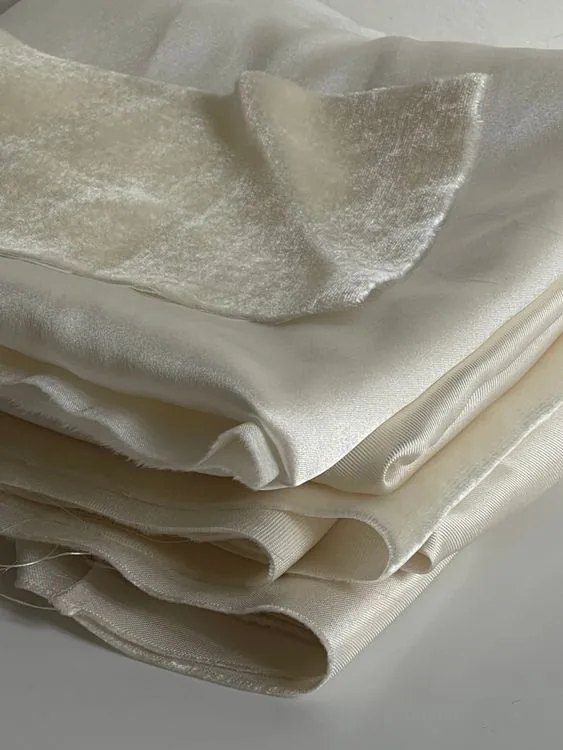
Fabrics: why white works in winter (when the fabric is right)
White in winter only works in winter fabrics. A white linen shirt in January looks wrong because the fabric is wrong, not because the colour is wrong. Wool fibres hold air, which causes the fabric to retain heat — and white wool, white cashmere and white denim are all warm, substantial fabrics that make white look like a winter choice.
The fabrics to choose:
- Wool and cashmere — cream and ivory knits are the core of winter white. A cream cashmere roll-neck under a dark coat is the single most useful white piece in a winter wardrobe.
- Denim — white and ecru jeans work all winter. They are heavy enough for cold weather, they pair with every dark coat, and they are easier to keep clean than a white knit because denim is washable and hard-wearing.
- Leather and suede — white and cream boots, and a cream leather bag, are the accessories that make a winter white outfit look deliberate. White boots with dark jeans and a dark coat is a complete outfit.
- Coating wool — an ivory or cream wool coat is the boldest white piece, and the most rewarding. It needs a dark base underneath — dark jeans, dark boots, a dark bag — so the coat is the light in the outfit, not the whole outfit.
Avoid white in thin, shiny fabrics in winter: thin white polyester, shiny white satin and white linen all read as summer, and they show every mark. If a white fabric looks thin enough to see through, it is not a winter fabric.
How to wear white in winter: the white coat
A white or ivory coat is the statement piece of winter white, and it is easier to wear than it looks — as long as the rest of the outfit is dark. An ivory wool coat over dark jeans, dark boots and a dark bag is the formula: the coat is the light, everything else is the frame. A cream coat over a cream knit and cream trousers is the harder version — an all-cream outfit — and it works, but it needs texture to keep it from looking flat: a knit, a wool coat and leather boots in different textures read as separate pieces, while three flat cream fabrics can merge.
Wear a dark scarf with a white coat, not a white one. A dark scarf frames the face, protects the collar from makeup and dirt, and gives the coat contrast at the neck. A burgundy, navy or chocolate scarf with an ivory coat is the classic combination.
White knits: the easiest entry point
A white or cream knit is the easiest way into winter white, and the piece to buy first. A cream crew-neck or roll-neck works with dark jeans, grey wool trousers, navy skirts, chocolate trousers and black tailored trousers — which is to say, with almost everything in a winter wardrobe. Keep the knit simple: the colour is the point, so it does not need a pattern as well.
Layering a white knit is straightforward: under a dark coat, the knit shows at the neck and cuffs, which is enough white to brighten the outfit. Under a camel or chocolate coat, a cream knit is the light layer that stops the outfit looking heavy.
White knits show marks, so buy one you can wash easily — machine-washable wool or a wool blend is more useful than a dry-clean-only cashmere for everyday wear, even if the cashmere feels better.
White jeans in winter
White jeans in winter work, and they are one of the most useful white pieces because they are washable. Ecru and off-white jeans are the easiest: they hide marks better than bright white, and they pair with every dark coat. Bright white jeans work too, but they need a darker top half — a navy or chocolate coat, a dark knit — so the outfit has balance.

Outfit formulas: work, weekend, evening and all-white
Work: cream knit, charcoal tailored trousers, navy coat, dark leather shoes, dark bag. Or a white shirt, navy blazer, dark trousers, dark shoes — the white shirt is the white in the outfit, and the rest is dark and tailored.
Weekend: cream roll-neck, white or ecru jeans, chocolate coat, brown boots. Or a cream knit, dark jeans, dark coat, white ankle boots.
All-white (or all-cream): cream knit, ivory coat, ecru jeans, cream boots — with texture doing the work: knit, wool, denim and leather in different textures, so the pieces read as separate. Add one dark accessory — a chocolate bag or dark gloves — if the all-white feels too pale. An all-white outfit is the hardest version and the most striking when it works; try it first on a dry day, not a slushy one.
For more outfits to build these formulas on, see these winter outfit ideas for women and these quiet luxury outfits for 2026 — winter white sits naturally in both.

Keeping white clean in winter
White in winter is a care question more than a style question. The habits that keep it wearable are small:
- Spray before you wear. A fabric protector on a new white coat or white boots, before the first wear, is worth more than any cleaning afterwards.
- Deal with marks the same day. Salt, slush and coffee all come out more easily the same day than the next week. A damp cloth and a little patience is usually enough for a coat; a knit can go in the wash.
If a white coat gets badly marked, take it to a cleaner rather than experimenting at home — wool coating does not forgive harsh treatment. And read how to care for silk, cashmere, velvet and wool before the season’s first wash, because white wool and cashmere show every mistake first.
Shopping guidance: what to buy first
You do not need a white wardrobe. Start with what you own — dark jeans, a dark coat, dark boots — and add white in this order:
- One cream knit. The piece that makes every dark coat work, and the easiest white to wear.
- One white or cream shirt for work, under a blazer or a dark coat.
- White or ecru jeans, and white or cream boots. Washable, hard-wearing, and the white pieces you will wear most after the knit.
If you are working to a budget, build a capsule wardrobe on a budget first and add the cream knit as the single seasonal update. And if you want to place cream and ivory in a classic colour scheme, the old money colour palette shows where they sit.
Check whites in daylight before buying — cream can look yellow and bright white can look blue under shop lighting — and hold a new white piece next to the whites you already own before you pay for it.
Common mistakes and how to fix them
- Wearing white in the wrong fabric. Thin white linen or shiny polyester in January reads as summer. Fix: choose wool, cashmere, denim or leather for white in winter.
- Mixing whites that do not match. Bright white trousers with a cream coat can look like a mistake. Fix: keep whites in the same family, or make the difference obvious — a bright white shirt under a cream knit is fine, because the shirt is clearly an accent.
- An all-white outfit with no texture. Three flat white fabrics merge into one pale block. Fix: change the textures — knit, wool, denim, leather — before you change a colour.
- White with nothing dark. An all-white outfit with white shoes, a white bag and a white coat can look washed out in winter light. Fix: add one dark accessory — a chocolate bag, dark gloves, dark boots.
- Wearing white on a slushy day without a plan. White trousers on a wet, salty street will mark. Fix: save the whitest outfits for dry days, and keep a dark coat and dark boots for the worst weather.
- Forgetting the underlayers. A white knit over a dark bra or a dark top can show through. Fix: wear nude or white underlayers under white knits, and check in daylight before you leave.
Frequently asked questions
Can you wear white in winter?
Yes. The “no white after Labour Day” rule was about lightweight summer whites. Winter white — cream and ivory wool, cashmere, denim and leather — is one of the season’s best looks.
Can you wear white jeans in winter?
Yes. White and ecru jeans work all winter: they are heavy enough for cold weather, washable, and they pair with every dark coat. Wear them with a dark coat and dark or brown boots for balance.
How do I keep white clothes clean in winter?
Spray new pieces with fabric protector before the first wear, deal with marks the same day, wash white knits separately on a gentle cycle, and protect the collar of a white coat with a dark scarf.
Is an all-white winter outfit a good idea?
It can be striking, but it is the hardest version. Keep the textures different — knit, wool, denim, leather — and add one dark accessory if it feels too pale. Try it first on a dry day.
Conclusion
How to wear white in winter comes down to three choices: pick the right white — cream and ivory first, bright white as an accent — pick the right fabric — wool, cashmere, denim and leather — and pick the right amount — one or two white pieces per outfit, with dark pieces around them. Start with a cream knit, add white jeans, and let the coat stay dark until you are ready for ivory. White in winter is not a risk. It is the light in a dark season.