

Most winter clothes are not ruined while you wear them. They are ruined in storage: moth holes in a favourite sweater, a musty smell that will not wash out, a coat that comes back creased, or knitwear stretched by the wrong hanger. Learning how to store winter clothes without damage is mostly about doing a few simple things in the right order — clean, fold or hang correctly, pack in the right container, and keep out moths and damp.
This guide works through the process piece by piece: what to clean and how, what to fold and what to hang, which containers to use, and how to keep moths away.

The quick answer: clean, fold knits, hang coats, store dry
Wash or dry-clean everything before it goes away — clean clothes attract far fewer moths than worn ones. Fold knitwear flat; hang coats on wide wooden hangers. Use breathable cotton bags or lidded boxes, not airtight plastic, and add cedar blocks or lavender sachets for moth protection. Store everything in a cool, dry, dark place, and check on it once over the summer.
That is the whole method. The rest of this guide is the detail: which pieces need which treatment, and the mistakes that undo it.
Why winter clothes get damaged in storage
Four things damage stored clothes: moths, moisture, crushing and gravity. Clothes moth larvae eat animal fibres — wool, cashmere, silk and fur — and they are drawn to the food stains, sweat and body oils left on worn clothes. That is why the most important storage step is cleaning.
Moisture causes mustiness and mildew, and it thrives in sealed plastic bags and damp rooms. Crushing comes from overstuffed boxes and tall stacks: the sweater at the bottom spends months compressed and loses its loft. Gravity is the slow one — a knit hung on a narrow hanger stretches at the shoulders month by month.
Winter clothes are especially vulnerable: they are made of the fibres moths like, they are bulky enough to crush each other, and they sit untouched for months.
Step 1: clean everything before it goes away
Never store a winter garment dirty. Food stains, sweat, perfume and body oils attract moths, and a stain left for months can set permanently. Wash what can be washed, and dry-clean what cannot. Check the GINETEX care symbols on each label first: they tell you the maximum wash temperature and whether the piece can be machine washed, hand washed or dry-cleaned only.
Wool and cashmere sweaters should be washed by hand or on a wool cycle, then dried flat. For the full fabric-by-fabric rules, see how to care for silk, cashmere, velvet and wool. Down jackets need a proper wash and a full dry before storage, because damp down clumps and smells. Leather and suede should be brushed clean and left to air, not washed. The end-of-season clean is the one that matters: it removes the season’s dirt and oils before months in storage.
Make sure everything is completely dry before packing: a garment can still hold moisture in thick seams and linings, so leave freshly washed pieces out for a full day after they feel dry. Packing even slightly damp clothes is how mustiness starts.
Step 2: sort, repair and decide what stays
Storage is the best time to edit your winter wardrobe. Lay everything out and sort it into three groups: keep and store, keep and wear through the warmer months, and let go.
Check each piece as you sort it. Fix small problems now — a loose button, a dropped hem, a small hole — because they are worse after months in a box. If you have not worn a piece in two winters, let it go rather than storing it.
Sort by type as well as by season: knits together, coats together, scarves together. It makes packing easier, and unpacking in order when winter returns. Sorting is also the habit that makes a small wardrobe work year-round — see how to build a capsule wardrobe on a budget.
Fold or hang? The rule for every winter piece
The rule is simple: hang structured pieces, fold soft ones. A coat has shape built into it — shoulders, lapels, lining — and hanging keeps that shape. A knit has no structure, only loops of yarn, and hanging lets gravity pull those loops out of shape.
| Piece | Fold or hang | Why |
|---|---|---|
| Wool and cashmere sweaters | Fold | Hanging stretches the shoulders and lengthens the body |
| Coats and jackets | Hang | Keeps the shoulders and shape; use a wide wooden hanger |
| Scarves and hats | Fold | Small, soft, and easily crushed if hung |
| Down jackets | Hang or fold loosely | Either works if the down is fully dry; do not compress tightly |
| Wool trousers and skirts | Hang or fold | Hang by the waistband, or fold along the crease |
| Boots and shoes | Neither — stuff and box | Stuff with paper to hold the shape, store upright |
For folded knits, fold loosely rather than pressing sharp creases into the fabric. Keep stacks short — three or four sweaters at most — with the heaviest at the bottom and the lightest on top, so nothing is crushed.
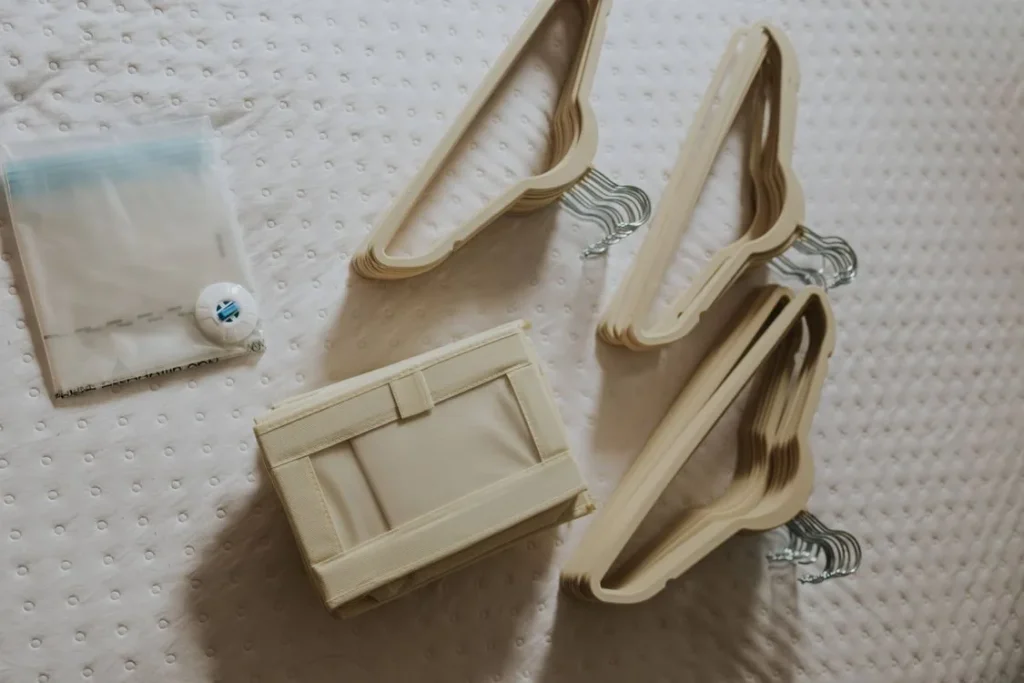
For hanging, use wide wooden or padded hangers, never thin wire ones: wire concentrates the weight and leaves marks on shoulders. Fasten the top button of a coat so it holds its shape, and leave space between garments so air can circulate.

How to store winter clothes: choosing the right container
Breathable storage is the goal: air should move slowly, moisture should escape, and moths and dust should stay out. The best options are cotton garment bags for hanging pieces and fabric storage boxes or lidded cardboard boxes for folded ones.
Avoid airtight plastic bags and vacuum-sealed bags for long-term storage. Vacuum bags crush the loft out of knits and down, and sealed plastic traps moisture left in the fabric, which is how mildew starts. They are fine for a short move, but not for months.
Label every box on the outside with what is in it, so you are not opening five boxes to find one sweater in October. Keep boxes off the floor — a low shelf protects them from damp.
Storing coats and jackets
Coats are the most expensive winter pieces and the easiest to store well, because hanging does most of the work. Brush each coat before storing, empty every pocket, and fasten the top button so the coat holds its shape.
Hang coats on wide wooden hangers with space between them for air to circulate. Cover each coat with a breathable cotton garment bag, not plastic: cotton keeps dust off while letting moisture escape. A short piece of tissue paper tucked into the shoulders helps them keep their shape.
Leather and suede coats need air more than most materials, so never seal them in plastic. Brush suede gently, let leather air out for a day, and store both in cotton bags in a dry place. The wool coats and knits in a quiet luxury capsule wardrobe are exactly the pieces that need this care.
Storing knitwear
Knits are the pieces moths want most, so they get the most care. Wash every sweater before storage, dry it flat, and fold it loosely. Store folded sweaters in a fabric box or a drawer, with tissue paper between layers and the stacks short. Put the moth protection — cedar blocks or lavender sachets — in the box with the knits.
Cashmere deserves its own box, or the top layer of a stack where nothing heavy sits on it. Never hang a sweater: months on a hanger can stretch the body permanently.
Storing boots and winter shoes
Boots hold their shape only if you help them. Stuff each boot with acid-free tissue paper, rolled-up clean cloth, or a boot shaper, so the shaft stands upright and the toe keeps its shape. Unstuffed boots slump and crease at the ankle over a summer.
Clean boots before storing: brush off salt and dirt, wipe leather with a damp cloth and let it dry fully, and brush suede with a suede brush. Salt left on leather over the summer can stain and crack it. Store boots upright in their original boxes or a fabric shoe bag, in a cool dry place — never in a damp basement or a hot attic.
Keeping moths away
Moth protection works best as a routine, not a single product. Clean clothes and checking stored pieces once or twice over the summer do more than any repellent on its own. Cedar blocks and lavender sachets are the gentlest options: they smell pleasant and discourage moths, though they need refreshing when their scent fades. Sand cedar blocks lightly to renew the scent, and replace lavender sachets each season.
Pheromone traps catch adult male moths and tell you whether moths are active, but they do not protect clothes. Mothballs work, but they smell strongly and need care in handling; keep them away from children and pets and follow the packaging instructions exactly.
The most important habit is the check: open your stored boxes once in mid-summer and look for small holes, webbing, tiny larvae or a musty smell. Finding moths early means washing the affected pieces before the damage spreads.

Where to store winter clothes
The best storage spot is cool, dry, dark and stable: a bedroom closet, a spare-room wardrobe or a dry cupboard. The worst spots have temperature swings and damp — a hot attic, a damp basement, a garage or a shed. Heat and humidity encourage mould and moths.
If closet space is tight, under-bed boxes work well for folded knits, as long as they are breathable and the room is dry. Keep boxes away from outside walls, which can be cold and damp, and never store clothes on the floor.
Darkness matters too: sunlight fades colours and weakens fibres over months, so a lidded box beats an open shelf in a sunny room.
Common storage mistakes
- Storing clothes dirty. Food stains, sweat and oils attract moths. Always clean before storing.
- Hanging knitwear. Gravity stretches knits on a hanger. Fold sweaters, always.
- Using vacuum bags for months. They crush wool and down, and trap moisture. Fine for a move, not for a season.
- Sealing leather or suede in plastic. Both need air. Use cotton bags, never plastic.
- Packing damp clothes. Even slightly damp fabric grows musty in a closed box. Dry everything fully first.
- Overstuffing boxes. Crushed clothes lose their shape and trap moisture. Leave room for air.
- Forgetting the mid-summer check. One quick look in July catches moths and damp early.
- Storing on the floor or against a damp wall. Keep boxes raised and away from damp walls.
Bringing winter clothes back out
When the cold returns, air everything before wearing it: hang coats in fresh air and lay knits flat near an open window. A sweater that still smells musty after a day of airing needs a wash. Check each piece as you unpack it for moth holes and stains, and wash everything in a box where moths were found. Good storage pays off twice: your winter clothes last longer, and getting dressed in October is a pleasure instead of a repair job. For outfit ideas with the pieces you stored, see winter outfit ideas for women. The investment pieces worth buying guide covers what is worth spending on.
Frequently asked questions
How do you store winter clothes without damage?
Clean everything first, fold knits, hang coats on wide wooden hangers, use breathable cotton bags or fabric boxes, add cedar or lavender, and store in a cool, dry, dark place. Check the boxes once over the summer.
Can you store winter clothes in vacuum bags?
For a short time, yes. For a whole season, no: vacuum bags crush the loft out of wool and down, and sealed plastic traps moisture that causes mustiness. Breathable fabric boxes are better for long storage.
How do you keep moths out of stored clothes?
Store clothes clean, since moths are drawn to food stains and body oils. Use cedar blocks or lavender sachets, and check stored clothes once or twice over the summer for holes or webbing.
Should you fold or hang sweaters for storage?
Fold them. Hanging stretches knitwear at the shoulders and lengthens the body over time. Fold sweaters loosely, keep stacks short, and put the heaviest knits at the bottom.
Where is the best place to store winter clothes?
A cool, dry, dark closet or wardrobe inside the house. Avoid hot attics, damp basements and garages, where heat and humidity encourage mould and moths. Keep boxes off the floor and away from outside walls.
Conclusion
Storing winter clothes without damage is a short routine: clean everything, fold the knits, hang the coats, pack in breathable containers, add moth protection, and store in a cool, dry, dark place. Check once over the summer. Skipping it is how a good coat ends up creased, a favourite sweater ends up with holes, and boots end up slumped out of shape.