

How to style shearling coat women — the question is really two questions, because shearling comes in two very different shapes. There is the short aviator jacket, cropped at the hip with a wide collar, and there is the long belted coat, falling to the calf with a self-tie belt. Both are warm, both are bulky, and both reward the same discipline: keep what goes underneath slim, let the coat be the loudest thing in the outfit, and match the cut to where you are actually going. Faux fur follows the same rule — see our guide to how to style a faux fur coat.
How to style shearling coat women: the quick answer
Pick the cut first. An aviator suits jeans and boots, a long belted coat suits tailoring and dresses. Underneath, wear thin, close layers — a fine knit, a silk shirt or a thin roll-neck — never a chunky jumper, which doubles the bulk. Balance the volume on top with a slim or straight line below: straight jeans, slim trousers, a column skirt. Keep the palette tight in tan, chocolate, black and cream.

The aviator in action: a cropped tan shearling jacket over denim, with the shearling collar and cuffs doing the work and the rest of the outfit kept plain.
What shearling actually is
Shearling is sheepskin tanned with the fleece left on, so it is warm and it is bulky. MOJEH’s guide to how to style a shearling coat puts the trade-off plainly: it is warm and bulky, and the way you style it decides whether you look sleek or swallowed. One material gives you both sides — a suede or leather face on the outside, a thick wool fleece on the inside — which is why a shearling coat feels surprisingly light for how warm it is. The fleece is the insulation; the suede face marks in heavy rain, so shearling is not a raincoat.
Faux shearling is the other option: a suede-look or leather-look outside with a synthetic fleece inside. It costs far less, it is usually easier to clean, and it looks close to the real thing in a photo. It does not age the way real shearling does — the suede softens and the collar relaxes with wear — but for a first shearling-style jacket it is a sensible buy. The styling rules in this guide work for both, because the volume is the same either way.
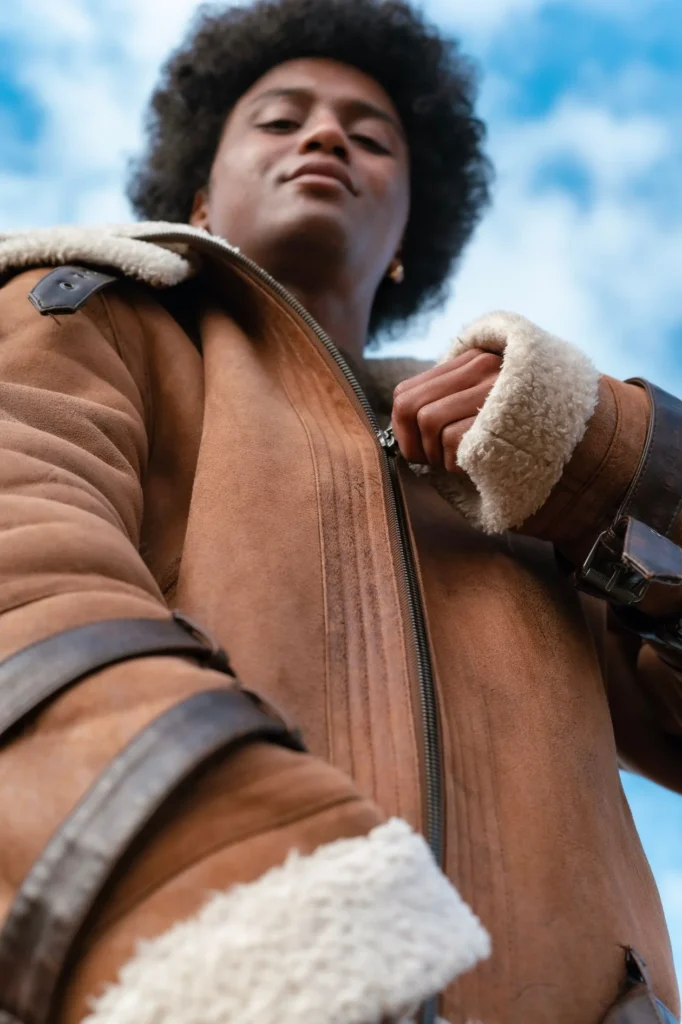
What shearling looks like up close: a suede-faced outside, a thick fleece inside, and the zip, cuffs and collar that mark the aviator shape.
Aviator vs long belted: choosing your cut
Most styling problems start at the shop, not in front of the mirror. A shearling coat is a long-term buy, so the silhouette matters more than any trend attached to it this season.
The aviator jacket. The aviator traces back to the B-3 bomber jacket issued to American aircrews in the Second World War, which is why it still has that wide collar and the buckled throat strap. It stops at the hip. It suits anyone who dresses mostly in denim and flat boots, and anyone who finds long coats overwhelming on a petite frame. Wear it open with straight-leg jeans, a white T-shirt or a fine merino roll-neck, and let the collar do the work.
The long belted coat. A calf-length shearling with a self-tie belt is the dressier option, closer to a wrap coat than a jacket. It suits taller women and anyone who wears tailoring to work. Belt it over a knit dress or wide trousers and a fitted top so the waist reads clearly. Left open and unbelted, the same coat turns into a more relaxed weekend layer over jeans. For length and proportion, compare it with our guide to how to style a maxi coat in winter.
The reversed or curly shearling. Some coats wear the fleece on the outside, either smooth or in tight curls that look almost like bouclé. These read softer and more playful than suede-faced styles. Because the coat is already visually busy, everything else should be plain: black trousers, a black knit and simple leather boots.
The volume rules: keep everything underneath lean
This is the rule that does most of the work. Shearling adds width at the shoulders, chest and arms, so a cable-knit jumper underneath just doubles the bulk and makes the sleeves strain. A fine cashmere crew-neck, a silk shirt or a thin roll-neck keeps the line clean and stops you overheating indoors, which happens fast in a fully lined coat. Swap the chunky knit for a fine one, and wear the chunky knit sweater with a wool coat instead.
The same goes for the bottom half. Straight or slim trousers, column skirts and narrow jeans give the coat something to contrast against. Wide-leg trousers can work, but only with a shorter jacket or a belted long coat that defines the waist. Follow how to layer clothes in winter without looking bulky for the full method: thin base, fine mid-layer, coat on top, and nothing else.
Outfit formulas: jeans, work, evening
With jeans: a tan or brown aviator over mid-blue straight jeans is about as reliable as winter dressing gets. Add a cream knit for a softer feel or a black roll-neck if you want it sharper. For a long coat, darker denim looks more deliberate: indigo or black jeans with how to style knee-high boots in winter as the finish, the coat left open, a slim leather bag.
For work: a long belted shearling coat in chocolate or black over tailored trousers and a crisp shirt, or over a fine-knit midi dress with heeled boots. The softness of the coat balances the sharpness of the tailoring.
For evenings: a sleek black or chocolate shearling coat over a slip dress or a satin skirt with heeled boots. The contrast of rugged texture against something fluid is the whole appeal — keep the dress hem shorter than the coat, and keep jewellery simple at the neck, since the collar already frames the face.
With a dress: a long shearling coat over a slip dress or a fine-knit midi dress is one of the better ways to wear one. Knee-high boots close the gap between hem and coat in cold weather. On a milder night, a slingback or a pointed flat keeps the look light.
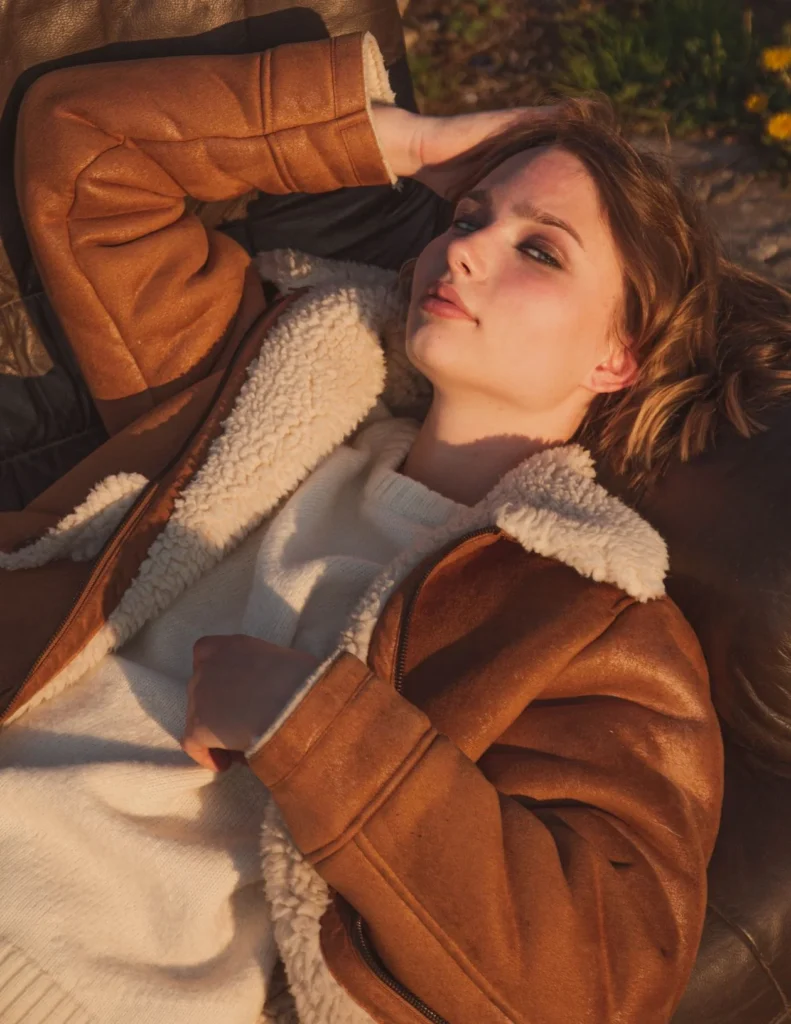
Shearling as a daytime layer: a tan jacket worn open over a white knit, with the fleece lining visible and nothing else competing for attention.
Colours: what lasts
Tan and cognac are the classics, partly because they age so well. The suede softens, the colour deepens, and the coat looks better in its third winter than its first. Dark chocolate pairs easily with black, cream and denim. Black is the most practical in a city and the easiest to dress up. Cream and ivory look striking, especially over all-white or camel outfits, though they show wear quickly — the collar and cuffs are the first places to look grubby.
Tonal dressing is the safest way to make any of these look considered. A chocolate coat over a brown knit and cream trousers, or cream shearling over winter whites, gives you a polished outfit with almost no effort.
Shoes and accessories
Boots are the natural choice. Knee-high leather boots suit long coats and dresses, while ankle boots and chunky-soled loafers sit well with aviators and jeans. Shearling-lined boots can look good, but only if the coat and boots are in different shades — otherwise the outfit starts to look themed. Trainers work with shorter jackets for a casual weekend look: keep them clean and minimal, in white or a colour pulled from the coat.
- Bags: a slim leather bag in black, chocolate or tan. Keep it smooth and structured.
- Jewellery: earrings and a ring carry more weight than a necklace, which disappears under the fleece collar. Gold reads warmer against tan and chocolate shearling.
- Scarves: a fine silk or fine wool scarf in a toning colour. A chunky scarf under a shearling collar crowds the neck, so keep it light or skip it.
- Gloves: leather gloves in black or dark brown are the practical choice, and they keep the suede cuffs clean.

The longer shearling coat, worn like a city coat: black turtleneck underneath, shearling collar framing the face, and the length doing the dressier work.
Common mistakes and how to fix them
- Wearing the wrong size. Shearling has little give, so a coat that is too small pulls across the back, while one that is too big hangs like a blanket. Fix: shoulders should sit at your natural shoulder line, with room for a thin knit underneath.
- Wearing a chunky knit underneath. It doubles the bulk and makes the sleeves strain. Fix: a fine cashmere crew-neck, a silk shirt or a thin roll-neck.
- Mixing too many textures. A curly shearling with a mohair jumper, a fur bag and fluffy boots is too much fuzz. Fix: pick one textured hero and let the other pieces be smooth.
- Wearing it in heavy rain. Suede-faced shearling marks in heavy rain. Fix: wear a waterproof coat on wet days.
- Pairing volume with volume. A long shearling coat over wide-leg trousers and a chunky knit hides the waist completely. Fix: a belted coat that defines the waist, or a shorter jacket with the wide leg.
- Buying the wrong length for your life. A calf-length coat is hard to wear if you mostly cycle or walk with a bag. Fix: choose the aviator for denim days, the long coat for tailoring and dresses.
Care and storage: keeping shearling soft
Shearling is a living material, and it rewards gentle, consistent care. The shearling jacket care guide is the care reference for this article: brush lightly, blot spills, never machine wash, and let it dry slowly. After each wear, shake the coat to remove dust, then brush the wool and suede lightly with a soft-bristle brush. If a spill happens, dab it with a clean cloth, never rub, and spot clean in small sections with a mild, wool-safe detergent in lukewarm water. Our guide to how to wear a leather coat in winter covers the leather side of the same care rules.
If the coat gets wet, shake off the excess water, blot with a clean towel, hang it on a broad padded hanger in a well-ventilated space, and let it dry naturally at room temperature, away from radiators and hairdryers. That often takes from overnight up to two days. Never machine wash or tumble dry shearling: saturation and dryer heat can permanently shrink, stiffen or distort the coat. For anything beyond light surface dust, and about once a year for a frequently worn jacket, take it to a professional cleaner who specialises in leather and shearling. Store it on a wide, padded hanger in a breathable cloth garment bag, never in plastic, in a cool, dry place.
Shopping guidance: what to buy first
Buy the best shearling you can afford, because the material is the whole point — the fleece is what keeps you warm, and the suede is what everyone sees. Before you pay, check three things: the fleece should feel dense and even, with no thin or bald patches; the suede should feel soft and supple, not stiff or papery; and the seams, zips and belt should feel solid, because shearling is heavy and weak hardware fails first. Try it on over a fine knit, not a T-shirt. No prices are promised here, because they change by store and season. If the budget only stretches to one shearling piece, make it an aviator in tan or chocolate: it works with jeans, it suits more frames than a long coat, and it is the easiest to wear every day.
Frequently asked questions
Is a shearling coat warm enough for winter?
Yes — shearling is one of the warmest winter materials, because the fleece is the insulation and the suede face blocks the wind. A fine knit underneath is usually enough.
Can petite women wear a shearling coat?
Yes, and the aviator is the best choice: it stops at the hip, it shows the waist and the legs, and it does not overwhelm a petite frame the way a calf-length coat can. Wear it open over straight jeans.
What should I wear under a shearling coat?
Thin, close layers: a fine cashmere crew-neck, a silk shirt or a thin roll-neck. Avoid chunky knits, which double the bulk and make the sleeves strain.
Can you wear a shearling coat to work?
Yes — a long belted coat in chocolate or black over tailored trousers and a crisp shirt, or over a fine-knit midi dress with heeled boots.
How do I clean a shearling coat?
Brush it lightly after wear, blot spills straight away, and spot clean in small sections with a mild, wool-safe detergent. Never machine wash or tumble dry it. For anything beyond light dust, take it to a professional cleaner who specialises in leather and shearling, about once a year.
Is faux shearling as warm as real shearling?
It is warm, but not as warm as the real thing, and it does not age the same way — real shearling softens and the collar relaxes with wear. Faux shearling is a sensible first buy: it costs far less, it is easier to clean, and the styling rules are the same.
Conclusion
Wearing a shearling coat well comes down to restraint. Pick a silhouette that suits your life — an aviator for jeans and boots, a long belted coat for tailoring and dresses — keep the layers underneath slim and quiet, and build the outfit around the coat instead of competing with it. Look after it gently, and it will get better with every winter.