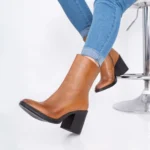

A leather coat is the most dramatic thing you can put on in winter — and the most misunderstood. None of that is quite true. The leather coat outfit winter women are wearing this season is one of the most wearable formulas of the season, because the coat itself does so much of the work: one long, belted layer over something simple, and the outfit is finished.
This guide covers the two lengths that matter — long and cropped — how to layer under leather so you stay warm, the three colours worth buying, work and weekend formulas, and the care basics that keep a leather coat looking good for years.
The quick answer: let the coat be the outfit
The rule for a leather coat is simple: let the coat be the outfit. Pick one long leather coat, belt it if it has a belt, keep what is underneath simple, and let your boots be the only other thing people notice. A coat that ends below the knee works with almost any boot, because the coat covers the top of the boot and you see only a clean line down to the toe.
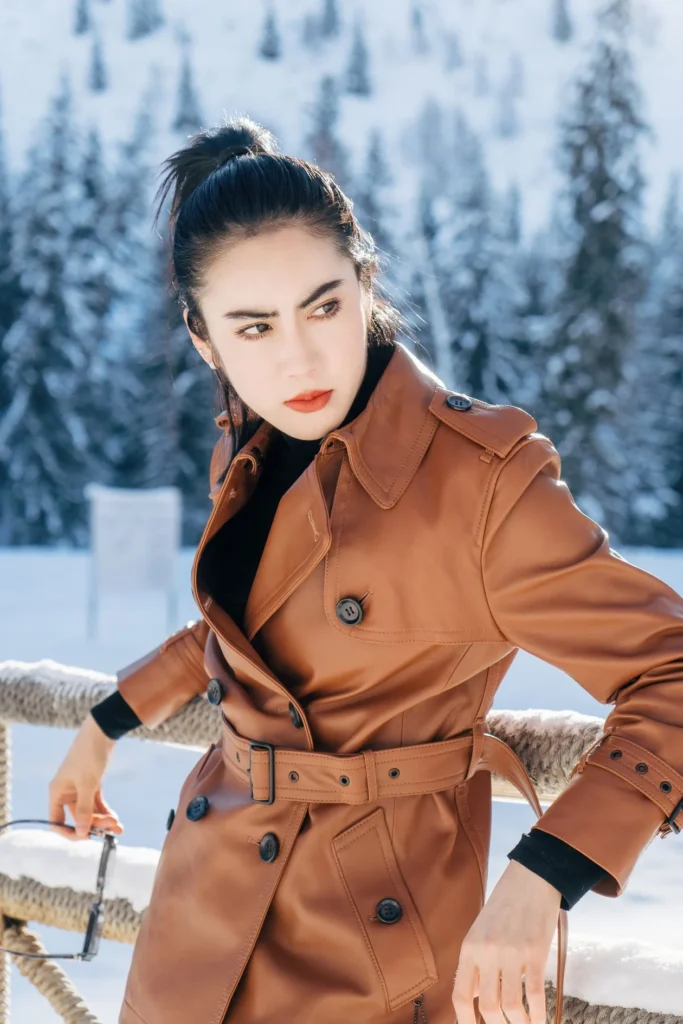
Long vs cropped: which leather coat length to choose
Length is the first decision, and it changes everything else — what you wear underneath, which boots work, and how warm you will be.
The long leather coat (below the knee, or midi/maxi length) is the most versatile shape in the category. A midi or maxi length with a belted waist, a storm collar and a single- or double-breasted front defines your waist, layers over everything from jeans to evening dresses, and looks intentional rather than costume. A long coat needs slim legs underneath: slim trousers, leggings, tights or straight jeans work best, because the coat already supplies all the volume the outfit needs.
The cropped leather coat (ending at the hip) is the weekend version. It ends at the hip, works with wide-leg jeans or a midi skirt, and is easier to wear if you are petite or if you live in a milder climate. It shows more of the outfit underneath, so it suits people who want the leather to be one layer among several rather than the whole look. The trade-off is warmth: a cropped coat leaves your hips and thighs to your trousers and tights, so it needs a warmer base layer underneath on cold days.
Which length should you buy first? The long coat, if you want one coat that does the most work — it covers more, goes over more outfits, and reads as a coat rather than a jacket. The cropped coat, if you already own a long wool coat and want leather as a second, lighter layer.
Is a leather coat warm enough for winter?
Honestly: a leather coat on its own is not as warm as a wool coat or a puffer. Leather blocks wind very well — that is its real strength in winter — but it has little insulation of its own, and it feels cold when you first put it on. Its warmth comes from what you wear under it. That is not a flaw; it is how the coat is designed to be worn.
The warmth system under a leather coat:
- A thin thermal under everything. A fitted thermal top under your knit or blouse adds warmth without bulk, and it is invisible under a coat.
- One thin knit, not three bulky layers. A single fine-knit roll-neck or a thin merino jumper under a leather coat keeps you warmer than three bulky layers, because the coat still sits close to the body and does not gap open at the front.
Real leather vs faux leather: what to know before you buy
Leather is a strong, flexible and durable material obtained from tanning animal skins and hides, and it can last for decades when it is looked after. That durability is the case for buying real leather: a well-made leather coat softens with wear, develops a patina, and can be repaired, reconditioned and worn for years. It is also the most expensive option, and it needs conditioning to stay supple.
Faux leather — usually polyurethane on a fabric base — has closed the gap with real leather dramatically in recent years, and it is now the accessible way into the look. A faux-leather trench gives you the long, glossy, belted silhouette at a price that does not require a second thought, and it needs almost no conditioning.
A leather specialist’s guide to how to wear women’s leather in autumn and winter makes the same point for jackets as this guide makes for coats: a high collar, a roomier cut and a softer colour than black each take the edge off leather in cold weather.
The colours: black, brown and oxblood
The autumn/winter 2026 trend reports name leather and faux-leather finishes as a key outerwear story, with richer colours — chocolate brown, burgundy and black — leading the darker palette of the season.
Black is the forever buy. It is the one that goes with a sequin skirt at a holiday party and with jeans on a Tuesday, and the one to choose if you are only buying one leather coat. Black leather is also the most severe, so soften it: a cream scarf, a soft knit underneath, brown or tan accessories — something that stops the whole outfit reading as one hard black block.
Chocolate brown is the fashion buy. Warmer than black, richer than tan, it suits the season’s brown palette and looks softer against the face.
Oxblood / burgundy is the statement buy. A burgundy leather coat is the coat that people remember, and it works because burgundy is already the season’s lead colour. Wear it with the same restraint as black — simple base, quiet accessories — and let the colour be the statement. For the full guide to pairing burgundy with chocolate, cream and navy, see burgundy and chocolate brown.

What to wear under a leather coat
The base under a leather coat should be simple, soft and slim. Leather is a hard, smooth surface, so the layers underneath should be the opposite: soft knits, fluid fabrics, matte textures.
| Under the coat | Best for | Notes |
|---|---|---|
| Dark jeans + white shirt | Everyday, weekends | The classic: belt the coat, let the white collar show |
| Roll-neck knit + tailored trousers | Work, smart days | A thin roll-neck keeps the coat’s line clean |
| Short knit dress + tall boots | Evenings, dates | The coat is longer than the dress; the boots fill the gap |
| Knit dress + opaque tights | Cold days | Fleece-lined tights make this genuinely warm |
Two combinations to avoid: leather on leather, and leather on leather-look. A leather coat with leather trousers is a lot of hard surface in one outfit, and it reads as a costume unless the textures are very different — a matte leather trouser with a glossy coat can work, but it is an advanced move, not a first one.
Leather coat outfit winter women: the work, weekend and evening formulas
Work: a black long leather coat, belted, over a cream roll-neck, grey tailored trousers and knee-high boots, with a structured bag. Or a brown leather coat over a white shirt, dark straight-leg trousers and loafers. The coat replaces the wool coat you would normally wear to the office — the rest of the outfit is the same one you already wear.
Weekend: a brown leather trench over dark bootcut jeans and a white shirt, with ankle boots.
Evening: a long black leather coat, belted, over a short knit dress and tall black boots — the coat longer than the dress, the boots filling the gap between hem and coat. Or a burgundy belted wrap coat over a satin skirt and heeled boots, with no other statement needed.

Leather coat care: the basics (and how it differs from suede)
A leather coat is an investment, and its care is simple but specific. Keep it clean and dry, condition it occasionally, and store it properly, and it will last for years. The full principles for leather footwear — which face the same winter salt and wet — are in the guide on how to clean leather boots and remove winter salt stains.
- After rain or snow: wipe the coat down with a soft, dry cloth and let it dry naturally at room temperature, away from radiators and direct heat. Heat dries leather out and can crack it.
- Salt stains: wipe off road salt as soon as you get indoors, with a slightly damp cloth, then dry. Salt left on leather draws out moisture and leaves pale marks.
Leather care is NOT suede care, and the two must not be confused. Suede is the underside of the leather, brushed to a soft nap, and it is far more vulnerable to water and stains than smooth leather. Suede needs a protector spray before it is worn, a suede brush to lift the nap, and it should never be oiled or conditioned the way smooth leather is — oil stains suede permanently. If your coat is suede, or has suede panels, follow suede care, not leather care: see how to care for suede boots in winter for the suede method, and do not apply any of it to a smooth leather coat, or vice versa.
Common mistakes and how to fix them
- Wearing a leather coat with nothing warm underneath. Leather blocks wind but insulates little. Fix: a thin thermal and one fine knit under the coat, not a bulky jumper that pushes it open.
- Leather on leather. A leather coat plus leather trousers plus leather boots is too much hard surface. Fix: soft, matte layers underneath — knitwear, wool trousers, a skirt.
- A long coat with wide legs underneath. A maxi leather coat over wide-leg trousers or a full skirt is volume on volume. Fix: slim legs under a long coat; save the wide legs for the cropped coat.
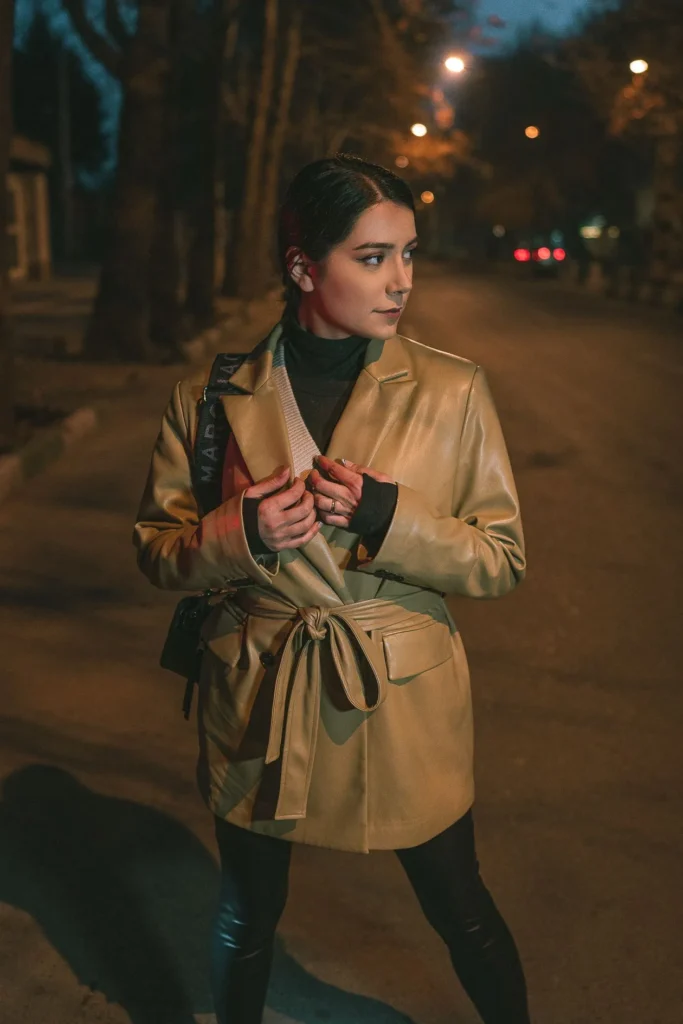
Buying guide: what to look for
Before you buy, check the things that separate a good leather coat from a disappointing one. The leather should feel soft and flexible, not stiff and plasticky — bend the sleeve and see whether it creases naturally or cracks. The seams should be straight and the stitching even, with no loose threads. The lining should be smooth and fully attached, with no bunching. The belt, if there is one, should be the same leather as the coat, not a thinner strip. And the coat should close comfortably over a knit — if it only closes over a T-shirt, it is the wrong size.
For a structured approach to the whole decision — wool, puffer, trench or faux fur — see how to choose a winter coat. And if you want the trench version in detail, the guide to a trench coat in winter covers length, belting and boots for the trench shape specifically.
Frequently asked questions
Are leather coats warm enough for winter?
A leather coat blocks wind well but has little insulation on its own, so its warmth comes from the layers underneath: a thin thermal, one fine knit, a scarf tucked into the collar, and fleece-lined tights under dresses. Layered that way, a long leather coat is warm enough for most winter days; on the coldest days, a wool coat or a puffer is warmer.
What do you wear under a long leather coat?
Keep it simple and slim: dark jeans and a shirt, a roll-neck and tailored trousers, or a short knit dress with tall boots. One thin knit is better than three bulky layers, because the coat still needs to sit close to the body. Avoid leather trousers under a leather coat — soft, matte layers balance the coat better.
Can you wear a leather coat to work?
Yes. A black or brown long leather coat, belted, over a roll-neck and tailored trousers with knee-high boots is a work outfit — the coat simply replaces your wool coat. Keep the rest of the outfit the same as your normal work outfit, and keep jewellery and the bag structured and quiet.
How do you care for a leather coat in winter?
Wipe off rain, snow and road salt as soon as you get indoors, let the coat dry naturally away from heat, and condition the smooth leather once or twice a winter to keep it supple. Store it on a wide hanger in a breathable bag. Do not oil suede, and do not use suede care on smooth leather — the two are different materials with different needs.
Conclusion
A leather coat is not a difficult piece — it is a simple one that looks difficult. Pick the length that suits your life — long for the most work, cropped for weekends and petite frames — keep the base underneath simple and slim, layer a thermal and one fine knit for warmth, and choose black, brown or burgundy.