

A satin blouse is the piece most people save for spring — and then never wear. It looks too thin, too slippery and too cold for winter, so it hangs in the wardrobe while heavier knits do all the work. Learning how to wear a satin blouse in winter changes that: worn in the right layering order, it becomes one of the most useful dressy pieces you own, because it does the polished part while other layers do the warm part.
This guide covers the layering order step by step, the colours that work best in winter, outfit formulas for work, evenings and weekends, and the fixes for the two things that actually go wrong with satin in cold weather — static cling and creasing.
The quick answer: satin is a middle layer, not an outer layer
Think of a satin blouse as the middle of a three-part outfit, never the whole outfit. Something warm and thin goes underneath it, the satin blouse goes in the middle, and something structured and warm goes on top. That is the whole system:
- Under: a thin thermal or a fitted long-sleeve top in a colour close to the blouse, so it disappears at the neckline and cuffs.
- Middle: the satin blouse itself, tucked in or half-tucked so it reads as intentional rather than slippery.
- Over: a blazer, a cardigan, a knit vest or a coat — the layer that actually keeps you warm and gives the outfit its shape.
On its own, satin gives almost no insulation. It is thin, and while some types can hold a little heat close to the body, it is not in the same league as wool or fleece — so it needs to be paired with other layers to truly keep you warm in winter. The good news is that satin is also a brilliant layering fabric: its smooth surface slides under wool and coats instead of catching on them, so your layers move freely instead of bunching up. For the full system behind this, see how to layer clothes in winter without looking bulky.
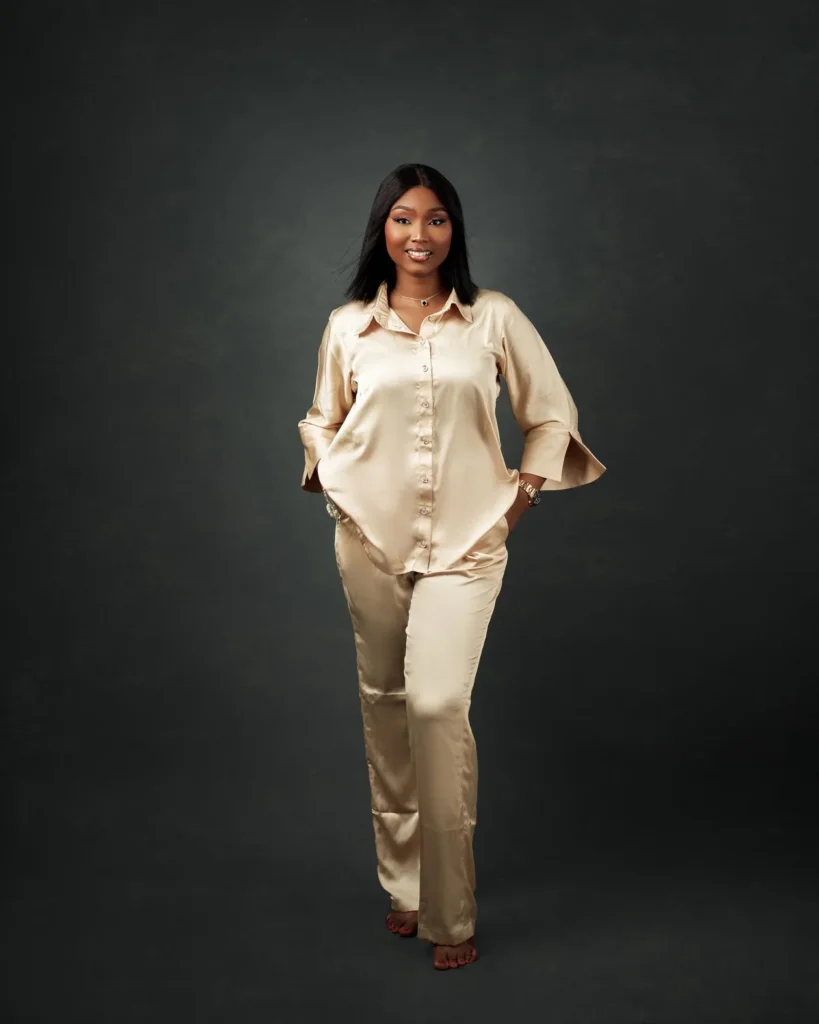
What satin actually is (and why it behaves the way it does)
Here is the fact that explains almost everything about wearing satin: satin is a weave, not a fibre. It is a weaving technique that produces a glossy, smooth surface, typically with a shiny top and a dull back — and it can be made from silk, polyester, nylon or other fibres. That is why two “satin” blouses can feel completely different.
Silk satin is the warmer, better-breathing option; polyester satin is cheaper and resists wrinkles better, but breathes less well. If you are buying one satin blouse for winter, silk satin or a silk blend is the better buy.
The layering order: what goes under a satin blouse
The layer underneath is what makes or breaks a satin blouse in winter, and it has one job: warmth without bulk, and without showing.
A thin thermal is the best under-layer. A fitted thermal top in black, cream or a colour close to your blouse disappears under satin and adds real warmth. Choose one with a neckline that sits below the blouse’s neckline — a scoop or V-neck thermal under a collared blouse, a crew-neck thermal under a high-neck blouse. If the thermal’s collar peeks out, it reads as a mistake rather than a layer. For the full explainer on weights and fabrics, see the guide to thermal base layers.
What goes under the blouse at the bottom matters too. Tuck the blouse into high-waisted trousers, a skirt with tights, or jeans, and the thermal underneath stays put. An untucked satin blouse over an untucked thermal slides around and rides up; a tucked one stays where you put it. A half-tuck — front tucked, back loose — works with jeans and straight-leg trousers and keeps the outfit relaxed.
The layering order: what goes over a satin blouse
The layer on top does two jobs: warmth and structure. Satin is soft and fluid, so it needs something with shape over it, or the whole outfit can look shapeless.
A structured blazer is the best over-layer for work. Layering a satin blouse under a structured blazer gives an effortlessly polished look that works for the office and for evenings out, and the blazer in a classic colour like black or navy sits well against the sheen of the satin. The blazer also solves the warmth problem indoors: you keep it on at your desk, and take it off at dinner to show the satin. If the blazer pulls across the shoulders over the blouse, that is a fit problem, not a you problem — size up in the jacket and keep the blouse as the star.
A cardigan is the warmest over-layer. Pairing a satin blouse with a cosy cardigan is the easiest way to add warmth without losing the elegant feel. Choose cardigans in neutral shades like grey or beige to keep the focus on the satin, and let the blouse show at the collar, the cuffs and the front opening.
A coat is the final layer, not a styling layer. A wool coat over a satin blouse is simply practical — it keeps you warm between places. The coat does not need to “match” the blouse; it needs to be long enough to cover it and warm enough for the weather. Take the coat off indoors and the outfit underneath is the outfit.
Static cling and creasing: the two real problems, fixed
Static is the reason most people give up on satin in winter, and it is fixable. Satin, especially polyester satin, builds up static in dry winter air, and then it clings to tights, to lining, and to itself. A few things help, and they are all simple:
- Wear a smooth layer underneath, not a textured one. A smooth thermal or a silk-feel camisole under the blouse gives the satin nothing to grip. A fluffy or brushed layer underneath makes cling worse.
- Avoid rubbing the blouse against tights and linings. If a satin blouse keeps clinging to a skirt, the problem is usually the skirt’s lining or the tights; a slip or a smooth lining layer between them breaks the contact.
Which colours work best in winter
The safest winter choices:
| Colour | Why it works in winter | Pair it with |
|---|---|---|
| Black satin | Reads as a dark neutral; hides creasing; goes with every coat | Cream knit, grey trousers, camel coat |
| Burgundy / wine satin | The season’s richest dark colour; evening-ready | Chocolate brown, black, cream |
| Forest green / emerald satin | Deep, jewel-toned, suits winter light | Black, navy, camel, gold jewellery |
| Navy satin | Quieter than black, still dressy | Grey, cream, burgundy, tan leather |
| Champagne / ivory satin | The light option; best for evenings and parties | Black trousers, chocolate coat, dark jeans |
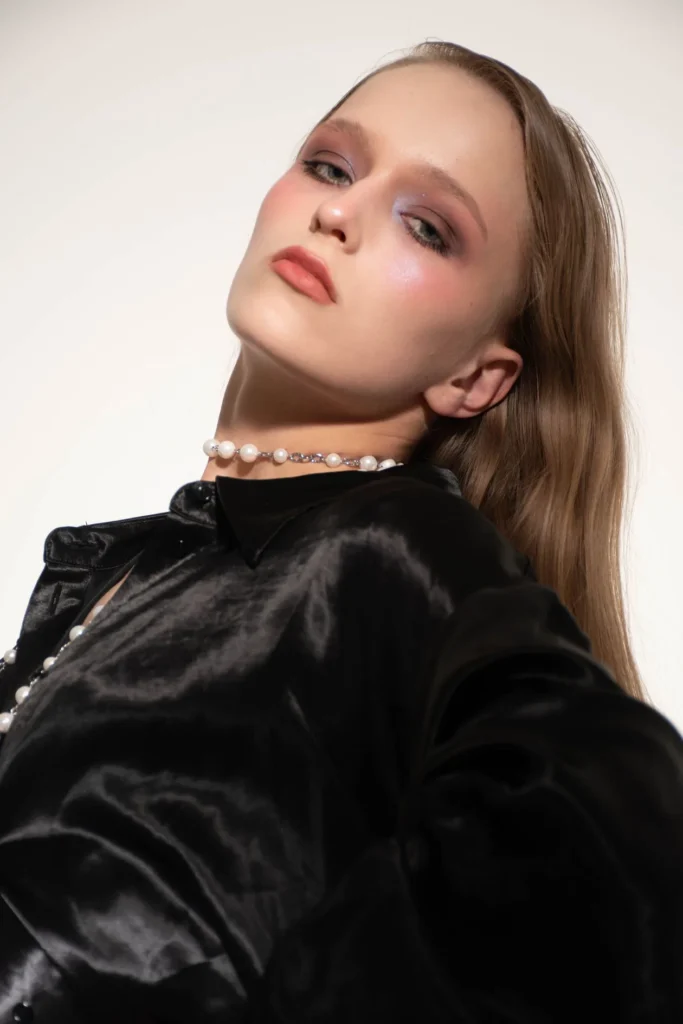
How to wear a satin blouse in winter for work
The work formula is: satin blouse + tailored trousers + structured blazer + a coat on top. It is the same formula as the five winter ways to style a satin shirt — cardigan, tailored trousers, blazer, high-waisted jeans — with the work version leading on tailoring.
- The blouse: long-sleeved, in black, navy, burgundy or forest green.
- The trousers: tailored, high-waisted, in navy, black or charcoal. Tailored trousers go hand in hand with satin blouses for a polished look, and the high waist keeps the tuck neat all day.
- The blazer: structured, in black or navy, so it sits well against the sheen. Wear it over the blouse indoors; the coat goes over both outside.
For cold commutes, the coat matters as much as the outfit: a long wool coat over the blazer keeps the whole thing warm, and you arrive with the satin uncreased because the coat protected it. See these winter work outfits for cold commutes for the full cold-morning system.
How to wear a satin blouse in the evening
Evenings are where satin earns its place. The fabric catches candlelight and low light in a way matte fabrics cannot, and an evening outfit does not need to survive a cold commute in the same way — you go from door to car to heated room.
- Satin blouse + wide-leg trousers. Tuck a champagne, ivory or deep red satin blouse into wide-leg trousers in a heavy fabric — ponte, crepe or a wool blend — in charcoal, black or plum. The trousers do the practical work and sit heavier than a skirt alone, which means extra warmth without extra layers.
- Satin blouse + leather trousers. The glossy blouse against matte leather is the best texture contrast in this whole guide: the leather takes the edge off the shine, and the satin takes the hardness off the leather. Leather trousers in black with a burgundy or forest green satin blouse is the evening formula to remember.
If you want a warmer dressy fabric altogether for a party night, a velvet dress for winter parties is the alternative — velvet is warmer on its own, satin is the lighter, shinier choice.

How to wear a satin blouse on weekends
Weekends are where satin stops being “occasion dressing” and becomes an everyday piece. The trick is to dress it down with one casual piece, not three — the blouse stays polished, and the rest of the outfit relaxes around it.
- Satin blouse + high-waisted jeans. High-waisted jeans are the classic casual partner for a satin blouse: choose a dark wash to contrast with the smooth texture, tuck the blouse in for definition, and add ankle boots. This is the weekend version of the work formula, and it works for lunch, shopping and visiting family.
- Satin blouse + cardigan + jeans. A chunky cardigan over the blouse, dark jeans, boots — the blouse shows at the collar and cuffs and lifts an outfit that would otherwise be all knit and denim.
The mistake to avoid on weekends is pairing satin with too many shiny or dressy pieces at once — satin blouse plus sequinned skirt plus heels reads as a party, not a Saturday. One glossy piece, and the rest matte and simple.
Buying and caring for a satin blouse
If you are buying your first satin blouse for winter, buy long-sleeved, in black or burgundy, in silk satin or a silk blend if the budget allows it. Check the seams and the buttons before you buy — satin shows pulled threads and loose buttons more than matte fabric does, and a blouse that is a little loose will crease less and layer better than one that is skin-tight.
For the full fabric-care reference, read how to care for silk, cashmere, velvet and wool.
Common mistakes and how to fix them
Wearing the satin blouse as the only layer. A satin blouse on its own in winter is cold, and it shows. Fix: add a thin thermal underneath and a blazer or cardigan on top — the blouse is the middle layer.
Too much shine in one outfit. Satin blouse plus shiny skirt plus shiny bag plus statement jewellery is glare, not glamour. Fix: one glossy piece, the rest matte.
Ignoring static until you are out of the door. Static builds up in dry winter air and shows most when you take your coat off. Fix: a smooth under-layer, moisturiser, and anti-static spray before you leave.
Frequently asked questions
Can you wear a satin blouse in winter?
Yes. A satin blouse works in winter as a middle layer: a thin thermal underneath, the blouse in the middle, and a blazer, cardigan or coat on top. On its own it is too thin for cold weather, but layered properly it is warm enough for work, evenings and weekends.
What do you wear under a satin blouse in winter?
A thin, fitted thermal top in a colour close to the blouse is the best under-layer — it adds warmth without bulk and stays hidden at the neckline and cuffs.
Can you wear a satin blouse to work in winter?
Yes — it is one of the best work blouses for winter, layered under a structured blazer with tailored trousers. Button it up for formal offices, wear a thin thermal underneath for cold offices, and keep the rest of the outfit matte and tailored so the satin is the single polished piece.
What trousers go with a satin blouse?
Tailored high-waisted trousers for work, wide-leg trousers in a heavy fabric for evenings, leather trousers for texture contrast, and dark-wash high-waisted jeans for weekends. The common thread is a defined waist and a matte fabric that balances the satin’s shine.
Conclusion
A satin blouse does not need to wait for spring. Treat it as the middle layer — a thin thermal underneath, the blouse itself, and a blazer, cardigan or coat on top — and it works all winter. Choose a deep colour, keep the rest of the outfit matte, fix static before you leave the house, and wear it with jeans at the weekend as well as with tailoring at work.