
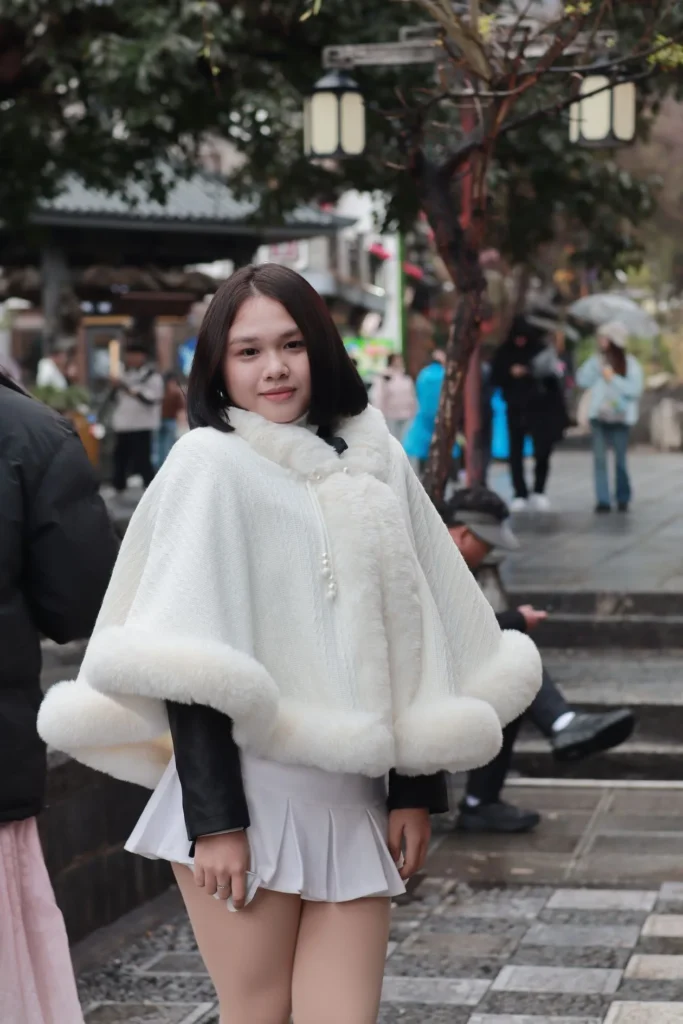

A cape poncho outfit winter women can wear without freezing is built the same way every time: one dramatic piece on top, everything underneath slim and warm. A cape or a poncho is winter’s most romantic outerwear — it moves when you walk and turns the simplest outfit into a look. Get the base right, and a cape or poncho is one of the easiest coats you will ever wear.
Cape poncho outfit winter women: the quick answer
Keep everything underneath narrow and close to the body: a fine knit, slim or straight trousers or a column skirt, and a slim boot. The cape or poncho carries all the volume, so nothing underneath should compete with it. Choose a mid-thigh to knee length in wool or a wool blend, in camel, black, charcoal or burgundy, and let it be the only dramatic piece. Belt it if it feels shapeless, add long gloves, and carry a top-handle bag. The simplest formula: a camel wool cape over a cream roll-neck, straight dark jeans and knee-high boots.
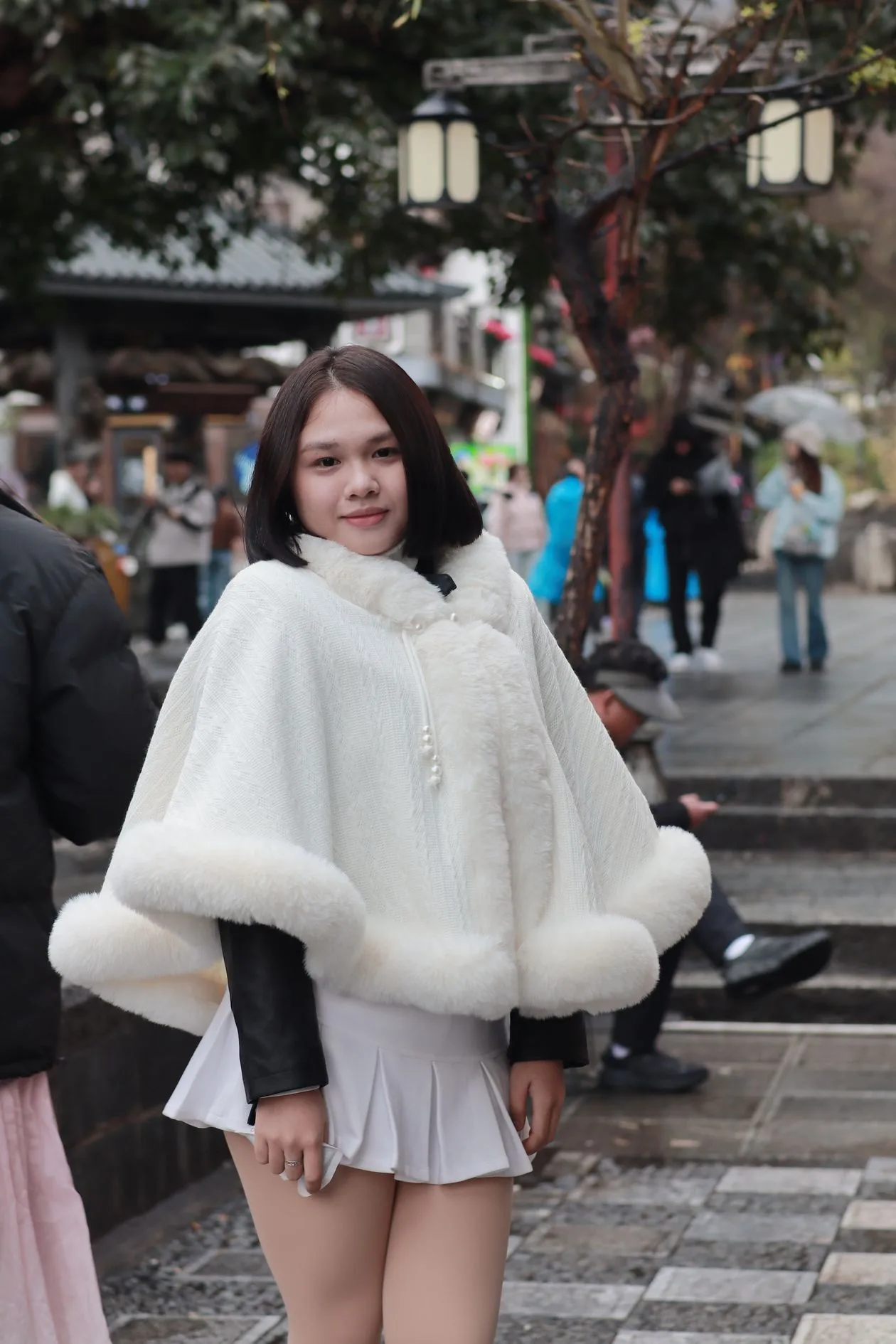
The white winter cape: the look works because everything underneath is slim — a pale knit, a pale skirt, and boots. The cape is the only dramatic piece.
Cape vs poncho vs cape coat: what is the difference?
A cape is sleeveless. It fastens at the neck or down the front and falls from the shoulders, with your arms coming through slits or from under the hem. It is warm at the core and cool at the forearms, layers beautifully over tailoring and dresses, and is the most formal of the three. A poncho is a single piece of fabric with a hole for the head — no fastenings at all. You pull it on and it drapes: the easiest to wear and the hardest to keep tidy in wind, best for casual days. A cape coat is a proper coat with a cape built in — an overlay, or wide cape sleeves — and it has sleeves of its own, sometimes three-quarter length. It is the warmest of the three, and the best first buy.
| Shape | Sleeves | Warmth | Best for |
|---|---|---|---|
| Cape | None; arm slits | Core warm, arms cold | Dressy days, over tailoring |
| Poncho | None; pull-on | Core warm, draughty edges | Casual weekends, easy layering |
| Cape coat | Cape sleeves or 3/4 sleeves | Closest to a real coat | Everyday winter, first buy |
| Capelet | None; shoulders only | Light layer only | Autumn, indoors, over a coat |
What to wear under a cape or poncho
What you wear underneath is the outfit. The cape is the frame; the base is the picture. The rule that does most of the work is to keep everything underneath narrow: a fine knit, slim or straight trousers, a column skirt and a slim boot. Wide trousers under a cape make volume on volume, and that is where the costume reading comes from — the one exception is a short cape over one single colour from shoulder to hem, so the outfit reads as one block.
Start with a fine knit, not a chunky one. A merino roll-neck or a cashmere crew-neck gives warmth without bulk, and the roll-neck matters: many capes button to the throat, and a collared shirt underneath fights it. Under the knit, on the coldest days, add a thermal base layer — nobody sees it, and it is the difference between wearing the cape for an hour and wearing it all day. Our guide to the warmest fabrics for winter covers which fibres actually hold heat. On the lower half, choose slim or straight: straight-leg jeans, slim tailored trousers, or a pencil or column midi skirt, with knee-high boots to close the gap between hem and boot. For slim layers that do not bunch, read how to layer clothes in winter without looking bulky.
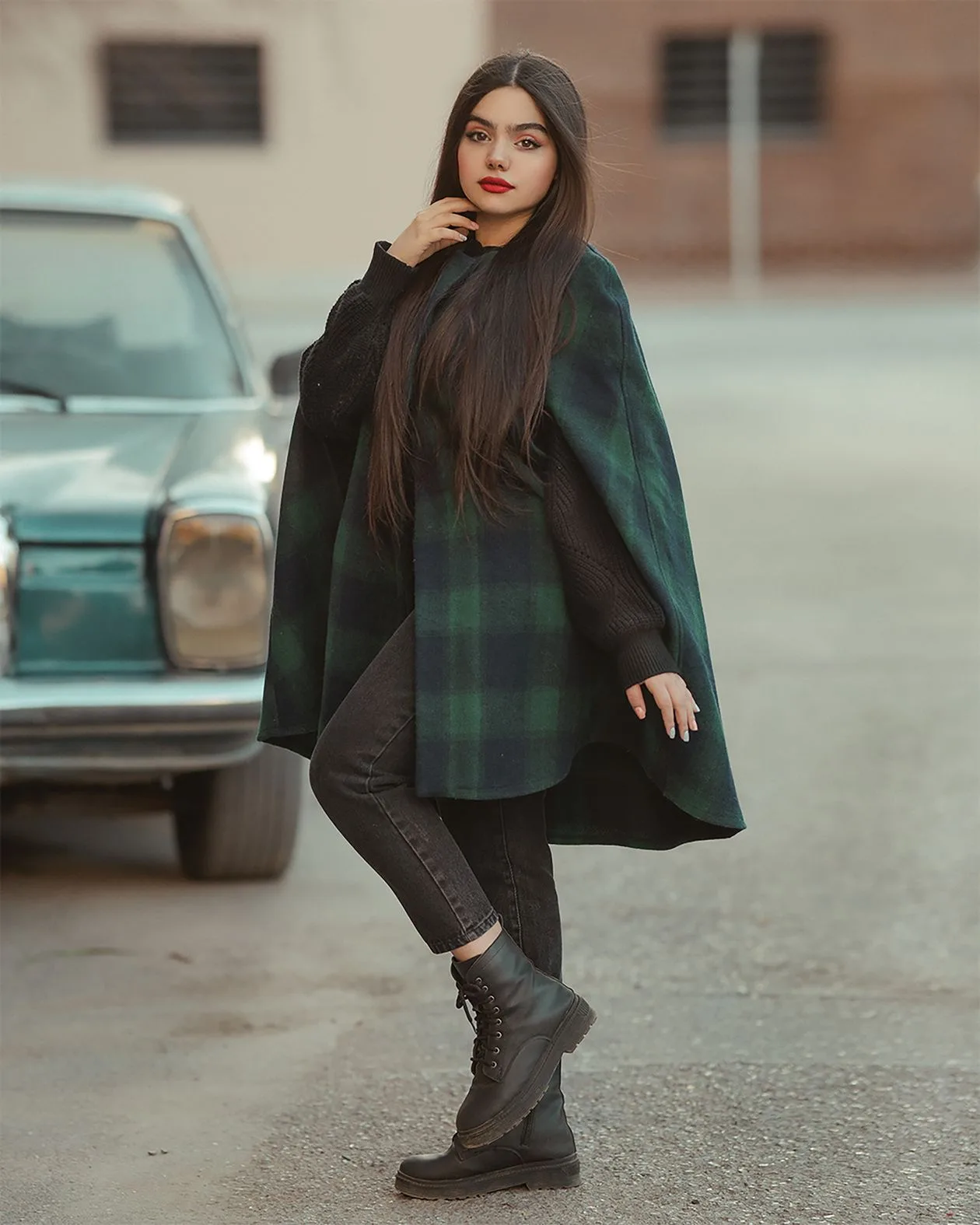
A poncho is the cape’s easy-going cousin: pull it on, no fastenings, no belts needed — but the same narrow-underneath rule applies.
How to style a cape or poncho: outfit formulas
For work: a knee-length camel or charcoal cape coat over a fine black roll-neck, slim charcoal wool trousers and knee-high boots. A cape goes over a blazer without crushing it — the structured shoulder underneath gives the cape something to fall from — so it is one of the easiest coats to wear over tailoring. Carry a structured top-handle bag. If your office is a long cold walk away, choose the cape coat with sleeves: you need both hands free and warm.
For weekends: a poncho over a cream roll-neck, straight dark jeans and ankle or Chelsea boots. A plaid poncho like the green one above does the talking, so keep the rest plain — dark denim, one neutral knit, no competing pattern. A poncho over leggings only works if the poncho covers the hip and the boots are knee-high; a short poncho over leggings reads as gym kit, not an outfit.
For evenings: a long black or burgundy cape over a knit midi dress, with heeled knee-high boots. Leave the cape open at the front so the dress shows, and keep the jewellery simple — the cape is already the statement. A hooded cape is the evening shortcut: the hood replaces the scarf and keeps the neckline clean.
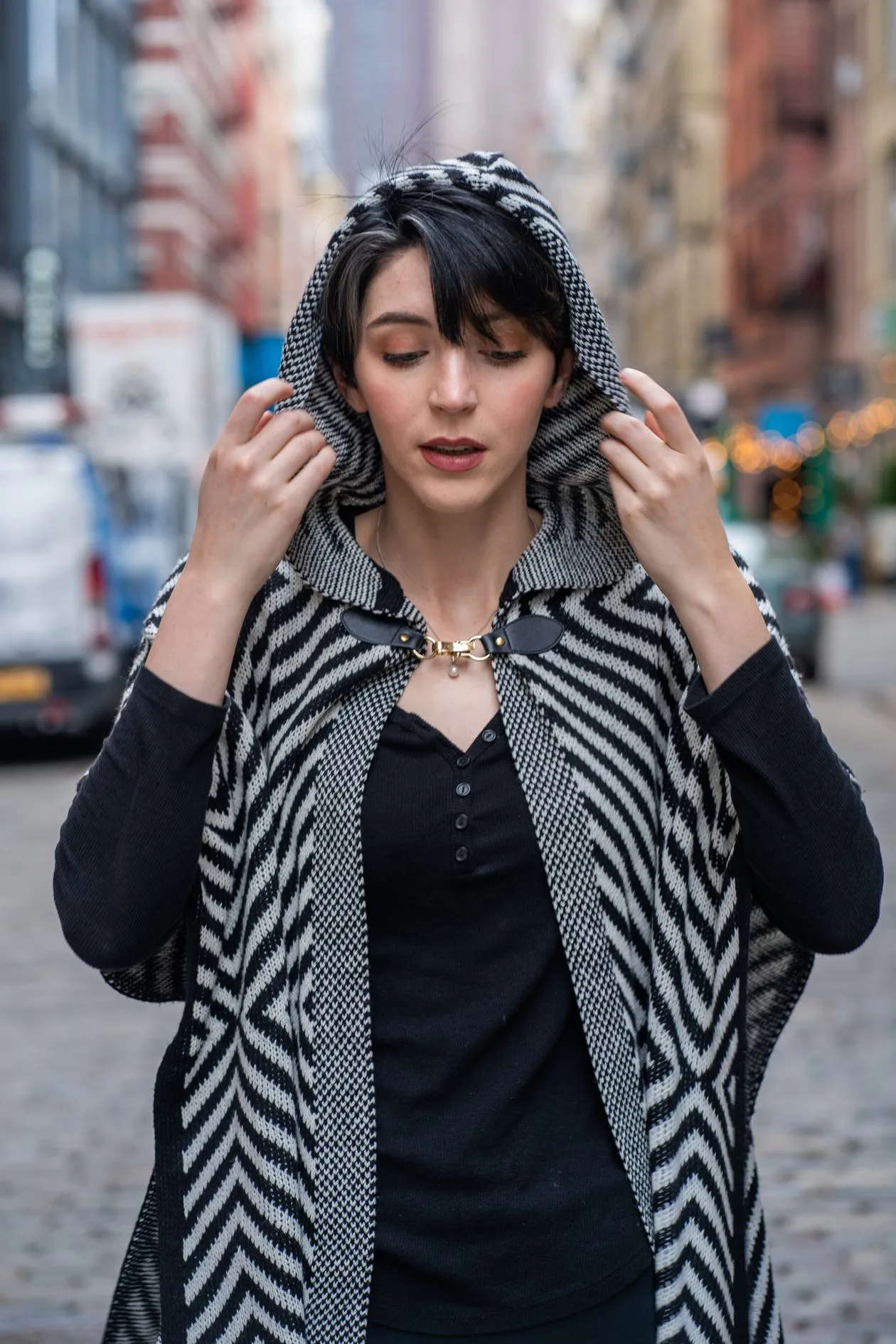
A hooded cape solves the cold-neck problem a cape usually creates — the hood replaces the scarf and keeps the line clean.
How warm is a cape or poncho, really? The honest limits
A wool cape traps a large volume of still air around the torso, and still air is what insulation actually is — so a cape is warmer than it looks. But it has three honest limits. First, your arms. A sleeveless cape leaves the forearms bare. Long knit sleeves that reach the wrist, plus long gloves that overlap them, are not accessories here — they are the insulation. Without them, a cape is a cold-weather disappointment. Second, the wind. A cape’s open hem lets wind in from below. On a still, cold day a wool cape over a thermal base and a fine knit is genuinely warm; on a windy day the same outfit feels draughty, because the wind moves the warm air out. A belt at the natural waist helps a lot: it closes the hem, gives the cape a waist, and keeps the wind out — the single fastest fix if a cape feels shapeless or cold. Third, the temperature. A cape or poncho is a mild-to-moderate cold piece, not an extreme-cold piece. Down to around freezing, over proper layers, it works. In deep cold, wet snow or a long outdoor wait, a sleeved coat wins — there is no honest way around it. Before you choose, read how to choose a winter coat.
Fabric matters more than shape. Wool is a classic choice for winter cape coats because it insulates while holding its structure, so long capes drape elegantly instead of collapsing. A wool-blend or cashmere cape is worth the money; a thin polyester poncho is a costume, not a coat.

A cape in real snow: beautiful, but notice what is doing the warming — the knit, the boots, the covered legs. The cape is the finish, not the insulation.
Petite and tall: getting the proportions right
If you are petite, a cape can swallow you — all that fabric with no waist and no sleeves removes the landmarks that show your shape. Three fixes. First, length: choose a cape that ends at mid-thigh or just above the knee, not below it. A below-the-knee cape on a petite frame reads as a blanket. Second, define the waist: belt it at the natural waist, or choose a cape with a built-in tie. Third, keep the base narrow and the boots slim — a slim boot and a straight leg lengthen the line. Our guide to how to wear an oversized coat on a petite frame covers the same volume problem, and the fixes transfer directly: defined waist, shorter length, narrow base.
If you are tall, a cape is one of your best coats. The length that swallows a petite frame looks intentional on you, and a below-the-knee cape over a column skirt is a genuinely elegant silhouette.
Rain, snow and wind: when not to wear it
A wool cape handles cold dry weather well and light snow reasonably — snow brushes off wool. What it handles badly is rain and wet snow: a soaked wool cape is heavy, loses its drape, and takes a long time to dry. If the forecast says rain, wear a waterproof coat instead. Wind is the other limit. A poncho is the worst of the three in wind: with no fastenings at all, it flaps, rides up and lets the cold in from every edge. A cape with a front fastening or a belt holds its shape far better. An open-front cape in winter needs a scarf; for the wraps that sit neatly under a high collar, see how to style a scarf with a winter coat.
Accessories: bags, gloves, boots and scarves
Bags: a structured top-handle bag or a clutch. A shoulder bag is the combination to avoid: the strap cuts across the cape, flattens the drape and slides off the shoulderless shape. If you must carry one, wear it under the cape, against your body. Gloves: long leather gloves in black or dark brown. They overlap the knit sleeves, keep the forearms warm, and keep the cape’s cuffs clean. Short gloves leave a gap of bare wrist — exactly where the cold gets in. Boots: knee-high boots for polish, slim ankle boots for casual days. The boot should be slim: a wide boot under a cape adds volume at the bottom, and volume at both ends with nothing in the middle is the costume shape. Scarves: a fine wool scarf in cream or camel under an open-front cape, tucked so it does not fight the collar. A funnel neckline is the alternative to a scarf altogether: see how to style a funnel-neck coat for the collar that does a scarf’s job.
Common mistakes and how to fix them
- Wide trousers under a long cape. Volume on volume reads as costume. Fix: slim or straight legs, or one single colour from shoulder to hem.
- A chunky knit under a cape. It bunches at the neck and the waist. Fix: fine knits; the warmth comes from the thermal base layer, not the knit.
- Wearing a shoulder bag over the cape. The strap ruins the line and slides off. Fix: a top-handle bag, or the bag worn under the cape.
- Skipping gloves. Bare forearms are the cape’s cold spot. Fix: long gloves that overlap the sleeves.
- Buying a thin polyester poncho for winter. It looks like a cape and insulates like a sheet. Fix: heavy wool or a wool-cashmere blend.
Shopping guidance: what to buy first
Buy the cape in the best wool you can afford — it is the piece everyone sees, and wool’s drape is the whole point. Before you pay, check four things: the fabric should be heavy wool or a wool blend with a real weight to it; the length should be mid-thigh to knee for a first cape; the arm slits should sit at hip height; and the fastening — buttons, a clasp or a tie — should close properly at the neck. If the budget only stretches to one piece, make it a camel or black cape coat with sleeves: the most wearable shape, it works over tailoring and jeans alike, and it survives a real winter.
Frequently asked questions
Can you wear a cape or poncho in winter?
Yes — a wool cape or poncho over a thermal base layer, a fine knit, slim trousers or a column skirt and boots is warm down to around freezing.
What do you wear under a cape in winter?
A fine knit — a merino roll-neck or a cashmere crew-neck — over a thermal base layer, with slim or straight trousers, a column skirt or straight jeans, and slim boots. Keep everything narrow: the cape carries the volume.
How do you keep warm in a poncho?
Layer a thermal base under a fine knit, wear long gloves that overlap your sleeves, belt the poncho at the waist to close the hem against the wind, and wear knee-high boots. A poncho is warmest on still, dry days.
Are capes for petite women?
They can be, with three rules: mid-thigh to above-the-knee length, a belted waist, and a narrow base with slim boots. A below-the-knee cape with no waist will swallow a petite frame.
What bag do you carry with a cape?
A structured top-handle bag or a clutch. A shoulder bag’s strap cuts across the cape, flattens the drape and slides off — wear it under the cape if you must carry one.
Conclusion
A cape or poncho earns its place in winter when you treat it as one dramatic piece over a slim, warm base. Choose wool, keep the length at mid-thigh to knee, wear a fine knit and slim trousers underneath, belt it if it feels shapeless, and finish with long gloves and a top-handle bag. Respect its limits and it will be the piece you reach for most.


