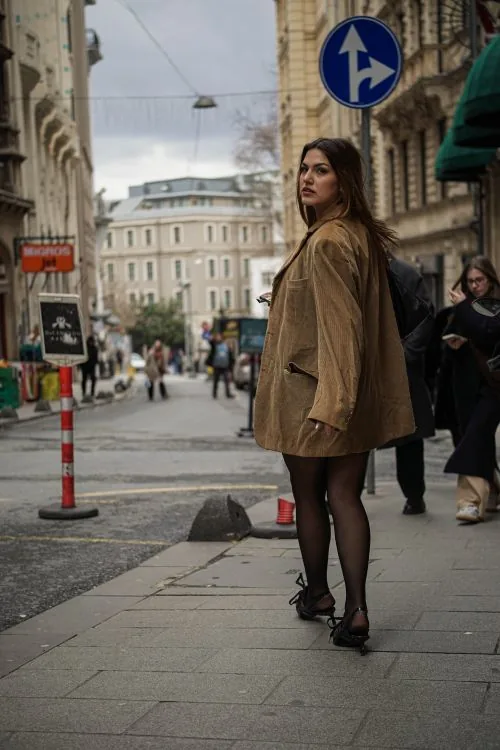

An oversized coat is one of winter’s most comfortable trends — roomy, warm, and easy to throw over anything. But if you are petite, you have probably wondered whether the look will work for you, or whether the coat will end up wearing you. Learning how to wear oversized coat petite styles is not about fighting your frame. It is about choosing the right length, the right shoulders, and the right layers underneath, so the coat looks deliberately oversized instead of simply too big.
This guide covers all three: how to pick the coat, what to wear under it, which shoes keep the proportions balanced, and the mistakes that make an oversized coat look like a borrowed one.
How to wear oversized coat petite: the quick answer
Pick a coat that ends at the knee or just below it, with shoulders that sit close to your own shoulder line — dropped shoulders are fine, but the seam should not fall halfway down your upper arm. Wear something fitted underneath: a slim knit, straight-leg jeans or a simple dress, so the coat is the only oversized piece in the outfit. Add shoes with a little height — a heeled boot or a platform trainer — and keep the coat open or belted loosely rather than buttoned up over bulky layers.
That is the whole system. One oversized piece, everything else fitted and simple, and a visible waist or ankle so the outfit has a shape. If you remember only one rule, make it this one: the coat can be big, but the outfit underneath should not be.
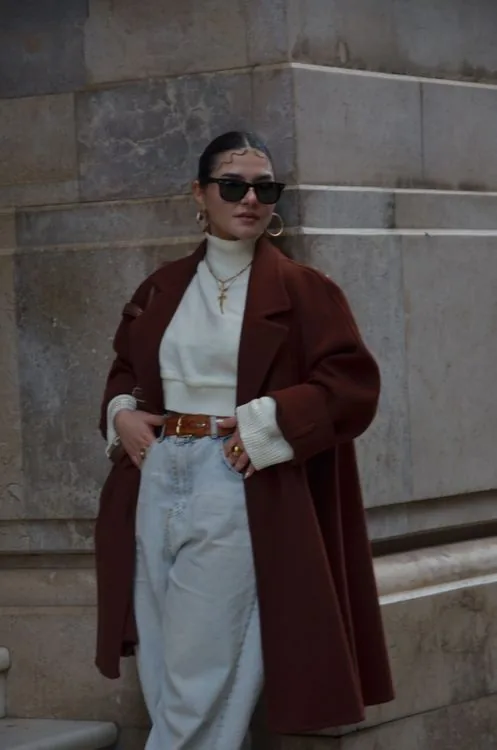
What is an oversized coat, exactly?
An oversized coat is cut deliberately larger than your usual size: wider through the body, roomier in the sleeves, and often longer, with a dropped shoulder and a straight or slightly A-line shape. It is not the same as a coat that is simply the wrong size. A well-designed oversized coat still has structure — a collar that sits properly and sleeves that end at the wrist rather than covering the hands.
The main shapes you will see are the long wool overcoat, the boxy cropped coat that ends at the hip, the belted wrap coat, and the oversized puffer. A coat is an outer garment worn for warmth, and each shape does that job differently — the long wool coat is the most versatile starting point. The overcoat is the classic version: long, roomy, and designed to be worn over tailoring, which is why its proportions are a good reference even for a modern oversized cut.
The proportion rules: length, shoulders, sleeves
Three measurements decide whether an oversized coat works on a petite frame. Get these right and almost any oversized style will look intentional.
Length. For most petite women, knee length or just below the knee is the safest choice. It gives you the long-coat look without covering so much of the leg that your proportions disappear. A coat that ends mid-calf can work if it is slim through the body and worn with heeled boots, but it is harder to get right — and a floor-skimming maxi coat will usually overwhelm a shorter frame unless it is very well cut. At the other end, a hip-length boxy coat is the easiest oversized style of all, because it leaves the whole leg visible.
Shoulders. This is the detail that separates a deliberate oversized coat from a too-big one. The shoulder seam can drop slightly — that is part of the look — but it should sit within a few centimetres of your natural shoulder. If the seam falls halfway down your upper arm, the coat will look borrowed, and no amount of styling underneath will fix it. When you try a coat on, check the shoulders first, before the length or the colour.
Sleeves. Sleeves should end at or just past the wrist bone. A little extra length is fine — you can push the sleeves up to show a cuff — but sleeves that cover the hands make the whole outfit look untidy and make the coat look too big. If the sleeves are too long, a tailor can shorten them far more cheaply than they can rebuild the shoulders, so a coat with good shoulders and long sleeves is still worth considering. For more on getting proportions right without expensive alterations, read how to dress petite without tailoring.
| Coat feature | What works on a petite frame | What to avoid |
|---|---|---|
| Length | Knee or just below the knee; hip-length boxy cuts | Floor-skimming maxi coats; mid-calf coats with a wide, stiff shape |
| Shoulders | Seam close to your natural shoulder, slight drop OK | Seam falling halfway down the upper arm |
| Sleeves | Ending at the wrist, push-up-able | Sleeves covering the hands |
| Shape | Straight or slightly A-line, some structure | Very wide, stiff, boxy shapes with no waist definition at all |
| Closure | Worn open, or belted loosely at the waist | Buttoned over bulky layers so the front pulls |
What to wear underneath: the fitted base
The most common mistake with an oversized coat is wearing an oversized outfit underneath it. Two voluminous layers do not add up to a relaxed look — they add up to a shapeless one. The base layer should be fitted and simple, so the coat is the only oversized piece.
A slim ribbed knit or a fine-gauge roll-neck is the best starting point: it keeps you warm without adding bulk at the shoulders or waist. Under that, straight-leg or slim jeans, tailored trousers, or a simple knit dress all work. For more ideas on building a slim base layer, see how to dress a slim frame.
Defining the waist without losing the oversized look
You do not need to belt every oversized coat, but you do need the outfit to have a visible shape somewhere. There are three ways to do this, and you only need one.
First, wear the coat open. An open coat shows the fitted base underneath, and the two front panels create a long vertical line down the centre of the outfit. This is the easiest option, and it works with almost every oversized coat.
Second, belt it loosely. A slim belt worn over the coat at your natural waist gives the coat a shape without making it look fitted. Keep the belt thin — a wide belt over a bulky coat can look like a costume.
Third, use a half-tuck. A knit tucked into the front of your jeans shows where your waist is even when the coat is closed. This works best with hip-length coats, where the waistband is visible.
Outfit formulas: four ways to wear it
Everyday: knee-length wool coat, cream roll-neck, straight-leg jeans, heeled ankle boots. The coat is the oversized piece; everything else is slim. Add a cross-body bag rather than a large tote, so the bag does not compete with the coat’s volume.
Work: long belted coat, tailored trousers, a fine knit, pointed-toe boots. Belt the coat loosely at the waist and keep the trousers in the same colour family as the knit.
Weekend: hip-length boxy coat, ribbed knit, slim jeans, platform trainers. The short coat leaves the legs visible, so flat shoes work here. Push the sleeves up to the forearm for a relaxed finish.
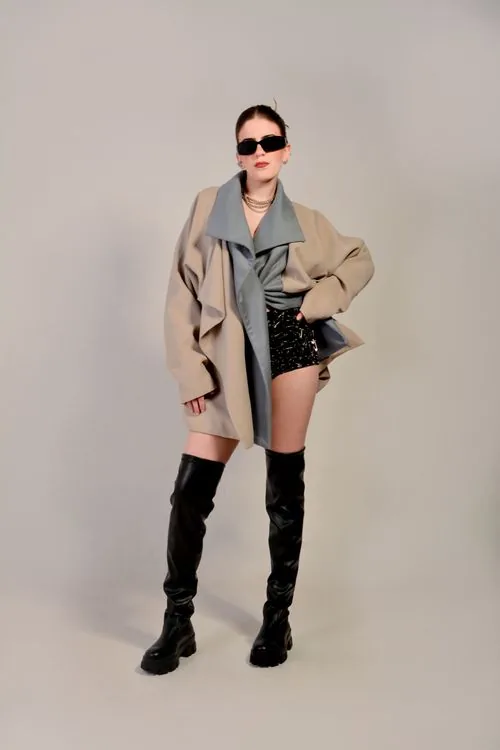
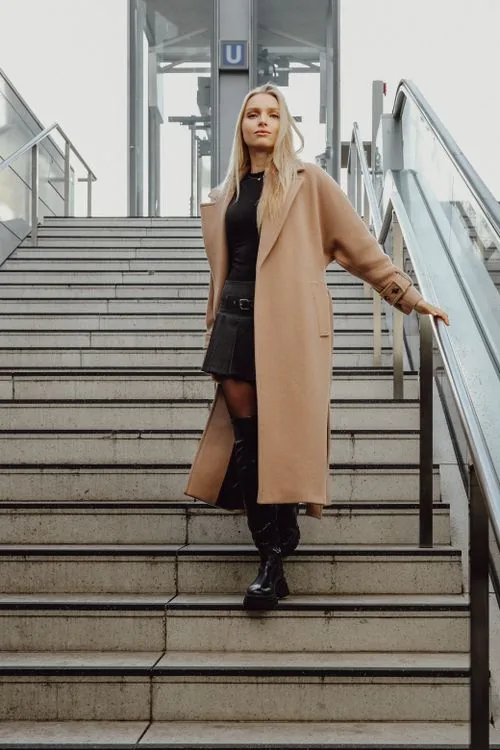
Evening: oversized coat over a knit dress and knee-high boots. The boots and the dress create one long line under the coat. Keep the bag small and structured.
For more cold-weather outfit ideas built around coats, see these winter outfit ideas for women.
Shoes: the part that fixes the proportions
Shoes do more work in an oversized coat outfit than most people expect, because they decide where the eye stops. A heeled ankle boot — even a low block heel — adds height and gives the outfit a finished line at the ankle. Knee-high boots work well with knee-length coats, because the boot and the coat hem meet and create one continuous line.
Trainers can work, but choose a slim or platform style rather than a very chunky one: a bulky trainer plus a bulky coat is a lot of volume at both ends of the outfit. And avoid flat ballet-style shoes with a long oversized coat — with no height at the foot, the coat’s length can make the legs look shorter than they are.
Accessories: keep them small and deliberate
Accessories should not compete with the coat. A large tote, a huge scarf and an oversized coat together are three big pieces fighting for attention. Choose one statement accessory and keep the rest small.
A slim leather belt is the most useful accessory for an oversized coat — it is the easiest way to add shape, and it costs far less than a new coat. A cross-body bag sits neatly under the coat’s volume, while a structured top-handle bag adds polish to a work outfit. A scarf is worth wearing, but keep it neat: a long scarf looped once around the neck, with the ends tucked into the coat, adds warmth without adding width.
Shopping guidance: what to look for and what to skip
Shop for the shoulders first and the length second. If a coat’s shoulders are right, a tailor can usually fix the sleeves and the hem; if the shoulders are wrong, no alteration will save it.
Consider the petite section, but do not assume it is the only option. Many regular-size coats in a shorter length — or a regular coat in a smaller size — work well, because oversized cuts are already roomy. Check the coat’s listed length as well as its size: a “knee length” coat on a taller model may be mid-calf on you, so the measurement matters more than the label.
Buy the best fabric you can afford. Wool and wool blends hold their shape and drape better than cheap synthetics, which matters more in an oversized cut — a stiff, cheap fabric will stick out rather than fall. Check the care label before you buy, and read how to care for silk, cashmere, velvet and wool before the first wash. If you are working to a budget, build a capsule wardrobe on a budget first and make the coat your one considered winter purchase.
Common mistakes and how to fix them
- Wearing an oversized coat over an oversized outfit. Two bulky layers cancel each other out. Fix: keep the base fitted — a slim knit and straight-leg jeans or tailored trousers.
- Choosing a coat by size instead of by shoulders. A coat two sizes too big is not an oversized coat. Fix: check the shoulder seam first; it should sit close to your natural shoulder.
- A coat that is too long. A maxi coat can overwhelm a petite frame. Fix: choose knee length or just below, or have the hem shortened.
- Buttoning the coat over bulky layers. The front pulls and the coat looks strained. Fix: wear the coat open, or swap the bulky mid-layer for a fine-gauge knit.
- Flat, tiny shoes with a long coat. No height at the foot makes the coat look longer than it is. Fix: a low block heel, a platform trainer or a knee-high boot.
- Piling on big accessories. A huge tote plus a chunky scarf plus an oversized coat is too much volume. Fix: one statement accessory, the rest small.
Frequently asked questions
Can petite women wear oversized coats?
Yes. An oversized coat works on a petite frame when the length is right — knee length or just below is the safest — the shoulders sit close to your natural shoulder line, and the outfit underneath is fitted rather than bulky.
What coat length is best for a petite frame?
Knee length or just below the knee works for most people. Hip-length boxy coats are the easiest of all, because they leave the whole leg visible. Mid-calf and maxi coats can work but are harder to get right.
Should I belt an oversized coat?
You do not have to, but a loose belt is the quickest way to give an oversized coat a shape. A slim belt at your natural waist works well; alternatively, wear the coat open so the fitted base underneath provides the shape.
What should I wear under an oversized coat?
Something fitted and simple: a slim ribbed knit or fine-gauge roll-neck, with straight-leg jeans, tailored trousers or a simple knit dress. Avoid a second oversized layer underneath the coat.
What shoes go with an oversized coat on a petite frame?
Heeled ankle boots, knee-high boots and platform trainers all work. A low block heel is enough to balance the coat’s volume; very flat shoes with a long coat can make the legs look shorter.
Conclusion
An oversized coat is not a style petite women need to avoid — it is a style that rewards a little attention to proportion. Choose knee length or just below it, check that the shoulders sit close to your own, keep the base layer fitted, and let the shoes add a little height. Wear the coat open or belt it loosely, keep the accessories small, and the coat will look deliberately oversized — relaxed, warm, and entirely yours.