
A wool sweater is one of the best things in a winter wardrobe — warm, breathable and hard to replace. It is also one of the easiest things to ruin in the wash. Learning how to wash a wool sweater without shrinking it comes down to one fact: wool does not shrink because it gets wet. It shrinks because heat, agitation and sudden temperature changes make the fibres lock together, and once they lock, the sweater does not stretch back.
Most wool sweaters can be washed safely at home, by hand or in the machine, as long as the care label allows it. This guide covers the label, hand and machine washing, flat drying, and the mistakes that cause most shrinkage.
The quick answer: cool water, gentle handling, dry flat
If the care label allows washing, use cool to lukewarm water — around 30°C — with a mild detergent made for wool or delicates. Wash gently, without rubbing, wringing or hard agitation. Rinse at the same temperature, press the water out without twisting, and dry the sweater flat on a clean towel, reshaping it while damp.
Never use hot water, never put a hand-wash-only sweater in the machine, and never tumble dry a wet wool sweater. If the label says “do not wash” or “dry clean only”, take it to a cleaner instead.
Why wool sweaters shrink
Wool fibres are covered in tiny overlapping scales, a bit like roof tiles. In cool, calm water those scales lie flat and the fibres slide past each other. Add heat and vigorous movement, and the scales lift and catch; the fibres draw closer and lock into a dense, smaller fabric. That process is called felting, and it is permanent — a felted sweater is smaller, thicker and stiffer.
Three things drive felting: temperature, agitation and temperature shock. Hot water opens the scales, rubbing and a fast spin push the fibres together, and moving a sweater straight from hot wash water into cold rinse water makes the fibres contract suddenly.
Start with the care label
Before the sweater gets near water, read the care label sewn into a side seam. It is the manufacturer’s instruction for that specific garment, and it overrules any general advice — including this article. A chunky lambswool crew-neck, a fine merino sweater and a wool-blend cardigan can carry different instructions.
The GINETEX care symbols page explains the symbols on wool labels. The most common ones:
| Symbol | What it means | What to do |
|---|---|---|
| Hand in a washtub | Hand wash only, max 40°C | Wash by hand in cool water; do not machine wash |
| Washtub with 30 and two bars underneath | Very mild wash at 30°C | Machine wash on the wool cycle, small load |
| Washtub with a cross through it | Do not wash | Take it to a professional cleaner |
| Triangle with a cross | Do not bleach | Use a bleach-free detergent only |
| Square with a circle and a cross | Do not tumble dry | Dry flat, never in the dryer |
The number in the washtub is a maximum, not a target — washing cooler is always fine. The bars underneath mean a gentler cycle; two bars is the gentlest machine setting and the one used for wool. If the label is missing or unreadable, treat the sweater as hand-wash only.
Also check the fibre content: a 100% wool or merino sweater needs the full gentle treatment, while a wool blend is usually more forgiving — but follow the label rather than guessing.
How often should you wash a wool sweater?
Less often than you think. Wool resists odour naturally, and a sweater worn over a shirt or T-shirt often only needs airing between wears — a few hours in fresh air clears most everyday smells. Brush off surface dust with a soft clothes brush, and deal with small marks as soon as they appear.
Wash after four or five wears, or sooner if it is stained or smells. Keeping the sweater clean before storage matters most: food stains and body oils attract clothes moths. For the wider picture, read how to care for silk, cashmere, velvet and wool. The classic crew-neck is also an old-money staple — how to dress old money on a budget shows how to wear it.
How to hand wash a wool sweater
Hand washing is the safest method for any wool sweater, and the only method for one labelled hand wash only. Woolmark’s guide to washing a wool sweater gives the same sequence: lukewarm water, a wool detergent, a ten-minute soak, a lukewarm rinse and a final cold rinse.
You need a clean basin or sink, a mild wool or delicates detergent, and two clean dry towels — one for pressing the water out, one as the drying surface. Have the drying space ready before the sweater is wet. Never use chlorine bleach on wool.
- Turn the sweater inside out. This protects the outer face from friction and helps the colour last. Empty any pockets and fasten any buttons.
- Fill the basin with lukewarm water, around 30°C. It should feel comfortably warm on your wrist, not hot. Dissolve the detergent before the sweater goes in.
- Submerge the sweater and soak for about ten minutes. Press it gently under the water so it wets evenly, moving it through the water slowly — do not rub, scrub or pull at the knit.
- Rinse in lukewarm water. Drain the basin, refill with clean lukewarm water at roughly the same temperature, and move the sweater through it. Repeat if the water still looks soapy.
- Give a final rinse in cold water. Keep the temperature change gradual rather than plunging a warm sweater into icy water.
- Press the water out — do not wring. Lift the sweater out supporting its full weight with both hands. Lay it flat on a dry towel, roll the towel up with the sweater inside, and press gently.
How to machine wash a wool sweater
Machine washing is fine when the care label allows it — and only then. A hand-wash-only sweater in the machine is the single most common cause of a shrunken sweater. Check the label first, every time.
- Turn the sweater inside out and put it in a mesh laundry bag. This cuts friction and keeps the shape. Wash wool with wool — never with jeans, towels or anything with zips and hooks.
- Add a wool detergent, preferably a Woolmark-approved one. Use the dose for a small load. Do not add fabric softener: it coats wool fibres and reduces their natural breathability.
- Select the wool cycle. If your machine has no wool setting, use the cold-water wash or the delicates cycle. Keep the temperature at or below the label’s maximum — 30°C is the safe choice.
- Keep the load small. For a very mild wash the drum should be no more than one-third full, so the sweater has room to move. A short, slow spin is fine; a long, fast spin is not.
- Remove it promptly when the cycle ends. Do not leave a damp wool sweater sitting in the drum. Lift it out supporting its weight, and dry it flat straight away.
How to dry a wool sweater without stretching it
Drying matters as much as washing: a wet wool sweater is heavy, and hanging it pulls the knit out of shape. The tumble dryer is worse, because it combines heat and tumbling, the two felting triggers, in one step.
- Dry flat, always. Lay the sweater on a clean, dry towel, away from direct sunlight and heat. Reshape it gently while damp: smooth the body to its normal width and length, straighten the sleeves.
- Dry in the shade with air moving. A room with a window open, or a shaded spot outdoors, is ideal. Direct sunlight can fade the colour and dry one side faster than the other.
- Turn it over halfway through. Once the top feels dry, turn the sweater over and replace the damp towel with a dry one.
- Allow a full day, sometimes two. A thick wool sweater dries slowly — do not speed it up with a radiator, a hairdryer or the tumble dryer.
How to wash a wool sweater without shrinking it: the mistakes to avoid
Most shrunken sweaters come from a short list of mistakes, all easy to avoid once you know them.
- Using hot water. The most common cause of felting. Keep the wash lukewarm, around 30°C.
- Washing a hand-wash-only sweater in the machine. A delicates cycle still agitates more than hand washing.
- Rubbing, wringing or twisting. Rubbing felts small patches; wringing stretches the knit. Press water out in a towel instead.
- Using the wrong detergent. Heavy-duty detergents and bleach damage wool. Use a mild wool detergent, and skip fabric softener.
- Tumble drying or hanging wet. Heat and tumbling felt the sweater; hanging stretches it. Dry flat, every time.
- Overloading the machine. A packed drum means more friction and more felting. Keep a wool load small.
- Washing with rough items. Jeans, towels and zipped garments rub against the knit. Wash wool with wool, in a mesh bag.
What to do if a wool sweater has already shrunk
A slightly shrunken sweater is sometimes recoverable; a fully felted one is not. Felting cannot be reversed — but if the sweater has only tightened a little, a gentle soak can help it relax.
Soak the sweater for fifteen minutes in lukewarm water with a small amount of wool detergent or hair conditioner. Lift it out, press the water out in a towel, and lay it flat, gently stretching it back towards its original measurements. This works only when the fibres have not fully felted; if the fabric feels dense, stiff and much smaller, with the knit pattern blurred, reshaping will not bring it back.
Storing a wool sweater between wears
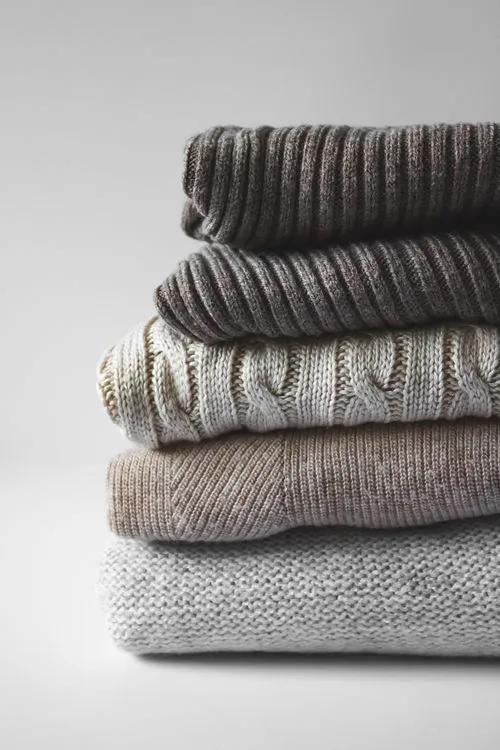
Fold knitwear rather than hanging it: a hanger concentrates the sweater’s weight and stretches the shoulders, while a folded sweater keeps its shape. Store folded sweaters in a drawer or on a shelf, heavier knits at the bottom and lighter ones on top.
Let a sweater rest for a day between wears so the fibres recover their spring. At the end of the season, wash each sweater before storing it — clean wool is far less attractive to moths than worn wool — and store it in a breathable cotton bag or a lidded box with cedar blocks or lavender sachets. If you are building a wardrobe around pieces that last, the investment pieces worth buying guide covers what to prioritise. A well-kept sweater is also the kind of piece a small wardrobe is built around — see how to build a capsule wardrobe on a budget for the rest of the formula.
Frequently asked questions
Can you wash a wool sweater in the washing machine?
Yes, but only if the care label allows it. Use the wool cycle (or cold/delicates), turn the sweater inside out, use a mesh laundry bag and a wool detergent, keep the load small and the temperature at or below the label’s maximum — usually 30°C.
How do you wash a wool sweater by hand?
Fill a basin with lukewarm water around 30°C, dissolve a mild wool detergent, turn the sweater inside out and soak it for about ten minutes. Move it gently without rubbing, rinse in lukewarm then cold water, press the water out in a towel without wringing, and dry it flat.
Why did my wool sweater shrink?
Shrinkage is felting: heat, agitation and sudden temperature changes make the wool fibres’ tiny scales lock together. The usual triggers are hot water, a machine cycle on a hand-wash-only sweater, rubbing or wringing, and tumble drying.
Can you unshrink a wool sweater?
A mildly shrunken sweater can sometimes be eased back by soaking it in lukewarm water with wool detergent, then gently stretching it to its original shape and drying it flat. A fully felted sweater cannot be unshrunk.
Should you wash a wool sweater inside out?
Yes. Turning the sweater inside out protects the outer face from friction in the wash, which helps the colour and the surface of the knit last longer.
How often should you wash a wool sweater?
After four or five wears, or sooner if it is stained or smells after airing. Airing between wears is usually enough. Always wash it before putting it away for the season, because clean wool attracts fewer moths.
Conclusion
Washing a wool sweater without shrinking it is a short list of habits: read the label, use lukewarm water, handle the knit gently, use a mild wool detergent, and dry the sweater flat. Hand washing is the safest method; the machine is fine when the label allows it, on the wool cycle, in a mesh bag, with a small load. Avoid heat, hard agitation, wringing and the tumble dryer, and a good wool sweater will keep its size and shape for years. A plain, well-made wool sweater is a quiet-luxury staple, and the quiet luxury capsule wardrobe guide shows how to build around pieces like it.