
A fuller figure means a fuller, plus-size or curvy body — more curves, and more variation between waist, bust and hips than standard sizing expects. (Elsewhere, “fuller figure” sometimes means making the bust look fuller — a different search, not this guide.)
If you have a fuller figure, you know the frustration: shirts pull, jeans gape, dresses cling when you sit. And the advice is often worse — wear black, hide it, dress to look slimmer.
It is not a problem to solve. The approach: fit first, fabric second, silhouette third. My Personal Style puts it well: the goal is confidence, not compromise.

The Quick Answer
- Buy for your largest measurement, then tailor the rest. Fit your bust or hips; take in the waist.
- Choose fabrics with weight and a little stretch. Medium-weight ponte, crepe, jersey and cotton with elastane skim; thin knits cling.
- Define your waist only if you want to. A wrap tie, belt, high waistband or tucked top can create one.
- Test every outfit sitting down, walking and raising your arms. If it only works standing still, it does not work.
- Build from repeatable formulas. Six are below — everyday, work and evening.
Fit First: The Rule That Fixes Most Problems
Most advice starts with silhouette. It should start with fit: on a fuller figure, standard sizing fits unevenly. That is a sizing problem, not a body problem.
Buy for the largest part, tailor the rest. If a shirt pulls across your bust, size up until the buttons lie flat, then have the waist taken in. If jeans fit your hips but gape, look for a contoured waistband. Taking in a waistband is a small job — worth it for pieces you wear often.
Learn the construction cues. Look for darts and princess seams, contoured waistbands, and adjustable waists such as a drawstring or tie waist. Look for a little stretch with recovery — research found 2–5% elastane a useful range; check the label.
The five-minute try-on test. Before you remove the tags: sit down, walk, raise your arms, check a photo as well as the mirror. If anything digs in, rides up or clings, the fit is wrong.
Drape vs Structure: How Fabric Decides Comfort
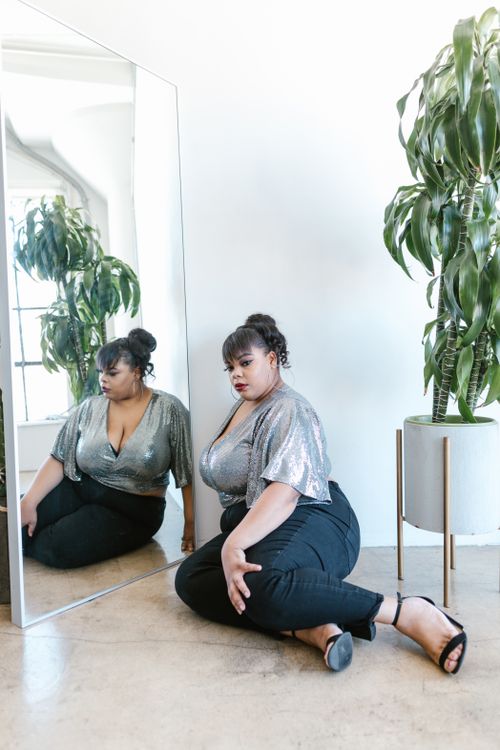
Two qualities matter: drape (how fabric falls) and structure (how much it holds its shape). You need both — a structured blazer over a draped top is the classic combination.
| Fabric | Drape or structure? | Best for |
|---|---|---|
| Ponte | Structured, stretch | Work dresses, jackets |
| Crepe | Draped | Dresses, wide-leg trousers |
| Jersey | Draped, soft | Everyday tops |
| Cotton-elastane | Structured, breathable | Shirts, jeans |
| Linen blends | Structured, breathable | Summer trousers, dresses |
| Rayon / viscose | Draped | Summer dresses, blouses |
| Georgette | Draped | Evening dresses |
| Stretch denim | Structured | Jeans, jackets |
Label check: medium weight, a little elastane, fabric that falls rather than sticks.
Different Fuller Proportions, Different Starting Points
A fuller figure is not one shape — these are starting points, not boxes.
Fuller bust. Button pull, gaping necklines, tops that fit the bust but swim at the waist. Look for wrap tops, V-necks and shirts with darts. A well-fitting bra matters most. Size to your bust and take in the waist — the same rule applies when you dress an hourglass figure with a fuller bust.
Fuller midsection. Clinging, waistbands digging in, tops riding up. A-line and empire-line dresses, peplum tops, longline jackets and high-rise trousers skim rather than squeeze.
Fuller hips. Trousers that fit the waist but pull at the hips; skirts that ride up. Choose A-line skirts, wide-leg trousers, bootcut or flare. Avoid very low-rise cuts and stiff fabrics.
No defined waist. Some fuller figures have little difference between waist, bust and hips. A waist is something you can create — a wrap dress, a belt, high-waisted trousers — or not. A straight column of one colour needs no waist definition.
How to Define Your Waist — If You Want To
Waist definition is the most repeated tip in fuller-figure advice — and the most misunderstood. It is not a requirement, and it is not about looking smaller.
- Wrap styles. The tie sets the waist.
- Belts. A medium-width belt over a dress or shirt marks a waist instantly.
- High-waisted bottoms. A high waistband holds a tucked top smoothly.
- Tucking. A full, front or half-tuck defines the waist.
- Colour and seaming. A seam or colour change at the waist works like a belt.
Prefer no waist definition? A straight dress with a long open cardigan is a complete outfit.
Dresses: The Easiest Win
Dresses are often the easiest fuller-figure outfit — one piece does the work of two: wrap dresses (adjustable); A-line dresses; shirt dresses (belted or loose).
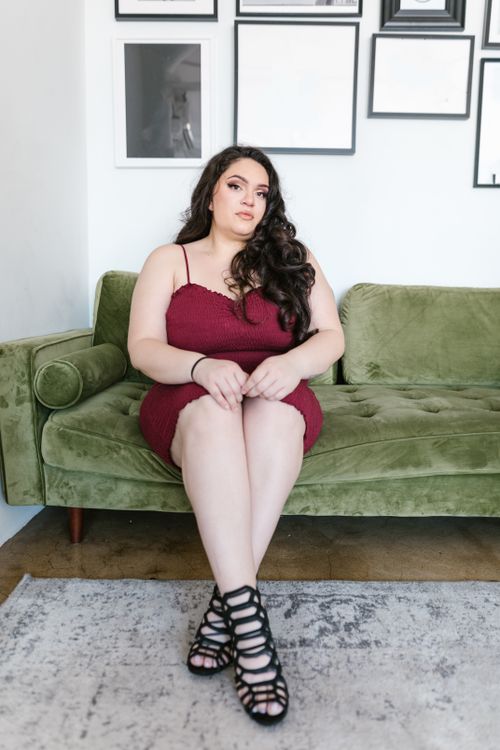
Why does a wrap dress work for a fuller figure? It adapts to the difference between bust and waist. V-necks suit a fuller bust, and a medium-to-large print often beats a tiny one.
Trousers and Jeans: Solving the Waistband Gap
Jeans are where fuller figures meet the worst sizing. The fix: high-rise, contoured waistband, stretch with recovery. High-rise sits at the waist, a contoured waistband follows its curve, and stretch with recovery returns to shape — the short answer to the best jeans for a curvy figure with no waistband gap.
Wide-leg trousers are a strong choice: fitted at the waist and upper hip, falling straight from there. Pair them with a tucked top — a wide-leg trousers plus size outfit with a defined waist is one of the most polished everyday looks there is. Straight-leg jeans suit most proportions; bootcut and flare balance fuller hips.
Workwear: Polished Without Discomfort
Plus size work outfits with a structured blazer are a reliable formula: the blazer structures while everything underneath stays soft. It must close comfortably — if the button pulls, it is the wrong size.
A work outfit that works all day: a ponte dress or a blouse with wide-leg trousers, a blazer, comfortable shoes. A column of one colour under an open blazer needs no belt. For more ideas, see these old money work outfits.
Summer: Breathable Fabrics That Don’t Cling
How to style a fuller figure in summer comes down to fabric and fit. Heat makes cling worse, so breathable fabrics that drape and don’t cling matter most: linen blends, cotton, rayon and viscose, and light crepe. In rayon and viscose, look for a lining or a slightly heavier weight. Looser cuts help — a relaxed shirt dress, wide-leg linen trousers, an A-line sundress — but “loose” means room to move.
Layering and Shoes
Layering works best when layers differ in length and weight: a long open cardigan over a shorter top creates a vertical line; a shorter jacket over a longer dress defines the top half. Avoid two bulky layers — pair one structured piece with one soft piece.
Shoes are often skipped in fuller-figure advice. Everyday: a cushioned trainer or a supportive flat. Work: a block heel or a pointed flat. Evening: a block-heel sandal or a heeled mule. Boots: a knee-high boot with stretch at the calf, or an ankle boot.
Six Outfit Formulas
Six complete formulas — top, bottom, layer, shoes — with a variation and a comfort note.
1. Everyday errands. High-waisted straight-leg jeans, a soft jersey top, a long cardigan, trainers. Variation: wide-leg trousers, flats. Comfort: the high waist stays put.
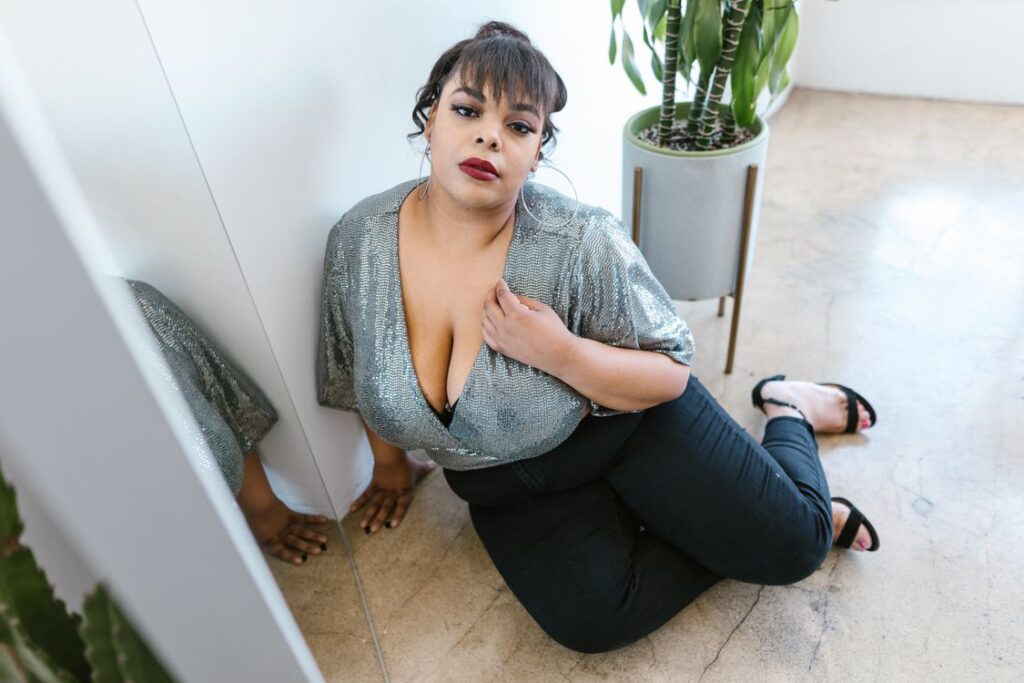
2. Everyday polished. A wrap top in crepe, wide-leg trousers, low heels. Variation: a fitted T-shirt, front-tucked. Comfort: the wrap adjusts to you.
3. Work — blazer and trousers. A blouse, wide-leg trousers, a blazer, block heels. Variation: a ponte sheath dress. Comfort: structured on top, soft underneath.
4. Work — dress and layer. A shirt dress with a tie belt, a longline cardigan, low heels. Variation: the dress loose, no belt. Comfort: easy to sit in all day.
5. Evening out. A wrap or A-line dress in crepe, a statement earring, block-heel sandals. Variation: wide-leg trousers, a draped blouse. Comfort: no adjusting all evening.
6. Summer day. A sleeveless A-line sundress or linen shirt dress, a light open linen shirt, flat sandals. Variation: wide-leg linen trousers, a tucked cotton top. Comfort: breathable and cool.
Fit Troubleshooting: Common Problems and Fixes
| Problem | Cause | Fix | Tailoring worth it? |
|---|---|---|---|
| Waistband gap | Straight waistband | Contoured waistband | Yes — a small job |
| Shirt buttons pulling | Sized to waist, not bust | Size up; darts or wrap | Yes, if the rest fits |
| Dress riding up | Too narrow at hip or thigh | A-line cut; a little stretch | Sometimes — let out a seam |
| Top clinging when sitting | Very thin knit; no lining | Medium-weight fabric | No — a fabric choice |
| Waistband slipping down | Too loose; worn-out elastic | Adjustable waist | Yes |
| Sleeves too tight | Straight-arm sleeve cut | Fuller cut | Yes, if the rest fits |
Karen Stauffer’s hourglass-figure guide covers similar troubleshooting, though for the hourglass shape only.
Common Mistakes and Fixes
- Wearing only black. Black is fine, but not a requirement — a medium-to-large print often beats a tiny one.
- Hiding in oversized clothes. Oversized pieces add volume; a garment that skims looks more polished.
- Buying your usual size regardless of brand. Sizing is inconsistent — try two sizes.
- Ignoring undergarments. A well-fitting bra changes how every top sits.
- Choosing very thin, clingy knits. They cling when you sit; medium weight with a little stretch is better.
- Skipping the sitting test. An outfit that only works standing up fails.
Shopping Guidance: What to Look For on the Rail
No brand list, no prices — judge each garment yourself. Read the label: look for a little elastane and a fabric you recognise. Check the seams: darts and a shaped waistband are good signs. Pull the fabric: if it springs back, it has recovery. Try two sizes: the right size fits your largest measurement. Spend more where fit matters most: a blazer, good jeans and a work dress beat a basic top — see these investment pieces worth buying. Build a small capsule: a few mix-and-match pieces beat a rail of one-offs — a capsule wardrobe is the cheapest route to getting dressed easily.
Frequently Asked Questions
How do I dress a fuller figure without hiding my body?
Choose fit and fabric over concealment: garments that fit your largest measurement, fabrics that skim, and silhouettes you choose because you like them.
What are the best jeans for a curvy figure with no waistband gap?
High-rise jeans with a contoured waistband, in denim with stretch recovery. High-rise sits at the waist, the waistband follows your curve instead of gaping.
Why does a wrap dress work for a fuller figure?
It adjusts to you: the tie sets the waist where you want it, the V-neckline suits a fuller bust, and the skirt falls rather than clings.
How do I define my waist on a fuller figure?
Use a wrap tie, a belt, a high-waisted bottom, a tuck, or a seam at the waist. Any one creates a waistline — and it is optional.
What are the best fabrics for a fuller figure that drape and don’t cling?
Medium-weight ponte, crepe, jersey, cotton with elastane, rayon and viscose (lined or slightly heavier), and linen blends. Avoid very thin knits; test by sitting down.
What should I wear to work with a fuller figure?
A structured blazer over a soft top, wide-leg trousers or a ponte dress, block-heel shoes. Check the blazer closes without pulling. For more ideas, see these quiet luxury outfits.
What are good petite and curvy outfit ideas?
The same fit principles in a shorter length: high-waisted jeans with a fitted top; a wrap dress ending at or above the knee; a cropped or three-quarter jacket.
Conclusion
Styling a fuller figure is not about hiding, slimming or fixing anything. It is about fit, fabric and a silhouette you choose: buy for your largest measurement, choose medium-weight fabrics with a little stretch, define your waist only if you want to, and test every outfit sitting down. For more ideas, see how to look expensive on any budget.