


Learning how to style a pleated skirt in winter starts with one shift: pleats are a shape, not a season. Folds that move when you walk and add volume without weight do not stop working in the cold. What changes is everything around the skirt: its fabric, its length, what goes underneath, and what goes over it.
How to style a pleated skirt in winter: the quick answer
Choose a midi or maxi pleated skirt in wool, velvet or heavy satin, and balance its volume with a fitted top: a fine roll-neck, a fitted knit, or a shirt tucked in with a belt. Wear fleece-lined or opaque tights underneath, and finish with knee-high boots and a long coat longer than the skirt or clearly shorter. The simplest formula is a black wool pleated midi, a cream roll-neck, opaque tights, knee-high boots and a camel wool coat.
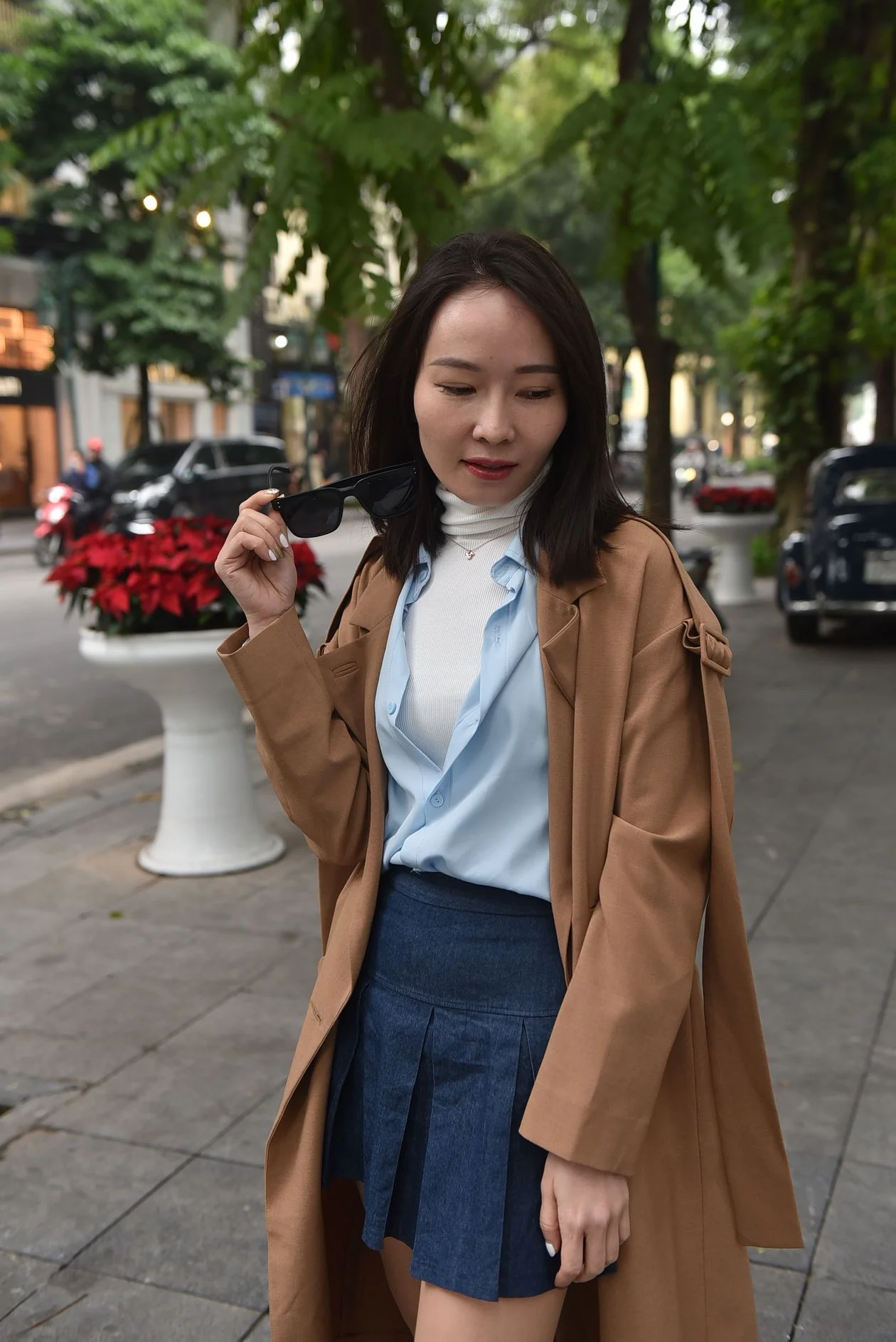
The winter pleated-skirt look: a long wool coat over a pleated skirt, with the pleats doing the talking.
Why pleats work in winter — and when they don’t
A pleated skirt gives shape without bulk: the volume moves, so the outfit looks light even under three layers. Pleated skirts are also still firmly in style — pleated skirts are still firmly in style in 2026, with midi and maxi the most worn — a classic shape having a long moment, not a trend to force.
Pleats fail in winter with the wrong fabric or the wrong proportions: a thin summer skirt flies up in wind and gives no warmth, while a voluminous skirt with an oversized knit and a short boxy coat makes one big shape with no waist and no line.
What is a pleated skirt? Knife, box, accordion and sunray
Knife pleats are narrow, sharp folds pressed in the same direction. Box pleats are wider folds facing away from each other, giving a fuller shape. Accordion pleats are fine, even folds that expand like a fan, usually in satin or metallic fabrics. Sunray pleats are narrow at the waist and wider at the hem, so the skirt flares as it falls.
For winter, knife and box pleats in wool are the easiest: they hold their shape under a coat. Accordion pleats in velvet are the most glamorous and warmest to the touch, while thin satin accordion pleats are the hardest — beautiful, but they need a heavier layer underneath. If you are buying your first winter pleated skirt, start with a knife-pleat midi in wool.
Choosing the right one: length, fabric and fit
Length decides your warmth. A midi — usually mid-calf — is the winter sweet spot: it covers most of the leg, shows the boots, and works with knee-high and ankle boots. A maxi is the warmest and most dramatic, but its hem must clear wet pavements. A mini depends entirely on fleece-lined tights and over-knee boots, and is the coldest option. This guide focuses on midi and maxi.
Fabric comes second. Wool pleats are the winter default: they hold a crease, drape rather than cling, and add real warmth. Velvet pleats are softer and heavier, with a glow that suits evenings — but velvet crushes under a tight coat belt, so wear it open or loosely belted. Satin pleats shine and move beautifully but are cold alone, so they need thermal tights and a proper coat. Faux-leather pleats are warm and wind-resistant but can look stiff, so keep the top half soft. Our guide to the warmest fabrics for winter compares these for insulation.
Fit is third. A pleated skirt should sit at your natural waist, where the pleats start. Too low, and the pleats open in the wrong place; too high and tight, and they pull open at the hips. Try it on with the tights and boots you will wear, and walk in it. Petite frames suit a midi ending just below the knee, with tights and boots in one colour; fuller figures suit knife pleats in heavy wool, which skim rather than cling.
| Fabric | Winter behaviour | Best length | Wear it with |
|---|---|---|---|
| Wool pleats | Holds shape, warm, drapes well | Midi or maxi | Fine roll-neck, knee-high boots, wool coat |
| Velvet pleats | Soft, heavy, glows in low light | Midi | Fine-knit top, heeled boots, long coat |
| Satin pleats | Shines, moves beautifully, cold alone | Midi | Thermal tights, fitted knit, structured coat |
| Faux-leather pleats | Warm, wind-resistant, structured | Midi | Soft fine knit, ankle boots, long coat |
| Metallic pleats | Statement, light-catching | Midi | Plain black knit, plain boots, plain coat |
How to style a pleated skirt in winter: outfit formulas
Everyday midi: a charcoal wool pleated midi skirt, a cream fine roll-neck tucked in, opaque black tights, knee-high black boots and a camel wool coat. Belt the coat or leave it open — either works, because the waist is already defined by the tuck.
Work: a navy or black pleated midi, a white shirt tucked in with a thin belt, a fitted blazer, opaque tights and heeled ankle boots. For the smooth-skirt version, see how to wear a slip skirt in winter.
Weekend casual: a pleated midi in olive, burgundy or grey, a knit half-tucked at the front, fleece-lined tights and ankle boots. The half-tuck shows the waist without the knit swallowing the pleats.
Evening: a velvet or satin pleated midi in burgundy or black, a fitted camisole or fine-knit top, warm tights and heeled boots, plus a long coat. Keep the top simple — the skirt is the outfit.
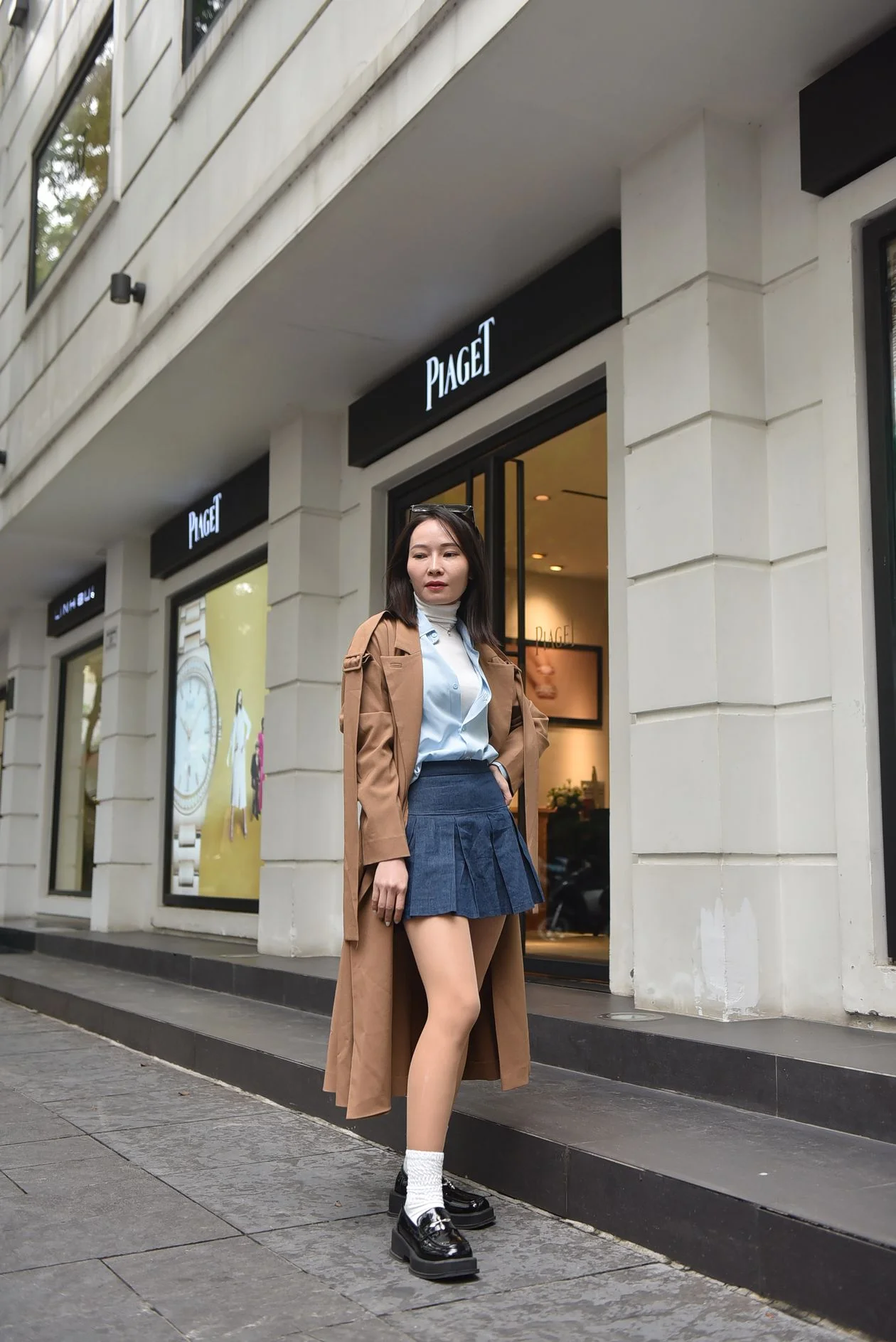
Wool pleats hold their shape in cold air — the fabric is doing half the styling work before you add anything.
What to wear underneath: tights, leggings and thermals
The warmth of a pleated skirt outfit is decided underneath it. Opaque tights are the baseline: smooth under pleats, no bulk, and genuinely warm in a high denier. Fleece-lined tights are the cold-day upgrade — a brushed inside, a smooth outside — and the single best buy for wearing skirts all winter. For the coldest days, fleece tights layered under sheer tights give a bare-leg look with real warmth: fleece first, sheer on top.
Leggings work under a maxi, where they are invisible, and under a midi on very cold days — but choose a smooth, fitted pair, because a baggy legging bunches at the knee. A thin thermal base layer under the knit matters as much as the legwear. Read how to choose tights for winter before you buy, because denier and lining matter more than brand. Static is the last point: synthetic pleats cling to tights in dry air, and an anti-static spray inside the skirt usually solves it.
What to wear on top: knits, shirts and the fitted rule
The rule for the top half is simple: fitted. Pleats give volume at the bottom, so the top stays close to the body — a fine roll-neck, a fitted knit, or a shirt tucked in. The most useful combination is how to layer clothes in winter without looking bulky: a thin thermal, a fine knit, then the coat. Three thin layers beat one thick one.
A chunky knit needs care: half-tuck it at the front so the waistband shows, and do not let it swallow the top of the pleats. Worn loose with no waist showing, it makes the outfit one shapeless column. A white shirt tucked into a pleated midi is one of the cleanest winter outfits there is, and it takes a blazer, a cardigan or a coat equally well.
Coats that work with pleats — and the length rule
The coat is where pleated-skirt outfits most often go wrong, and the rule is about length. A long coat falling below the skirt hem is the safest choice. A coat ending exactly at the skirt hem is the worst choice: the two hems fight. A clearly shorter coat — cropped or hip-length — can work with a midi, because the skirt is clearly the longer piece.
Belt a coat over the coat itself, not over the pleats — the movement returns when the coat comes off. A puffer over a pleated midi is practical on cold days, but keep it hip-length or long and the rest simple. A plaid pleated skirt is a statement on its own, so the coat should be plain, as covered in our guide to how to wear a plaid skirt in winter.
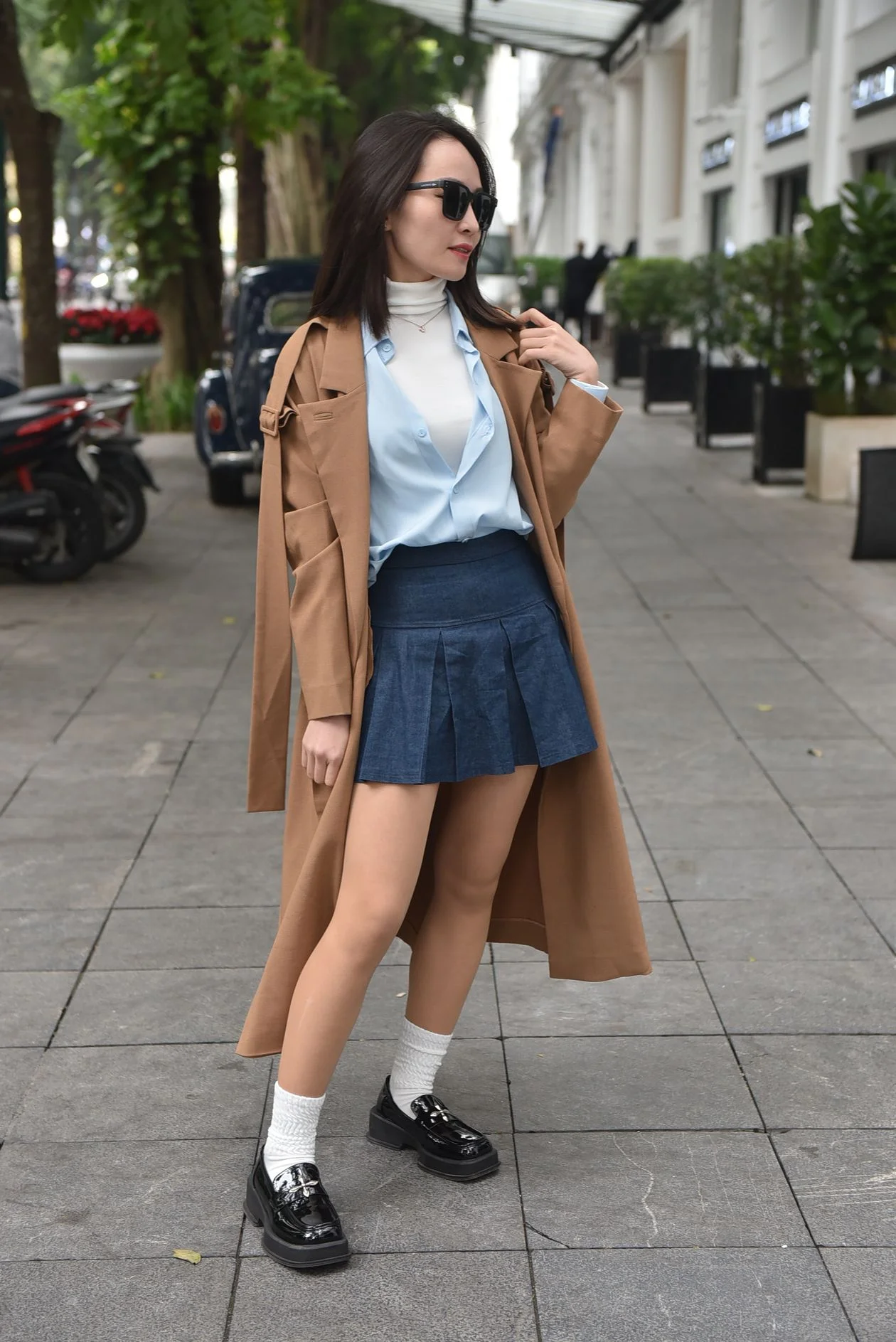
A coloured coat over a neutral pleated skirt: the coat carries the colour, the skirt carries the movement.
Boots, shoes and the gap between hem and footwear
Knee-high boots are the classic pairing for a midi pleated skirt: they close the gap between hem and foot and keep the lower leg warm. Our guide to how to style knee-high boots in winter covers height and fit. Ankle boots work too, especially heeled ones that lift the hem — choose a slim boot, not a chunky one.
Trainers belong to the casual version: a pleated midi with white trainers and a half-tucked knit is a comfortable weekend outfit, as the photo above shows. But trainers with a satin or velvet pleated skirt send mixed signals — the skirt says evening, the shoes say errands. Heels, even a low block heel, lengthen the leg, lift the hem, and make the pleats swing. On rainy days, choose the midi over the maxi and boots with grip.

The casual end of the pleated skirt: sneakers and pleats work for daytime, as long as the top half stays fitted.
Colours, care and keeping pleats crisp
Pleats give texture and movement, so colour can stay calm. Black, charcoal, navy and burgundy work with everything you own, and a black pleated midi is the most useful single skirt in this guide. Metallic pleats are the party exception: wear them with a plain black top and plain boots. Keep patterns to the skirt only — a checked skirt with a striped knit usually fights.
Pleats are pressed in, and winter puts them at risk from sitting, coat belts and folded storage. Hang the skirt by its waistband on a clip hanger, never folded. If the pleats soften, steam is the fix: hang it in a steamy bathroom or use a handheld steamer, and let the folds fall back into shape. Do not iron pleats flat — that is how they are lost. Brush salt off the hem before it dries into the folds, and let a damp skirt air-dry on its hanger.
Common mistakes and how to fix them
- Wearing a summer-weight pleated skirt in January. Fix: choose wool or velvet.
- An oversized knit with no waist showing. Fix: half-tuck it, or add a thin belt.
- A coat that ends exactly at the skirt hem. Fix: go longer than the skirt, or clearly shorter.
- Bare legs under a midi in cold weather. Fix: opaque or fleece-lined tights.
- Two patterns fighting. Fix: pattern in the skirt only; everything else plain.
- Ironing pleats flat. Fix: steam them, hang them, and let gravity do the work.
- A maxi hem dragging on wet pavements. Fix: wear the midi on rainy days, with heeled boots.
Shopping guidance: what to buy first
If you are buying one pleated skirt for winter, buy a knife-pleat midi in wool, in black or charcoal. Check three things before you pay: the pleats should be even and sharp from waist to hem; the waistband should sit flat without gaping; and the lining should be smooth, so the skirt moves over tights instead of clinging. No prices are promised here, because they change by store and season. Buy fleece-lined opaque tights in the same trip — they make the skirt wearable all winter.
Frequently asked questions
Can you wear a pleated skirt in winter?
Yes — choose a midi or maxi in wool or velvet, wear fleece-lined or opaque tights underneath, and finish with boots and a long coat. The skirt is not the warm layer; the tights, knit and coat are.
What tights should I wear with a pleated skirt in winter?
Opaque tights in a high denier are the everyday choice, and fleece-lined tights are the cold-day upgrade. For the coldest days, fleece tights under a sheer pair give a bare-leg look with real warmth.
What top do you wear with a pleated skirt in winter?
A fitted top — a fine roll-neck, a fitted knit, or a shirt tucked in with a belt. The pleats give volume at the bottom, so the top needs to stay close to the body.
Can you wear a pleated skirt with a coat?
Yes, and a long coat falling below the skirt hem is the safest pairing. Avoid a coat ending exactly at the hem; go longer than the skirt, or clearly shorter.
Are pleated skirts still in style in winter 2026?
Yes — pleated skirts remain a versatile staple, with midi and maxi lengths the most worn, and they pair naturally with knits, blazers and boots in cold weather.
How do I stop a pleated skirt clinging to my tights?
Static in dry winter air makes synthetic pleats cling. An anti-static spray inside the skirt, a smooth slip underneath, or cotton-rich tights usually solves it.
Conclusion
A pleated skirt in winter is not a compromise — it is one of the season’s easiest outfits. Choose a midi or maxi in wool, velvet or heavy satin, balance the volume with a fitted top, warm the legs with fleece-lined or opaque tights, and finish with boots and a coat that commits to its length. The pleats do the moving; everything else does the warming.