
Being tall is an advantage in fashion — long coats, maxi dresses and wide-leg trousers all look their best on a tall frame. The problem is that most clothes are cut for an average height, so sleeves stop short of the wrist, trousers end above the ankle, and waist seams sit in the wrong place. Learning how to dress a tall frame is mostly about fixing lengths and proportions: finding pieces cut long enough, defining the waist, and balancing long lines.
This guide covers the practical side: your proportions, the right lengths, which pieces suit a tall frame best, and outfit formulas for work, weekends and evenings.
The quick answer: length first, waist second, balance third
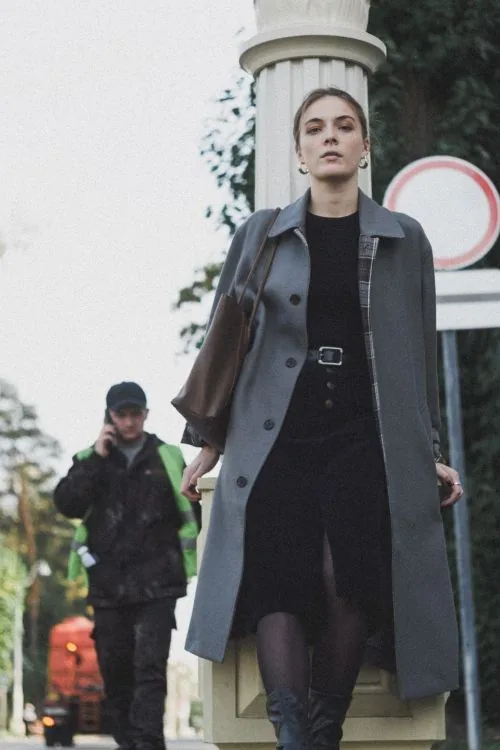
Buy for length first: look for tall ranges with longer inseams, longer sleeves and longer torsos, and check where the waist seam falls before you buy. Then define the waist — a belt, a high waist, a tucked-in top — so a long frame has shape as well as length. Then balance the outfit: pair volume with something fitted, and use horizontal breaks like belts, colour blocking or layering to divide long lines.
That is the method in one paragraph; the detail is below, piece by piece.
First, work out your proportions
Not all tall frames are the same, and the fixes depend on where your length sits. Two measurements matter more than your height: your torso length and your leg length. A tall woman with long legs and a shorter torso needs different things from one with a long torso and average legs.
Stand in front of a mirror in fitted clothes and look at three things: where your natural waist sits and where the waist seams of your dresses fall — if the seam sits above your waist, the piece was cut for a shorter torso; where your sleeves end — they should reach the wrist bone; and where your trousers end — the ankle bone or the floor.
Knowing your proportions helps you shop: if your legs are the long part, inseam is the number to check; if your torso is long, look for longer bodices and tops. Long Tall Sally’s styling tips for tall women make the same point. Proportions work the same way at the other end of the scale — see how to dress a slim frame for the companion guide.
Where to find the right lengths
The single most useful shopping habit for a tall frame is to look for tall ranges. Most start at around 5’8″ and offer longer inseams — often 34 to 36 inches — plus longer sleeves and longer torsos. That one choice solves the three most common tall-fit problems at once. C&A’s guide to clothing for tall women covers tops, trousers, dresses, coats and accessories in tall lengths.
A few rules help when shopping:
- Check the inseam, not just the size. A 34-inch inseam is a starting point for many tall women; longer legs may need 36 inches.
- Check sleeve length on jackets and coats. Sleeves should reach the wrist bone. If they stop at the forearm, the piece is too short.
- Check the waist seam on dresses. If it sits above your natural waist, the dress will always look slightly off.
- Buy long and hem. Hemming is cheap and easy, and adding length is impossible. If a piece fits everywhere except length, buy the long version and have it shortened.
- Keep a list of brands that fit. Sizing varies a lot between brands; once you find one whose tall range fits, stay with it.
Online shopping helps, because tall ranges are often online-only. Check the measurements on the product page, not just the size label, and read reviews from tall customers. Length is the problem at the other end too — how to dress petite without tailoring covers the short-frame side of the same issue.
Defining the waist: the key proportion move
A long, straight silhouette can look elegant, but without waist definition it can also look shapeless. Defining the waist is the single styling move that changes a tall outfit most. The same proportion thinking applies to other frames — how to style a fuller figure covers waist definition from the other side.
The simplest ways: a belt over a dress or a coat; high-waisted trousers or skirts; a top tucked into trousers; a wrap dress; a blazer with shaping. A wide belt works particularly well on a tall frame — a wide belt that would overwhelm a shorter torso looks proportionate on a long one. Colour blocking helps too: a dark top with light trousers divides the frame into sections.
A waist seam in the wrong place cannot be fixed with a belt: a dress whose waist falls on the ribs looks wrong however good it is. The seam should sit at your natural waist; if it does not, try the tall version or a different style.
Trousers and jeans for a tall frame
Trousers are the hardest tall fit, and the one where the right length matters most. High-waisted wide-leg trousers are made for long legs: they show the length, define the waist and balance the frame. Straight-leg and flared jeans in a long inseam do the same job. For the waist-to-hip detail, read jeans for different waist-to-hip proportions.
Look for a mid- or high-rise waistband, which defines the waist and balances a long torso; avoid very low rises. Wide-leg and straight-leg cuts suit tall frames well; very tight skinny jeans can make long legs look out of proportion with the top half. Cropped lengths — 7/8 and 3/4 trousers — show the ankle and break the leg line, which can be exactly what an outfit needs.
For work, tailored wide-leg trousers in a long inseam with a tucked-in blouse works most reliably. For weekends, straight-leg jeans with a long top and ankle boots.
Tops, knits and jackets
Tops are where tall women most often find things too short: a top that should reach the waistband ends above it. The fix is length again — longer tops, tunics and long blouses that end between the hips and the middle of the thigh are ideal, especially with tighter-fitting trousers.
Layering suits tall frames well, because each layer creates a horizontal break in a long line. Oversized pieces are another tall-frame advantage: oversized shirts, jumpers and blazers look intentional on a tall frame. Bold prints work the same way — few people can wear a large floral or a big check as well as a tall woman can.
For jackets and blazers, the rules are sleeve length and body length: sleeves should reach the wrist bone, and the blazer should be long enough to balance your height. A longer blazer with some shaping defines the waist. Read how to style a blazer for the detail.
Dresses and skirts
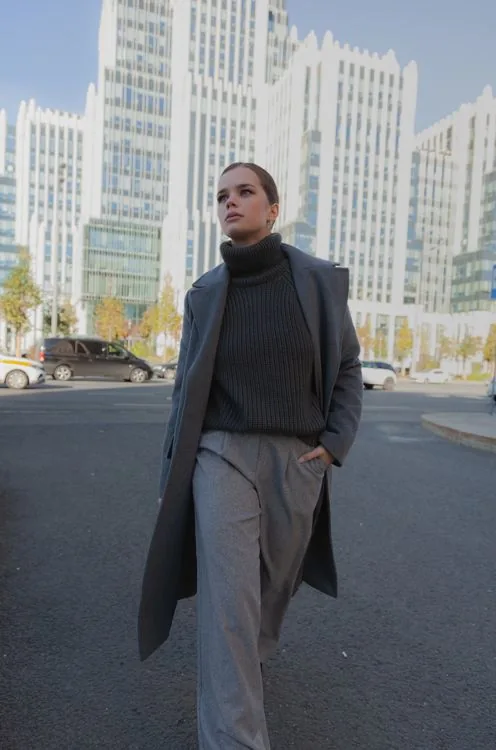
Dresses are where a tall frame has the most choice, because almost any length works — the question is whether the dress is long enough. Maxi dresses suit tall women naturally, as long as they actually reach the ankle; a maxi that ends mid-shin looks like a mistake. Midi lengths look elegant, though they sit higher on the leg than on a shorter woman. Mini dresses show a lot of leg; pair them with flats or boots for balance.
The waist seam is the detail to check, as always: on a fitted dress, if it sits above your natural waist, the dress was cut for a shorter torso. Wrap dresses are a reliable choice, because the wrap defines the waist at the right place regardless of the cut.
For skirts, midi and maxi skirts showcase long legs, while pleated and tiered skirts add movement. High-waisted skirts with a belt, and A-line shapes, give the waist definition a long frame needs.
Coats: the tall frame’s natural advantage
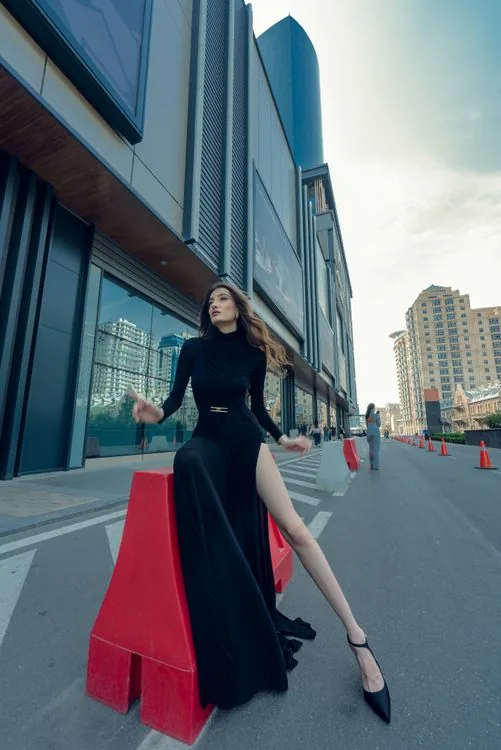
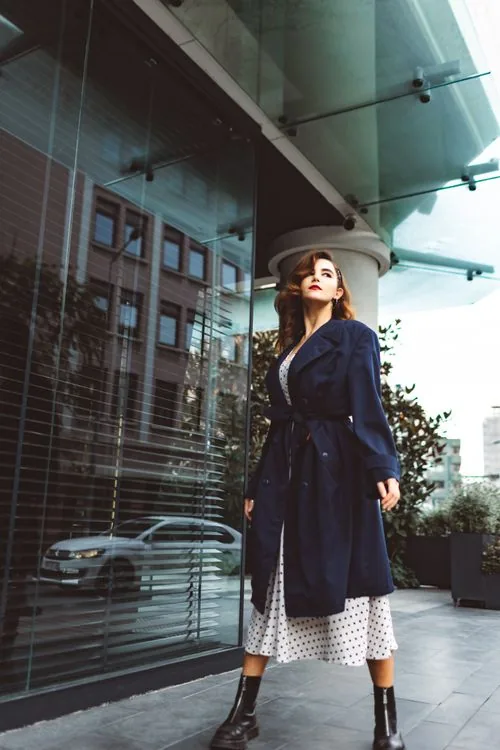
Coats are where tall frames win outright. Long coats, dusters and knee-length coats look elegant on a tall frame in a way they cannot on a shorter one — there is enough height to carry the length. A long wool coat over a simple outfit is one of the easiest good-looking winter outfits there is.
Choose a coat long enough to balance your height — knee-length or longer — with sleeves that reach the wrist. A belted coat defines the waist; an oversized coat works if the shoulders fit.
For winter, a long wool coat in camel, chocolate or black is the most useful single piece. It works over work clothes, over jeans and over a dress.
Shoes and accessories
Shoes are the easiest part: on a tall frame, wear whatever heel height you like. Flats, loafers, trainers and boots all look sharp, and there is no rule against adding height. Knee-high boots suit long legs particularly well. Pointed shoes can make feet look long on a tall frame, so a rounded toe is often the more balanced choice.
Accessories are where a tall frame can go big. Large bags, statement necklaces, wide belts and chunky scarves all work in proportion — a small, delicate bag can look lost on a tall frame, while a large tote looks right. The principle is proportion: accessories should be sized to the frame.
Outfit formulas: work, weekend and evening
Work: high-waisted wide-leg trousers in a long inseam, a tucked-in blouse, a longer blazer with sleeves that reach the wrist, and heeled ankle boots or loafers. Add a wide belt and a large tote.
Weekend: straight-leg jeans in a long inseam, a long knit or an oversized jumper, ankle boots, and a long coat. Add a scarf and a cross-body bag.
Evening: a maxi dress that reaches the ankle with a defined waist, or a midi dress with a belt, heeled boots or pumps, and a long coat. Add statement earrings and a clutch.
Winter: a knit dress with thermal tights and knee-high boots, a long wool coat, gloves and a scarf. The coat is the outfit — make it a good one.
The pattern in every formula is the same: length that fits, a defined waist, and one or two horizontal breaks — a belt, a colour change, a layer — to balance the long lines. A few well-fitting pieces beat a wardrobe of wrong-length ones — build a capsule wardrobe on a budget shows how to choose them.
How to dress a tall frame: the mistakes to avoid
- Wearing clothes that are too short. Sleeves above the wrist, trousers above the ankle, dresses that end too soon — these are fit problems, not style choices. Buy the tall range.
- Ignoring the waist seam. A dress or top whose waist sits in the wrong place will never look right, however good the rest is.
- Hiding your height. There is no need to dress to look shorter. The goal is proportion, not camouflage.
- Very low-rise trousers. They shorten the torso visually and sit uncomfortably on a long frame. Mid- or high-rise works better.
- Tiny accessories. A small bag or delicate jewellery can look lost on a tall frame. Scale accessories to the frame.
- One long, unbroken line. An outfit with no waist definition, no belt, no colour change and no layering can look shapeless. One horizontal break is usually enough.
Frequently asked questions
What should tall women wear?
Pieces cut long enough: tall-range trousers with a 34–36 inch inseam, tops with longer torsos, and coats that reach the knee or below. High-waisted wide-leg trousers, maxi dresses, long coats and oversized layers suit a tall frame well.
How do you define the waist on a tall frame?
With a belt, high-waisted trousers or skirts, a tucked-in top, a wrap dress, or a blazer with shaping. A wide belt works particularly well on a tall frame. The waist seam of a dress should sit at your natural waist — if it sits higher, the dress is cut for a shorter torso.
What inseam do tall women need?
Often 34 to 36 inches, depending on height and leg length. Tall ranges offer longer inseams, sleeves and torsos. Check the inseam on the product page rather than trusting the size label.
Can tall women wear maxi dresses?
Yes — maxi dresses are one of the easiest elegant outfits for a tall frame, as long as they actually reach the ankle. A maxi that ends mid-shin looks too short.
Should tall women wear heels?
Wear whatever heel height you like. Flats, loafers, boots and heels all look sharp on a tall frame, and there is no rule against adding height. Choose shoes for the occasion and for comfort, not to manage your height.
Where can tall women find clothes that fit?
In tall ranges, which most brands offer online — often online-only. Check inseam, sleeve length and torso length on the product page, and keep a list of brands whose tall range fits you.
Conclusion
Dressing a tall frame well is not about hiding height. It is about fit: lengths that reach, a waist that sits in the right place, and proportions that balance long lines. Buy the tall range, define the waist, and let the long coat, the maxi dress and the wide-leg trouser do what they do best.