
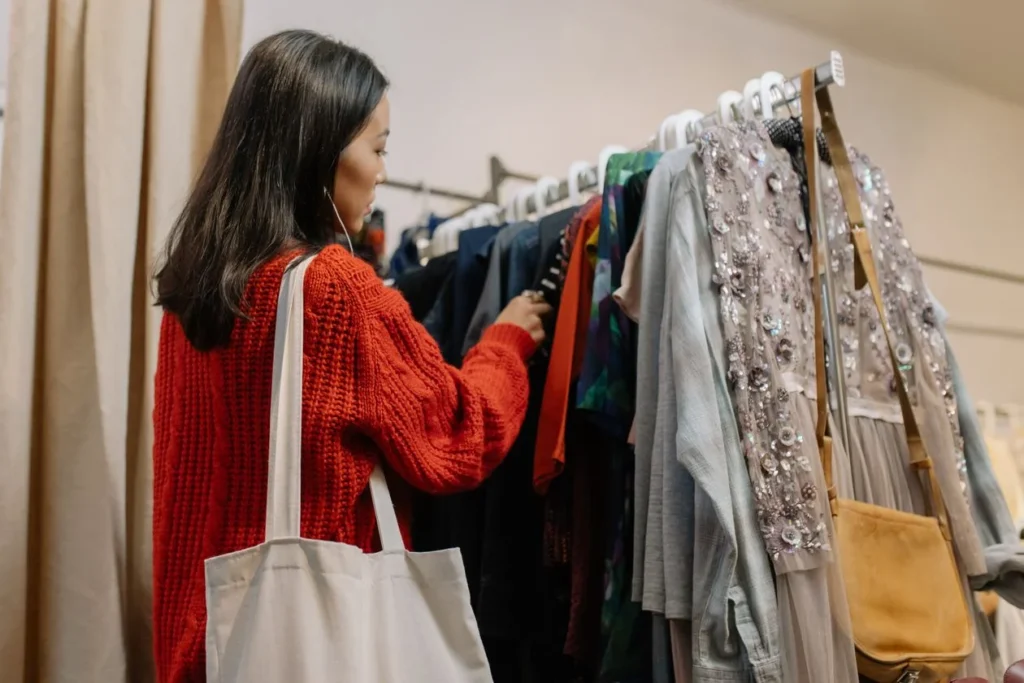

Learning how to thrift winter clothes is mostly learning what to check before you pay. A thrifted wool coat can be the best thing you own all winter — better made than most new coats at three times the price — or it can be a moth-eaten, shiny-elbowed mistake that never leaves the wardrobe. It is five minutes of hands-on checks: the seams, the zips, the lining, the cuffs, the label, and the smell. Winter pieces hide their flaws better than summer ones, so the checks matter more.
How to thrift winter clothes: the quick answer
Go with a list, go on a weekday morning when the shop is quiet, and check every piece the same way. Hold it up to the light and look for stains, holes, pilling and fading. Run every zip, test every button, and pull gently at every seam. Check the lining, the underarms, the cuffs and the collar — the four places winter wear shows first. Then ask one question: would I buy this at full price? If the answer is yes, it is a bargain. If the answer is “only because it is cheap,” leave it on the rail.
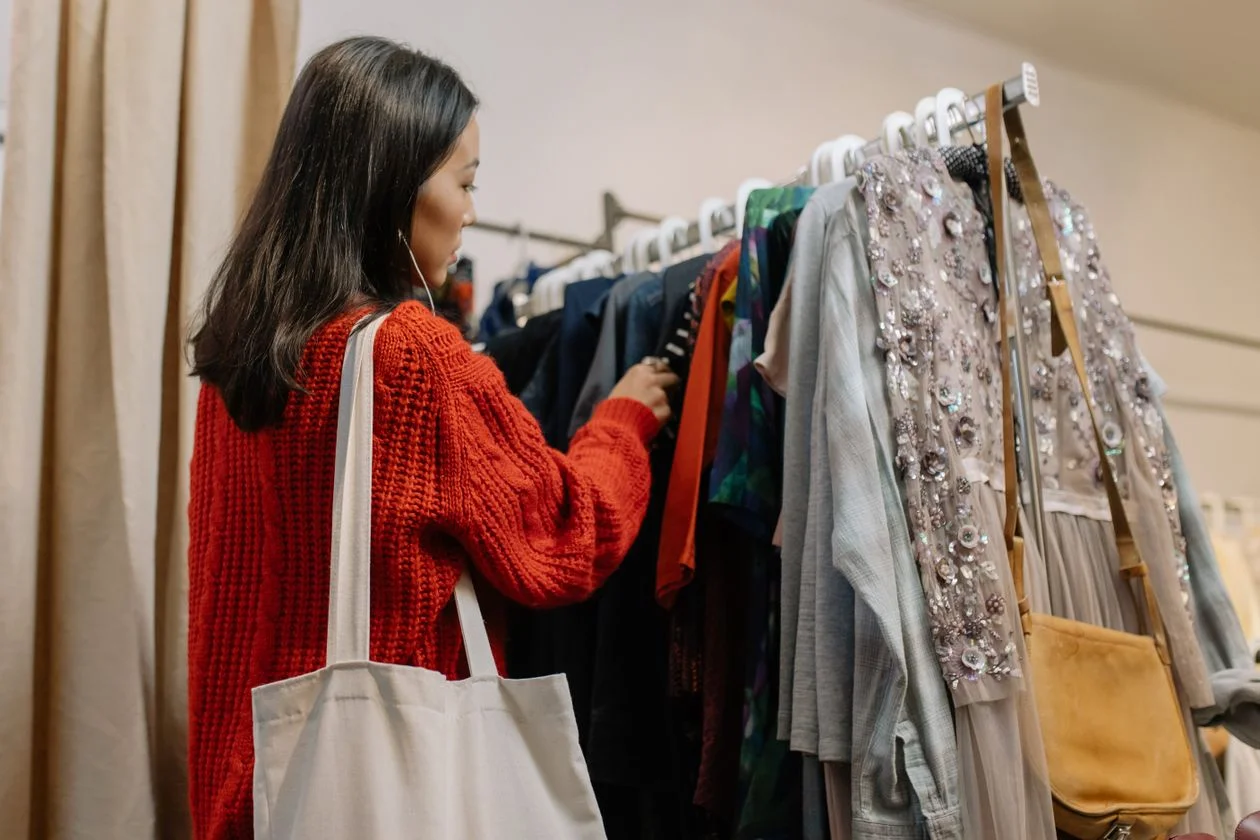
The best thrift finds come from a slow look through the rails, not a fast grab: the checks in this guide take minutes, and they save you from the pieces that only look like bargains.
Before you go: the 5-minute prep that saves money
Good thrifting starts before the shop. The single most useful thing you can do is make a list: the type of item, the colour, and the size you are looking for. One guide’s five tips for successful thrift shopping put it plainly: define what you want before you go.
Timing matters too. Avoid Saturday afternoons, when the shops are busiest and the rails are picked over. A weekday morning is quieter, and you can check a coat properly without someone waiting behind you. If the shop has fitting rooms, plan to use them.
The universal check: what to look at on every single piece
Every garment gets the same six checks, They are the thrift shopping dos and don’ts every experienced secondhand shopper follows: inspect everything carefully, and never buy on a quick glance.
1. The light test. Hold the piece up to the light, front and back. Stains, fading, thin patches and small holes all show up against the light.
2. The seams. Pull gently at the seams — under the arms, along the shoulders, at the pockets. A seam that is already opening will fail within weeks.
3. The fastenings. Run every zip up and down twice. A zip that sticks, separates or is missing teeth is not a small job. A missing button is an easy fix; a damaged zip often is not.
4. The lining. Turn the piece inside out, or reach inside and feel. A lining that hangs properly, without tears or stains, tells you the garment was cared for.
5. The label. Read it — fibre content, brand, care instructions. Our guide to the warmest fabrics for winter explains how wool, cashmere and fleece behave differently.
6. The smell. Smell the piece, especially under the arms and inside the lining. Musty, smoky or chemical smells are hard to remove, and a coat that smells of damp has usually been stored damp
Knitwear: the pilling, moth-hole and stretch test
Knitwear is the most common thrift buy and the easiest to get wrong, because a jumper can look perfect on the hanger and fall apart on the body. Start with the pilling test: look at the underarms, the sides and the cuffs, where pilling starts. Heavy, matted pilling across the whole body means the fibres are tired.
Then the moth test. Hold the knit up to the light and look for tiny holes, especially around the folds, the underarms and the bottom hem — moths eat where the fabric is undisturbed and dark. Check the cuffs too: pull gently and let go. Good ribbing springs back; ribbing that stays stretched has lost its elastic.
Finally, the fibre check. wool feels warm and slightly springy, cashmere feels soft and light, acrylic feels smooth and a little slippery and does not breathe. Our guide to how to spot quality winter knitwear covers fibre, weight and construction in full — the same checks apply here, with one difference: on a thrifted knit, you are also checking what the previous owner did to it.
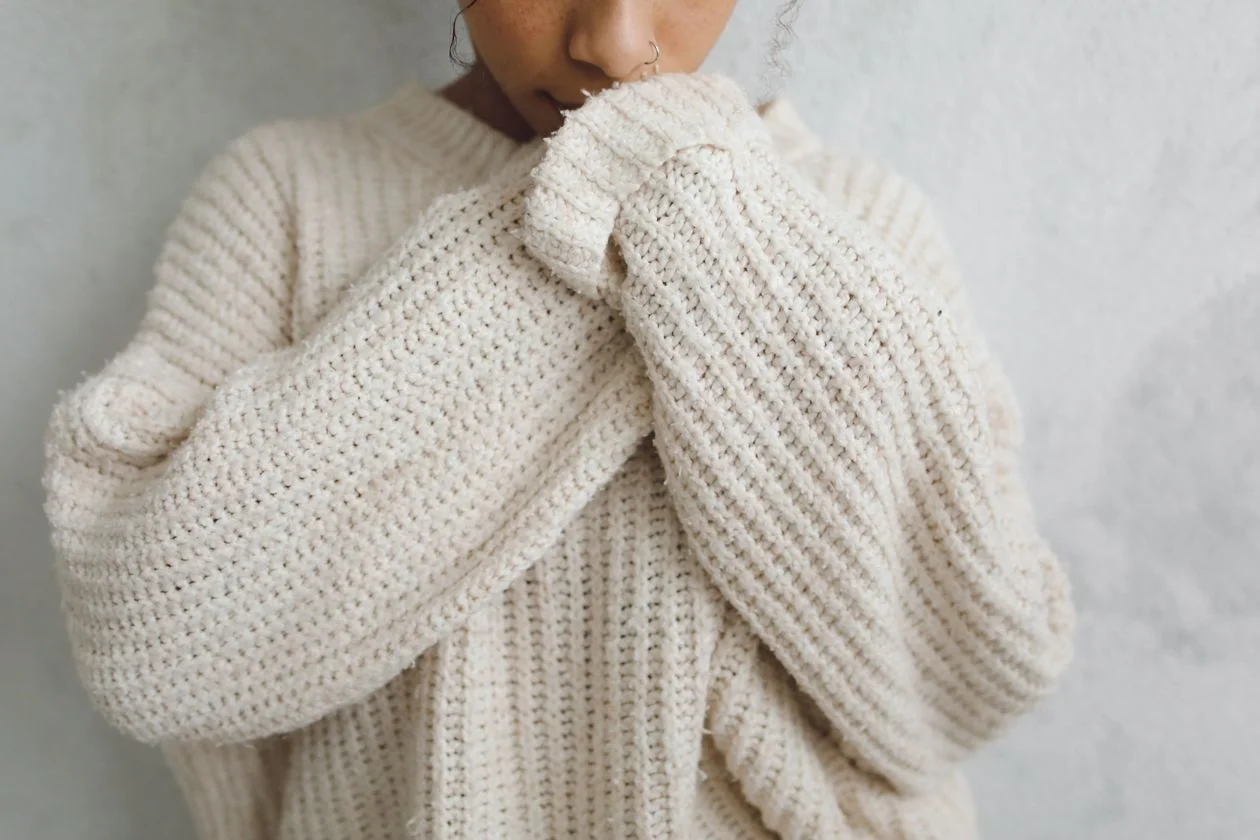
Knitwear is where thrifted quality shows fastest: hold the knit up to the light, stretch it gently, and check the underarms and cuffs before you decide.
Coats: where the money is — and where the traps are
A coat is the priciest thing on the thrift rail, and the best value when it is right. A well-made wool coat, a good trench or a real faux-fur coat can cost a tenth of its new price secondhand. Before you start, decide which type you are hunting for — our guide to how to choose a winter coat covers wool, puffer, trench and faux fur.
Wool coats. Check the elbows and the collar for shine — a shiny patch means the fibres are worn flat, and it does not come back. Look at the nap: it should feel even, with no bald or shiny patches.
Trench coats. The belt is the giveaway: a missing belt is hard to replace and expensive to have made, so check that the belt, the buckle and all the belt loops are present. Check the shoulders for water staining and the hem for mud splashes.
Puffer coats. Squeeze the baffles — the stitched chambers that hold the filling. They should feel evenly full. A flat baffle means the filling has clumped or escaped.
Faux fur coats. Run your fingers through the fur against the grain. Good faux fur feels dense and springs back; tired faux fur feels thin, sheds, and stays flattened where you touched it. Check the backing fabric by parting the fur — a backing that is brittle or tearing means the coat is at the end of its life.
Leather jackets. The touch test comes first: real leather feels warm, supple and slightly uneven, and it bends without cracking. Press a fold — good leather creases finely and the crease fades. Leather that cracks, flakes or stays white at the fold is dried out or is bonded leather breaking down.
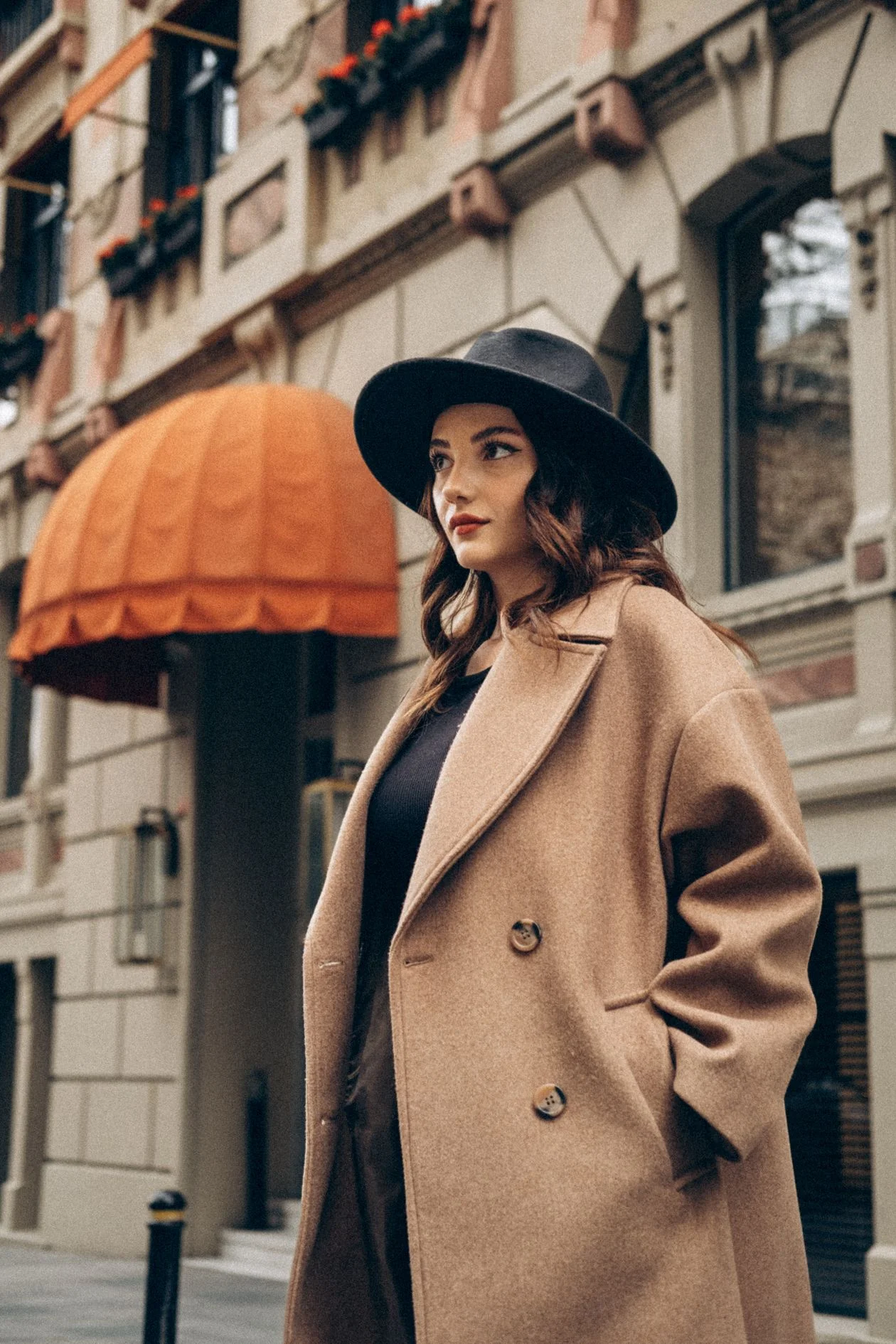
A good thrifted coat looks like this: clean lines, a lining that hangs properly, and no shine on the elbows or collar. The coat is the priciest thrift buy — and the one worth checking longest.
One coat rule covers all four types: try the coat on over the thickest jumper you plan to wear with it, and walk in it. A coat that pulls across the shoulders will not get worn
Boots: soles, zips and salt stains
Boots are the riskiest thrift buy, because you cannot see what the previous owner did to the inside. Start with the soles. Look at the wear pattern: even wear across the heel and the ball of the foot is normal. A heel worn down on one side, or a sole smooth in the middle, has lost its grip. Press the sole — it should feel firm, not soft or crumbling.
Then the zips. Run every zip up and down, and check the inside zip guard. A zip that sticks halfway is the most common reason boots end up in a thrift shop, and the most common reason they should stay there.
Then the salt stains. White rings and crusty patches around the sole and the lower leather are winter salt damage. Light salt marks can often be cleaned off — our guide to how to clean leather boots and remove winter salt stains explains how to tell a cleanable mark from permanent damage — but salt that has dried into the leather and cracked it means the leather is already breaking down.
The leather itself. Good leather feels supple and bends without cracking. Deep cracks, or leather that feels dry and papery, mean the boots were never conditioned, and conditioning will not bring back leather that has already split. Suede boots need their own check: brush the nap and look for bald patches, water marks and salt rings. Our guide to how to care for suede boots in winter covers the routine a thrifted pair will need on its first day home. And try both boots on, and walk in them: a pair that looks identical can feel different once you are standing in it.

Boots are the riskiest thrift buy: check the soles, the zips and the salt stains before you fall in love with the leather.
Labels: how to read them in 30 seconds
The label is the fastest quality check in the shop, and most people skip it. In thirty seconds it tells you three things: what the fabric is, who made it, and how it must be cleaned. Fibre content is the most useful line. Wool, cashmere, silk and cotton last and hold their shape; heavy acrylic and cheap polyester blends pill, go shiny and stop breathing.
Brand is the second line, but read it with care. A good brand on a bad piece is still a bad piece — the label tells you the garment was well made once, not that it still is. One label trap is sizing. Vintage sizes run smaller than modern ones — a 1980s size 42 can correspond to a size 38 today. Do not trust the size on the tag. Trust the tape measure, and trust the fitting room.
| Piece | Walk away if | Buy it if |
|---|---|---|
| Knitwear | Heavy pilling, moth holes, stretched cuffs | Light pilling, springs back, wool label |
| Wool coat | Shiny elbows, torn lining, musty smell | Even nap, lining intact, clean smell |
| Trench | Belt missing, water stains | Straps present, hem clean |
| Puffer | Flat baffles, filling escaped | Full chambers, shell intact |
| Leather boots | One-sided soles, cracked leather | Even wear, supple leather, zips run |
| Faux fur | Thin, shedding, backing brittle | Dense, springs back, sound backing |
After you buy: wash, air and repair before you wear
A thrifted piece is not ready to wear the day you buy it. Wash everything that can be washed before it goes into your wardrobe — check the label first, and when the label says hand wash, hand wash. Our guide to how to wash a wool sweater without shrinking it is the wash to follow for thrifted wool: cool water, gentle handling, and drying flat rather than hanging. Do the small repairs before the first wear: replace the missing button, stitch the opening seam, and treat the leather.
Common mistakes and how to fix them
- Buying it because it is cheap. Fix: ask whether you would buy it at full price.
- Skipping the fitting room. Vintage sizes run smaller. Fix: try everything on, over the layers you would wear it with.
- Checking the front and forgetting the back. Fix: run the same six checks on every piece.
- Ignoring the smell. Fix: smell the underarms and the lining before you pay.
- Buying boots with dead zips or one-sided soles. Fix: run every zip twice and check the sole wear before you fall in love with the leather.
- Forgetting the cleaning cost. Fix: read the care label and add the cleaning cost to the price.
Shopping guidance: what to buy first
If you are thrifting winter clothes for the first time, start with knitwear. It is the most forgiving category: the checks are quick, the repairs are easy, and a good wool jumper at a thrift price is the best value on the rail. Buy the best quality you can find, not the most pieces you can carry. One good wool coat beats three thin ones. No prices are promised here, because thrift prices change by shop, city and season — but the rule holds everywhere: the best thrift finds are not necessarily the cheapest ones. They are the pieces you are genuinely excited to take home and actually use.
Frequently asked questions
How do I know if a thrifted winter coat is good quality?
Check the nap for an even feel with no bald or shiny patches, especially at the elbows and collar. Look at the lining, the pockets and the hem, run any zips, and smell the underarms. A good coat has an even nap, an intact lining, sound pockets and a clean smell.
Is it safe to buy secondhand winter boots?
Yes, if you check them properly. Look at the wear pattern on the soles, press the sole for firmness, run every zip, and check for salt damage that has dried into the leather.
How do I check thrifted knitwear for moth holes?
Hold the knit up to the light and look for tiny holes, especially around the folds, the underarms and the bottom hem, where moths eat. One small hole in an invisible spot is repairable; a scatter of holes is not worth it.
Why do vintage thrift clothes fit smaller than modern ones?
Sizing has changed over the decades, so a vintage size does not mean what it means today — a 1980s size 42 can correspond to a size 38 now. Never trust the size on the tag.
Conclusion
How to thrift winter clothes comes down to five minutes of checks and one honest question. Hold every piece to the light. Run the zips, test the seams, check the lining, the cuffs and the collar, read the label, and smell the underarms. When the answer is yes, you have found what thrifting is for: a well-made winter piece, bought for a fraction of what it is worth, that will keep you warm all winter.