


Call jewel tones outfits winter 2026 the season’s quiet revolution: emerald, sapphire, garnet and citrine are no longer reserved for evening, and no longer treated as “colour” at all. This winter, they are the new neutrals — the saturated shades you build an outfit around the way you used to build one around black, navy or camel. They behave like neutrals: they pair with almost everything and make an ordinary outfit look considered. The trick is treating them that way — one jewel tone as the base, plain companions, no apology.
Jewel tones outfits winter 2026: the quick answer
Pick one jewel tone as your base — emerald for daytime, sapphire for work, garnet for evenings, citrine as a bright accent — and pair it with a true neutral: black, charcoal, cream, camel or navy. Wear the jewel tone in the biggest piece, keep everything else plain, and finish with gold jewellery and dark, simple shoes. One jewel tone per outfit is the rule.

Emerald is the easiest jewel tone to start with: it pairs with gold, black, cream and camel, and carries from daytime to evening.
Why jewel tones work as neutrals
A neutral, in styling terms, is a colour that goes with everything and never fights the outfit. Black, navy, grey and camel earned that role by being quiet. Jewel tones earn it differently: they are deep and saturated enough to read as solid and grounded, rather than bright and shouty. Emerald reads as a darker, richer green; sapphire reads as a deeper navy; garnet reads as a warmer burgundy; citrine reads as a golden yellow with weight behind it. None of them is pastel, none of them is neon, and that depth is what lets them anchor an outfit.
The runways agree. Coverage of the fall/winter 2026 collections describes jewel tones as the new neutrals outright — emerald, sapphire and garnet dominating the runways, rich and highly saturated, complementing the traditional neutrals. Winter 2026 trend roundups name rich jewel tones as one of the season’s defining directions, against all-black styling.
There is a practical reason, too: in low winter light, pale neutrals wash out and black flattens, while a jewel tone holds its colour indoors and out and photographs far better once the sun drops.
Emerald: the most versatile jewel tone
Emerald is the easiest jewel tone to start with. It pairs with gold, nude, black, cream and camel, and carries from a family gathering to a formal evening without changing anything but the shoes. A deep emerald knit with dark jeans and brown boots is daytime; the same green in velvet or satin, with gold jewellery, is evening.
If you are buying one emerald piece, make it a knit or a coat — something you will wear weekly, not once. Emerald and black is the evening formula; emerald and cream is daytime; emerald and camel is the most sophisticated combination here. Avoid emerald with bright red: the two saturated colours fight, and the outfit reads Christmassy rather than elegant.
Sapphire: the navy upgrade
Sapphire is a deep, rich blue that looks almost velvety — often grouped with cobalt, but darker, more mature and more appropriate for fall and winter. Think of it as navy with ambition: it does everything navy does, but it gets noticed.
Sapphire’s best partners are black, grey, cream and charcoal. Silver jewellery suits sapphire better than gold — the exception in this guide, since the cool blue asks for cool metal. Sapphire and charcoal is the work formula; sapphire and camel is softer and more daytime. If you already own a lot of navy, sapphire slots into every outfit navy used to fill.

Sapphire is navy with ambition: a deep, velvety blue that does everything navy does, but gets noticed.
Garnet: the warm statement
Garnet is a deep, dark red — the jewel tone closest to burgundy, but warmer and more jewel-like. It is the most dramatic of the four, and the most evening-ready: a garnet dress, a garnet velvet blazer, a garnet knit with black trousers.
Garnet’s partners are black, cream, charcoal and gold. Gold is the metal here — warm on warm — and a garnet outfit with gold jewellery and black shoes is the simplest evening formula in this guide. Garnet and chocolate brown is another strong pairing, covered in our guide to burgundy and chocolate brown. For daytime, keep garnet to one piece, with black or cream around it — head-to-toe garnet is an evening move.
Citrine: the bright neutral
Citrine is the surprise of the four: a golden yellow that works as a neutral precisely because it behaves like camel’s bolder sister. It is the hardest jewel tone to wear in large doses and the easiest as an accent — a citrine knit under a camel coat, a citrine scarf with a black outfit. In winter it adds light to an outfit when the days are short and grey.
Citrine pairs with black, charcoal, navy, cream and camel: black grounds it, cream softens it, navy makes it deliberate. Gold jewellery suits citrine, and brown leather shoes warm it up. Start with a citrine accessory — a bag, a scarf, shoes — and work up to a knit; a citrine coat over black is one of the most striking daytime outfits of the season.
| Jewel tone | Best for | Pair it with | Metal | Avoid pairing with |
|---|---|---|---|---|
| Emerald | Daytime, evenings, work | Black, cream, camel, gold | Gold | Bright red |
| Sapphire | Work, evenings | Black, grey, cream, charcoal | Silver | Bright orange |
| Garnet | Evenings, statement days | Black, cream, charcoal, chocolate | Gold | Bright pink |
| Citrine | Daytime accents, events | Black, navy, cream, camel | Gold | Neon yellow |
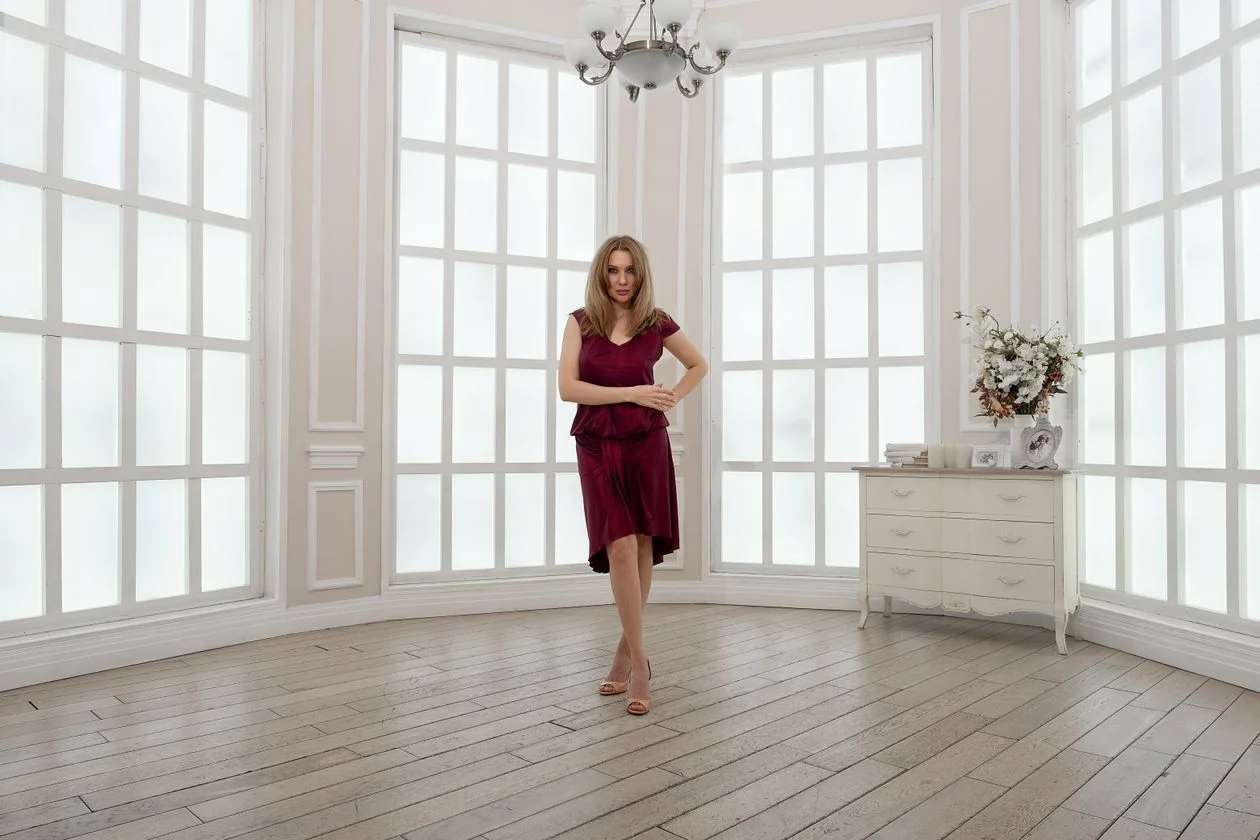
Garnet’s deep red sits in the same family as this ruby burgundy: warm, jewel-like, and made for evenings with gold jewellery.
Jewel tones outfits winter 2026: outfit formulas
Daytime: an emerald knit with dark straight-leg jeans, brown boots and a camel coat — or a citrine scarf with a camel coat over black. Daytime jewel tones work best in knits and coats.
Work: a sapphire dress or knit with charcoal wool trousers, black loafers and silver jewellery — or an emerald blouse under a black blazer with tailored trousers. One jewel-tone piece, in a tailored shape, everything else neutral.
Evenings: a garnet velvet dress with gold jewellery and black heels, or an emerald satin blouse with black tailored trousers. Low light loves saturation — see how to style a velvet dress for winter parties for the evening playbook, and how to wear royal purple for the season’s other statement colour.
Events and weddings: a sapphire or emerald dress with nude or black heels and a simple clutch — jewel tones photograph well. For a winter wedding, our guide to the best colours to wear in winter for an elegant look covers the wider palette.
Pairing rules: how to combine jewel tones
One jewel tone per outfit is the default: one saturated shade plus neutrals, and that restraint is what makes it look expensive.
Two jewel tones can work if they share a temperature: emerald and sapphire (both cool), garnet and citrine (both warm). Keep one of them small — a bag, a scarf, shoes. Emerald and garnet together need black between them.
Jewel tones with neutrals are the safest combinations: emerald with camel, sapphire with charcoal, garnet with cream, citrine with black. The neutral does the calming, the jewel tone does the talking.
Jewel tones with pattern need care: a neutral pattern (a grey check, a navy stripe) works; a second bright colour in a pattern usually does not. If the pattern is loud, the jewel tone should be the accessory.
Jewel tones as neutrals in a capsule is the advanced move: pick two jewel tones and rotate them against the same black, cream and camel base pieces — emerald and sapphire give more combinations than black alone, because each jewel tone reads as a different outfit.
Texture: velvet, satin, knit and wool
Jewel tones look different in every fabric, and fabric is half the styling decision. Velvet deepens a jewel tone — emerald and garnet velvet are the richest versions of those colours. Satin brightens it: a sapphire satin blouse catches light and reads more glamorous than the same colour in wool. Our guide to how to wear a satin blouse in winter (and stay warm) covers layering satin for cold weather.
Knitwear softens a jewel tone, which is why knits are the best daytime entry point. Wool grounds it: a sapphire wool coat is the most wearable sapphire piece you can buy. Mix textures rather than matching them — a velvet dress with a wool coat, a satin blouse with wool trousers, a jewel-tone knit with a leather bag.

Citrine is the golden-yellow jewel tone: the hardest to wear in large doses and the easiest as an accent — a scarf, a knit, a coat over black.
Accessories and metals: the finishing rules
Gold suits emerald, garnet and citrine; silver suits sapphire. That is the only metal rule you need — the wrong metal can make a jewel tone look off, while the right one makes it look intentional.
Shoes should be dark and simple: black heels or boots, nude heels for evenings, brown leather boots for daytime. A jewel-tone shoe is a statement, not a base — one pair is enough. Bags follow the same rule: black, brown or nude leather most days, a jewel-tone clutch for evenings. A jewel-tone scarf is the cheapest way into the trend: it sits near the face, where saturated colour flatters most.
Care: keeping saturated colours saturated
Jewel tones fade faster than neutrals if washed carelessly. Wash them in cold water, inside out, with a colour-safe detergent, and dry out of direct sunlight. Velvet should be dry-cleaned or steamed rather than washed; satin washed cold and dried flat; wool knits washed rarely and dried flat. Read the warmest fabrics for winter before the first wash — a faded emerald is just a dull green.
Common mistakes and how to fix them
- Wearing two jewel tones at full strength. Emerald dress plus sapphire coat is a clash. Fix: one jewel tone as the base, the second only as an accessory.
- Pairing jewel tones with bright colours. Emerald with bright red, sapphire with orange. Fix: pair jewel tones with neutrals — black, cream, charcoal, camel.
- Head-to-toe citrine in winter. The brightest jewel tone in the largest dose overwhelms. Fix: citrine as one piece, grounded with black or navy.
- The wrong metal. Gold with sapphire, silver with garnet. Fix: silver for sapphire, gold for emerald, garnet and citrine.
- A jewel tone in a cheap, shiny fabric. Saturated colour in thin polyester looks costume-like. Fix: buy jewel tones in wool, velvet or satin.
- Washing jewel tones hot. Heat fades saturated dye fast. Fix: cold water, inside out, dry away from sun.
Shopping guidance: what to buy first
Buy the emerald knit first — the most versatile jewel tone and the easiest to wear weekly. Second, a sapphire piece in a tailored shape: a coat or a dress. Third, garnet for evenings, in velvet if you can. Citrine comes last, as an accessory or a knit. Check quality before you pay: the colour should look deep and even, the fabric should have weight. If the budget stretches to one statement piece, make it a jewel-tone coat — emerald or sapphire — because a coat is the piece everyone sees, and the colour does the work of a whole outfit.
Frequently asked questions
What are jewel tones in fashion?
Jewel tones are deep, saturated colours named after gemstones: emerald green, sapphire blue, ruby or garnet red, amethyst purple, and citrine yellow. They are rich rather than bright, which is why they work as winter neutrals.
Can you wear jewel tones in the daytime?
Yes — in knits and coats, with neutrals around them: an emerald knit with jeans, a sapphire coat over black trousers, a citrine scarf with a camel coat. Keep daytime jewel tones to one piece.
What is the best jewel tone for work?
Sapphire, for most offices: it reads as a deeper navy, pairs with charcoal and black, and suits silver jewellery. Emerald is the second choice, in a knit or a blouse under a blazer. Keep work jewel tones to one tailored piece.
Do jewel tones suit everyone?
Mostly, yes — the depth flatters most skin tones. Emerald and sapphire suit cooler tones; garnet and citrine suit warmer ones. If a jewel tone feels too strong near your face, wear it lower and keep a neutral near your face.
Can you mix jewel tones together?
Yes, if they share a temperature: emerald with sapphire (both cool), garnet with citrine (both warm). Keep one of them small — an accessory — and the other as the main piece. Emerald and garnet together need black between them.
What colours go with emerald green in winter?
Black, cream, camel, gold and charcoal. Emerald and black is the evening formula; emerald and cream is daytime; emerald and camel is the most sophisticated. Avoid bright red with emerald — the two saturated colours fight.
Conclusion
Jewel tones are the new neutrals because they do a neutral’s job with more personality: they pair with everything and hold their colour in winter light. Start with emerald, add sapphire for work, keep garnet for evenings and citrine for light. One jewel tone per outfit, plain companions, the right metal — and the colour does the rest.